

SYZYGY

In the past, over the Fourth of July week, rather than focus on a single neighborhood, I have shared one of my ongoing projects that spans the entire city. These projects predate The Neighborhoods and, in many ways, serve as its connective tissue, recurring motifs that stitch together parts of the city that might otherwise seem unrelated.
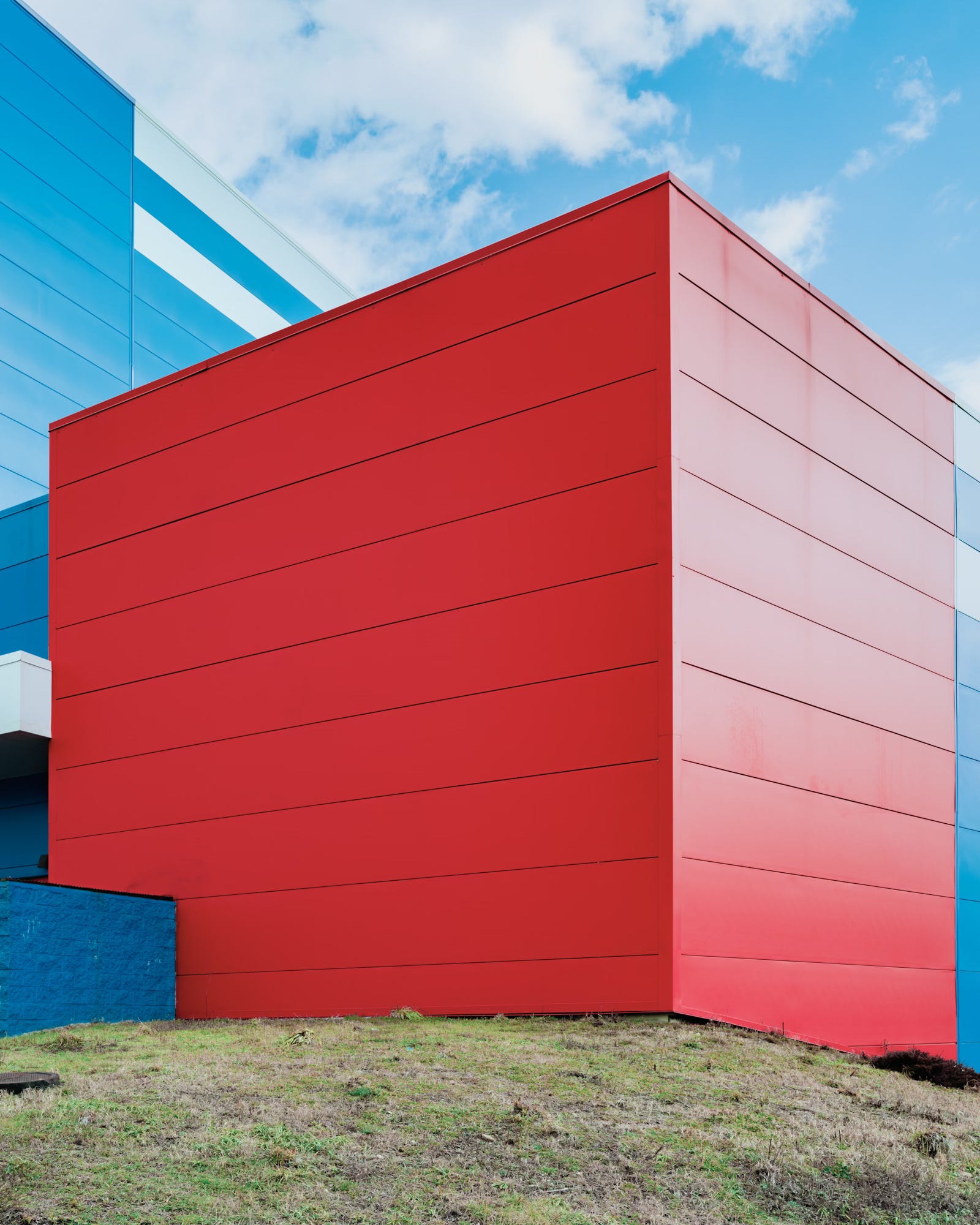
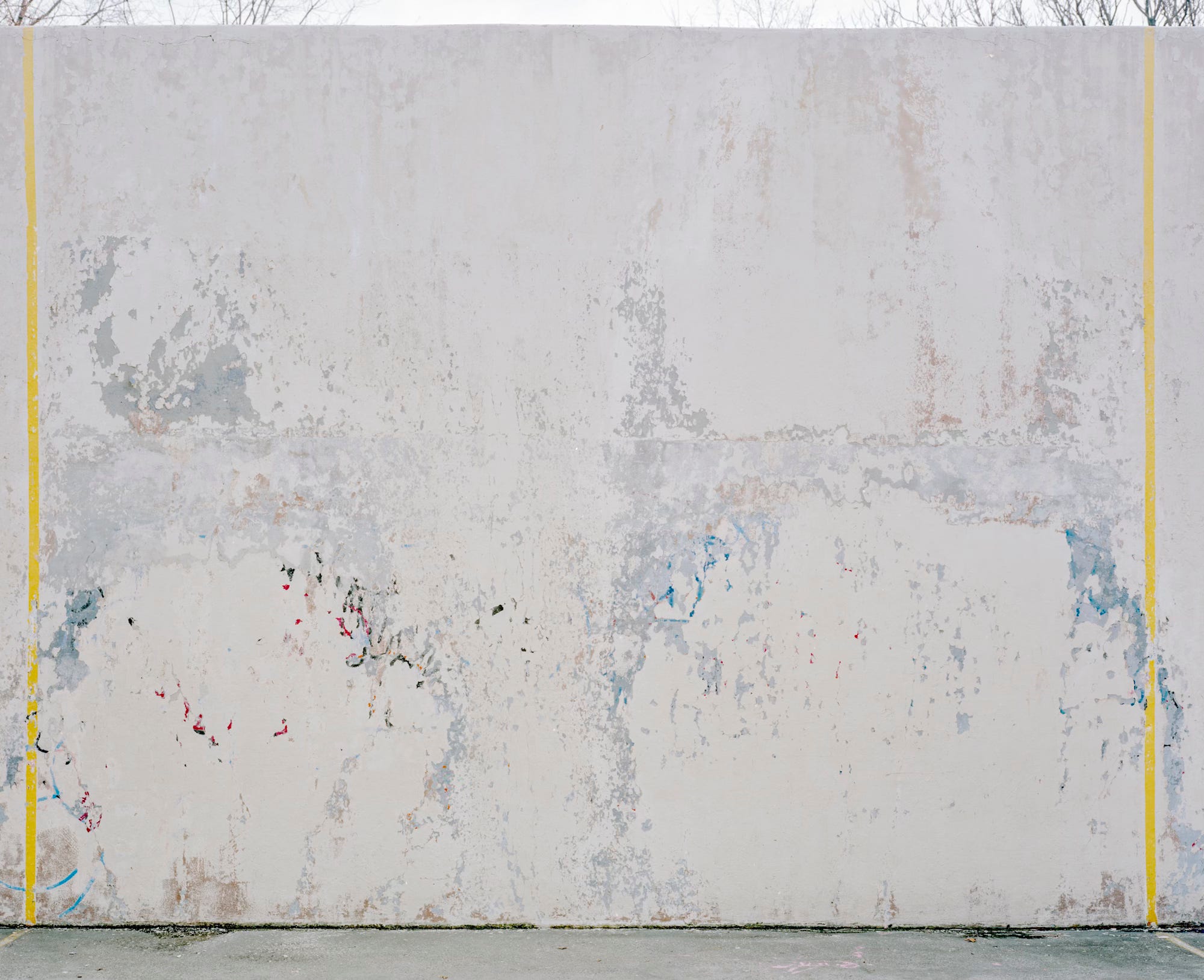
Last year I shared A New Monumentality, a look at the proliferation of self-storage buildings, and the year before that I wrote about handball courts.
This year, I’m turning to one of my favorite forms of vernacular architecture: split houses.
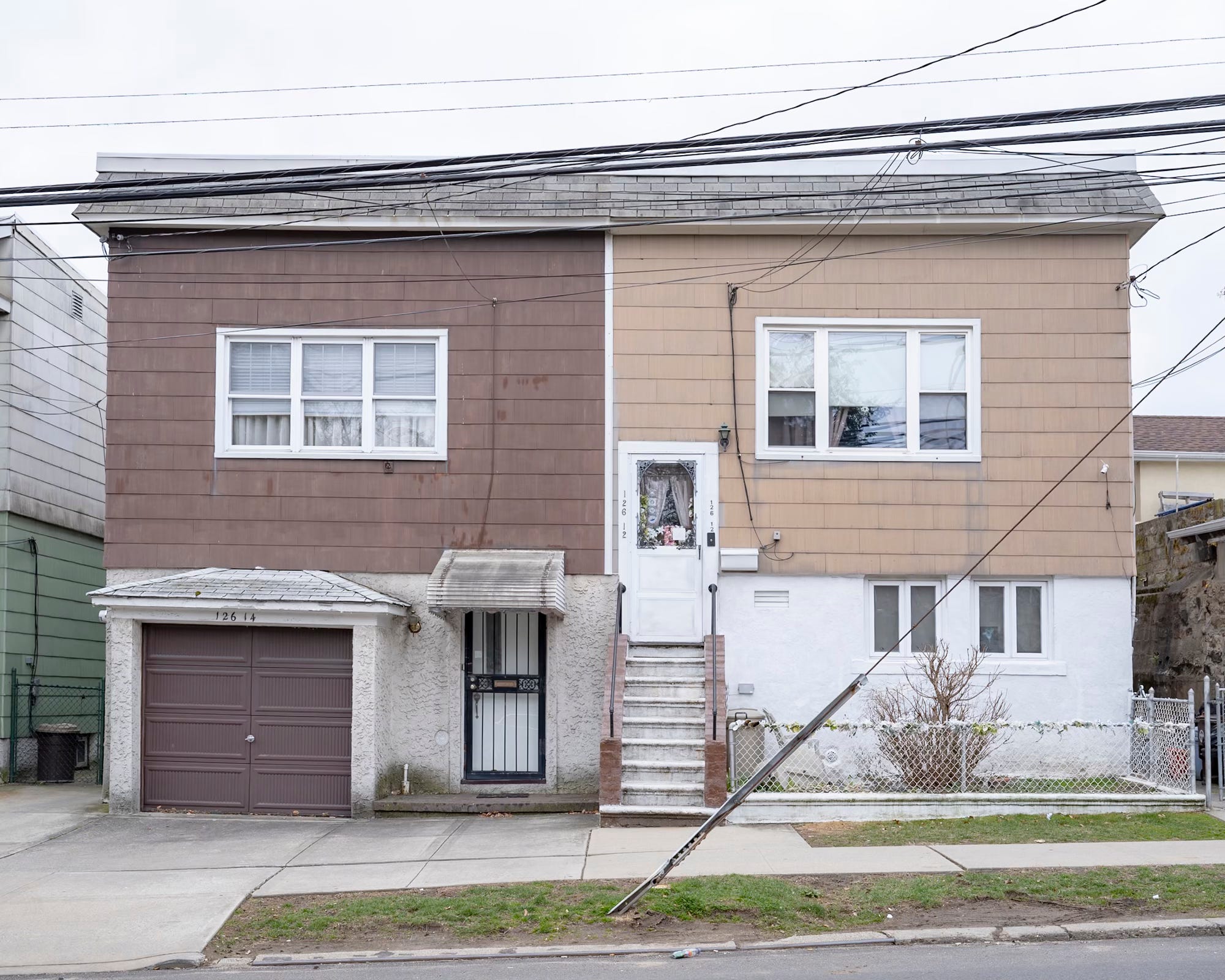
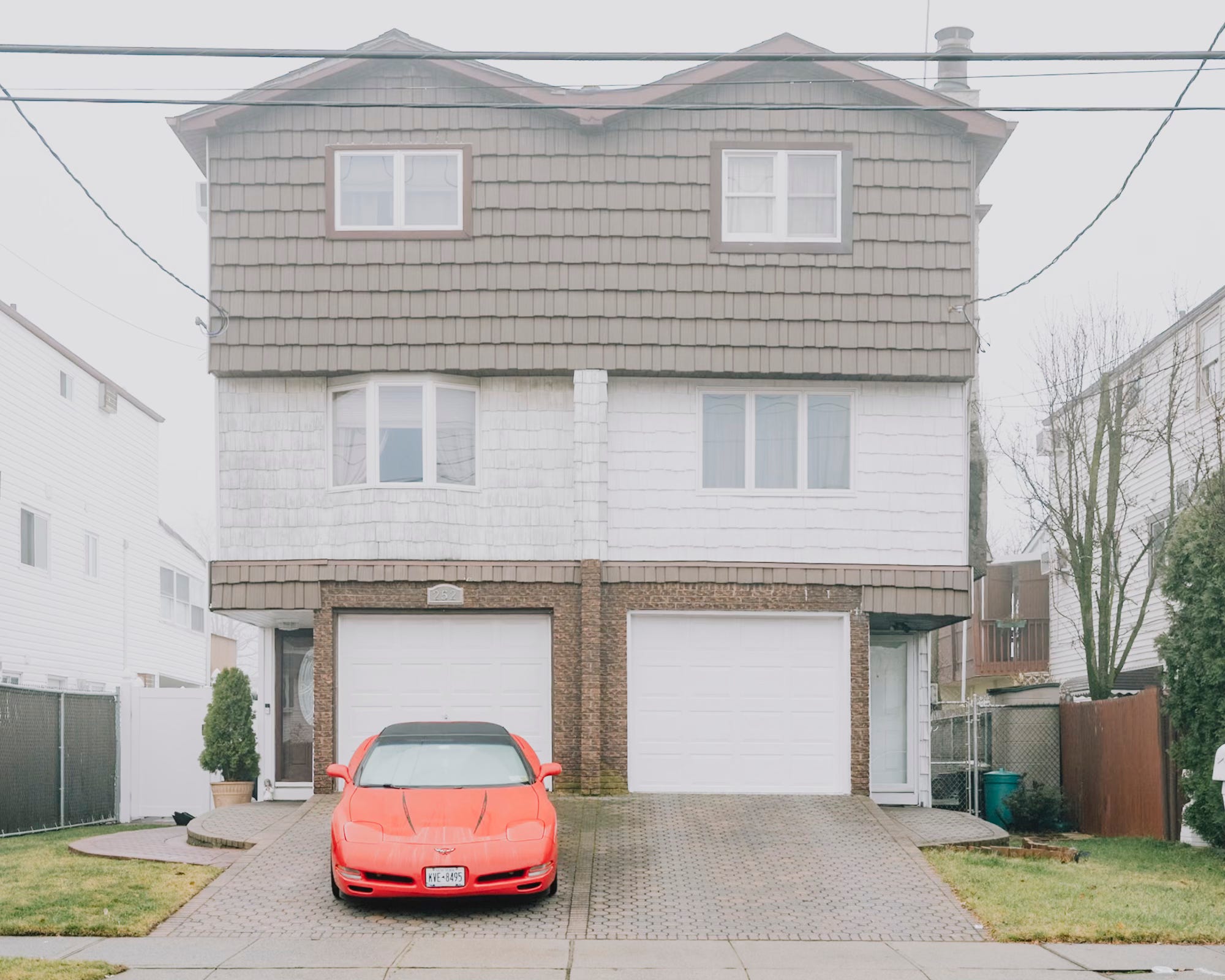
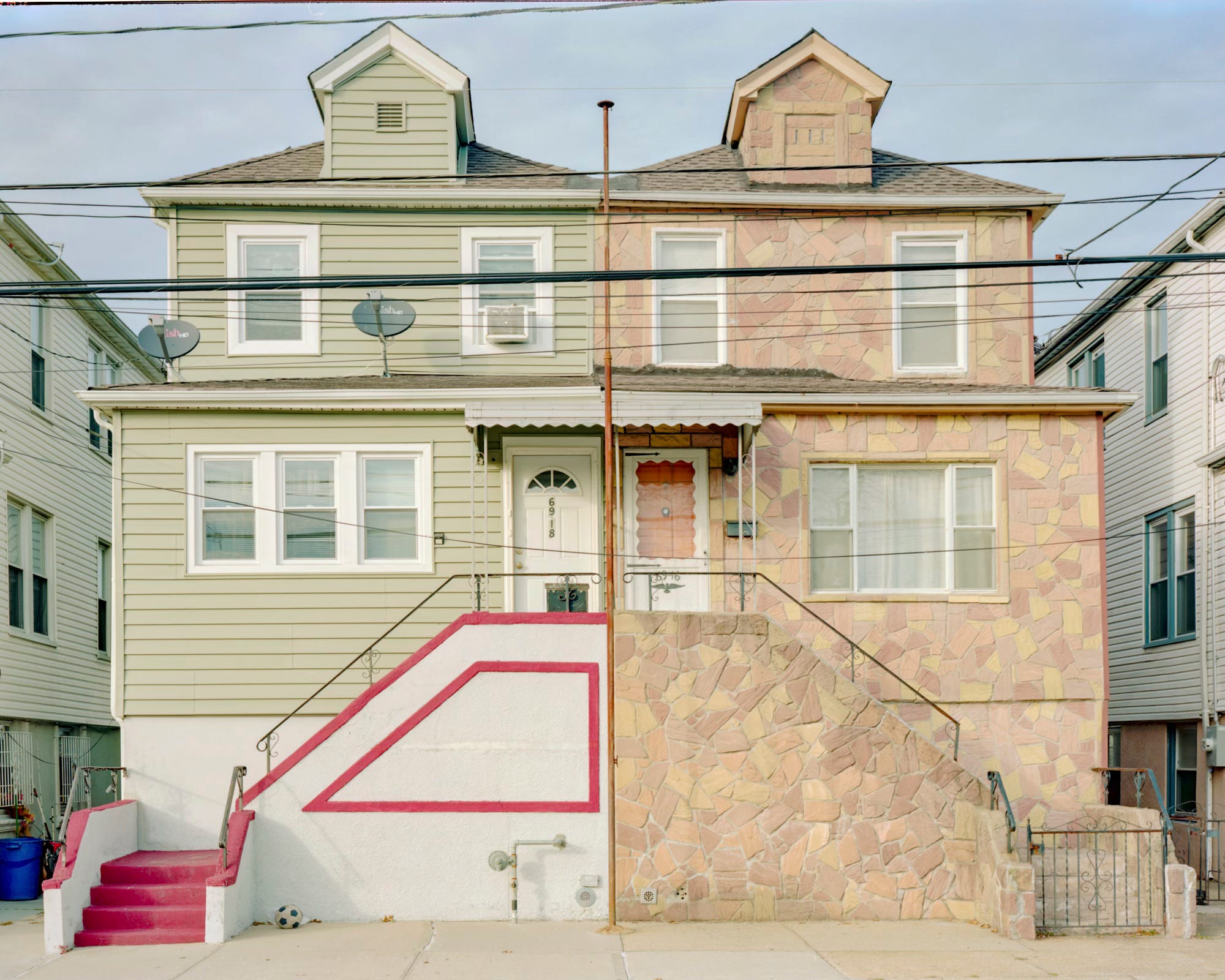
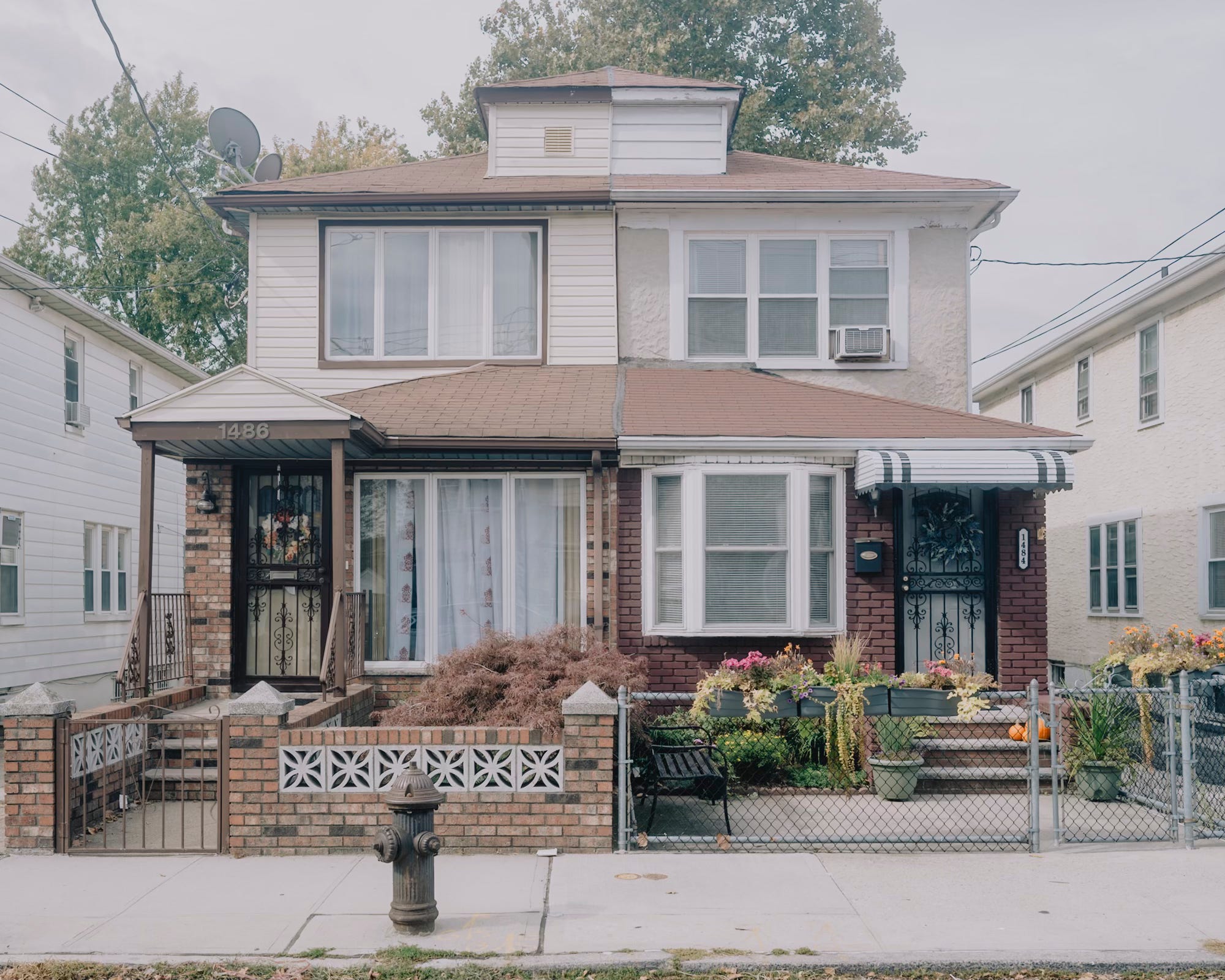
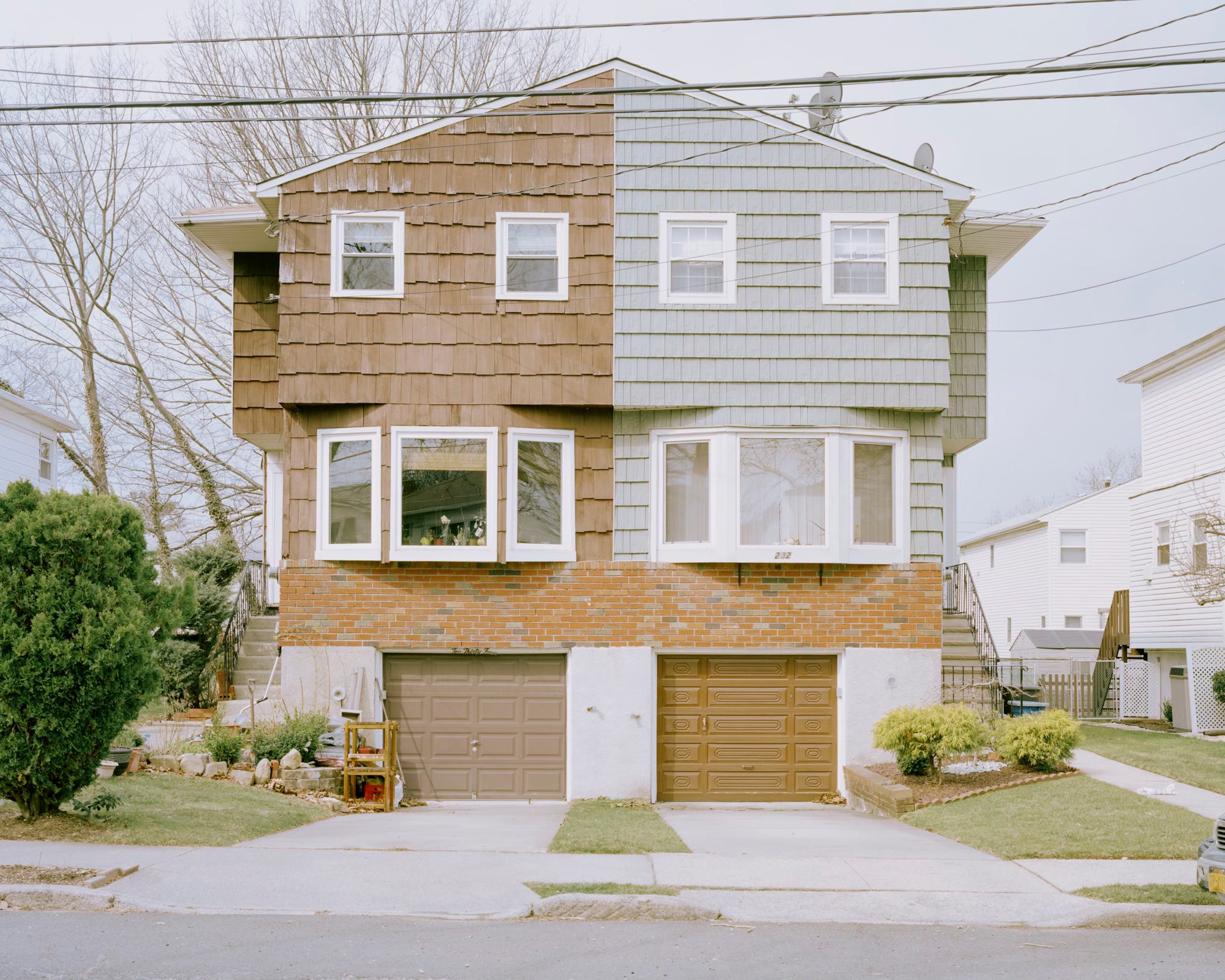
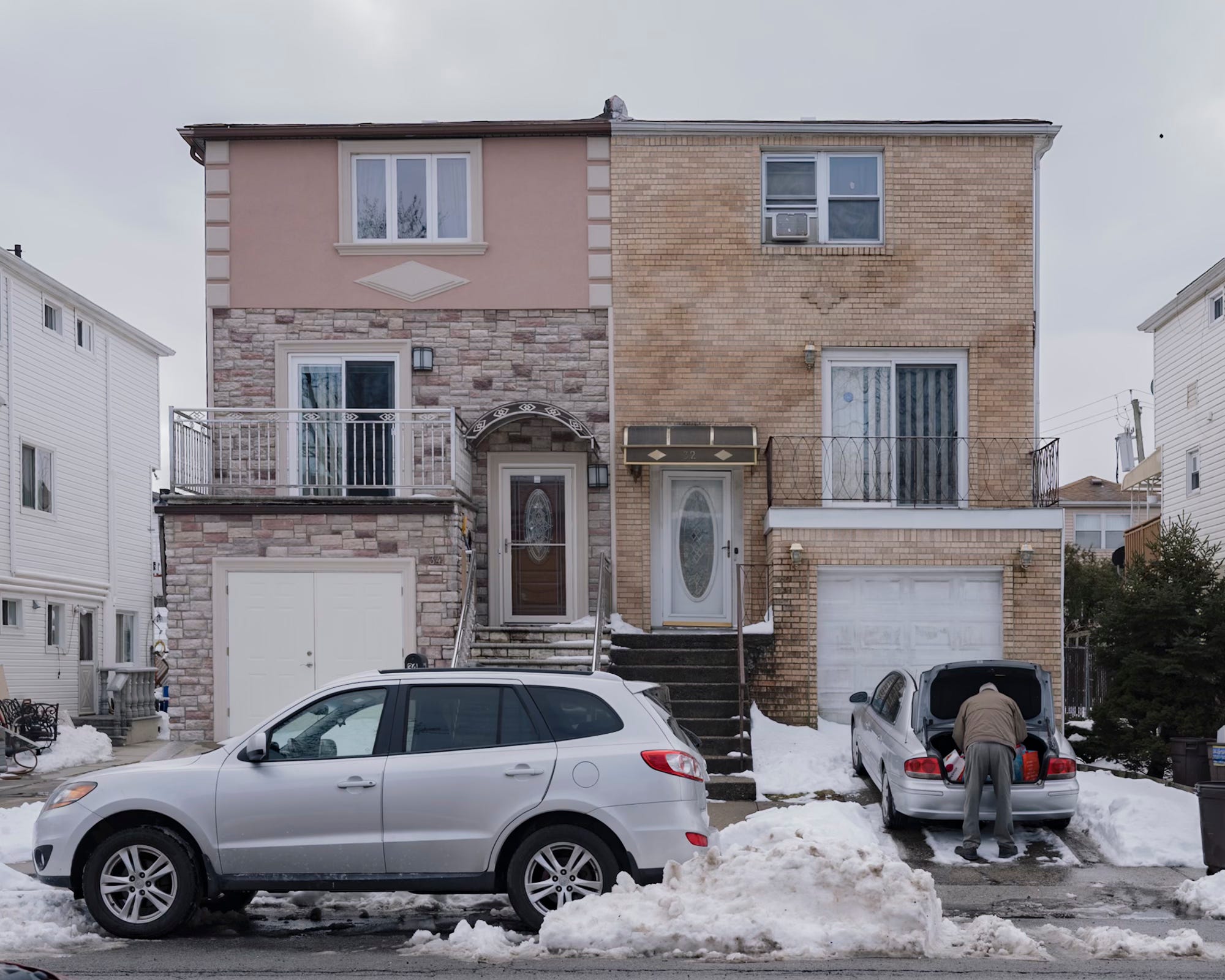
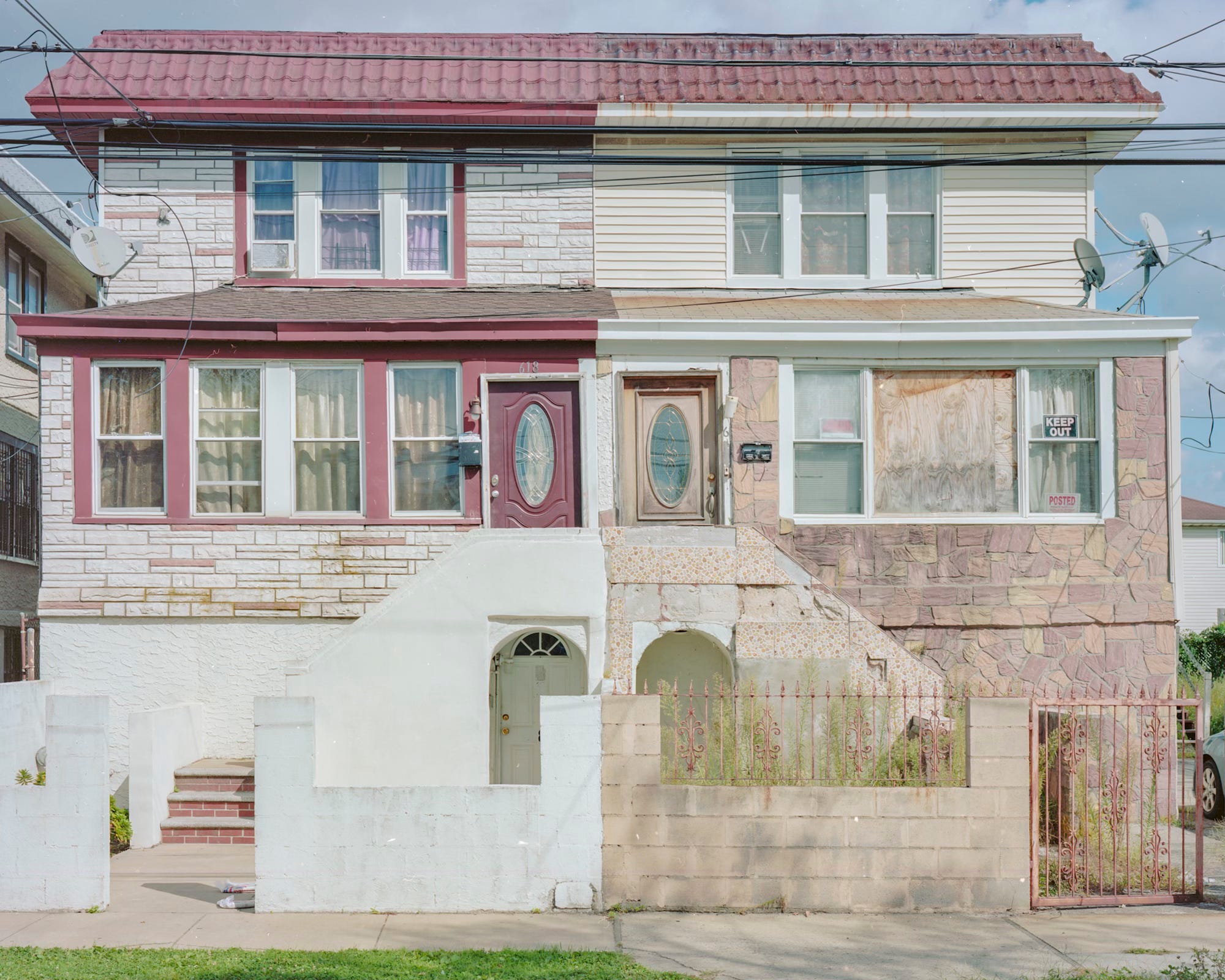
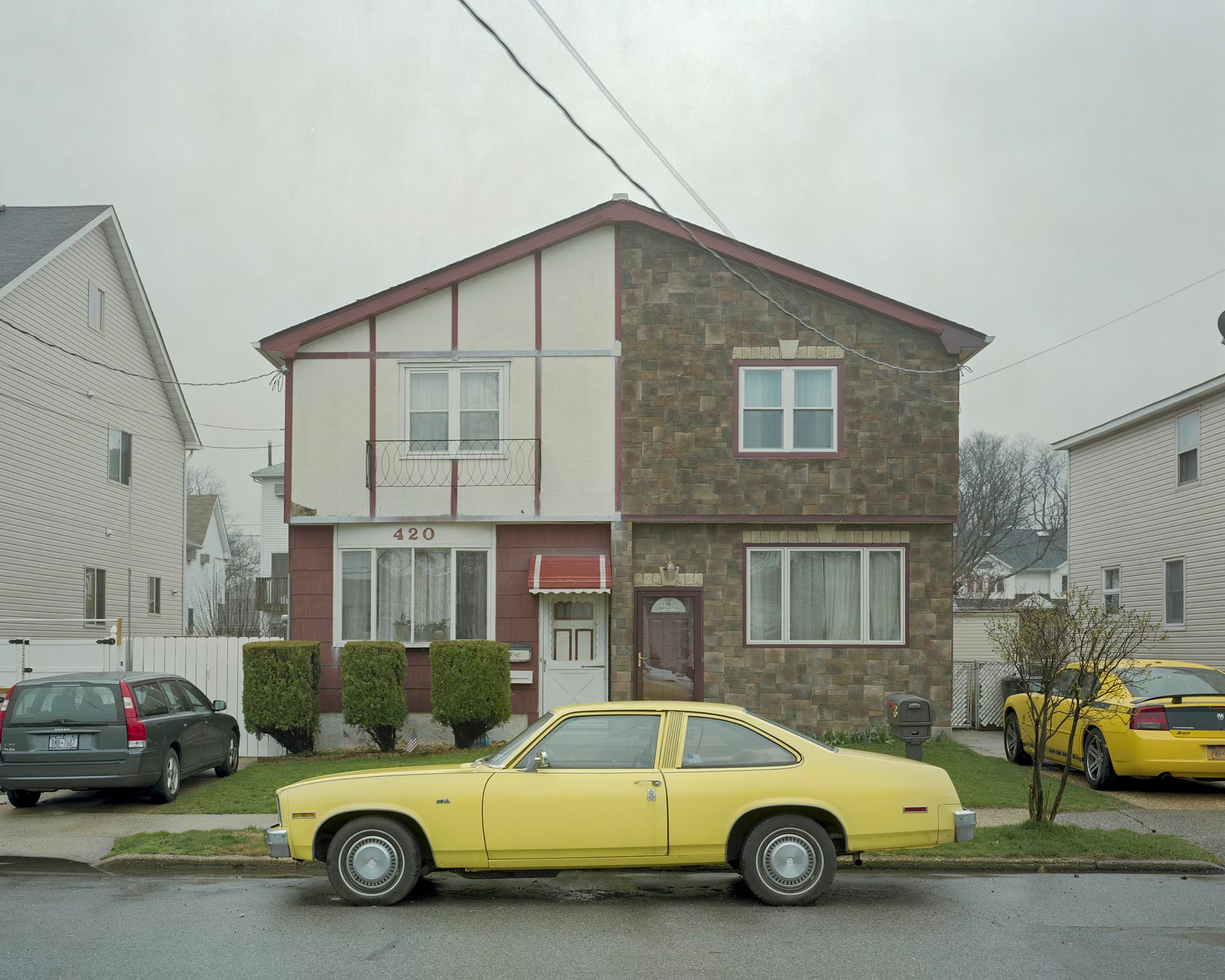
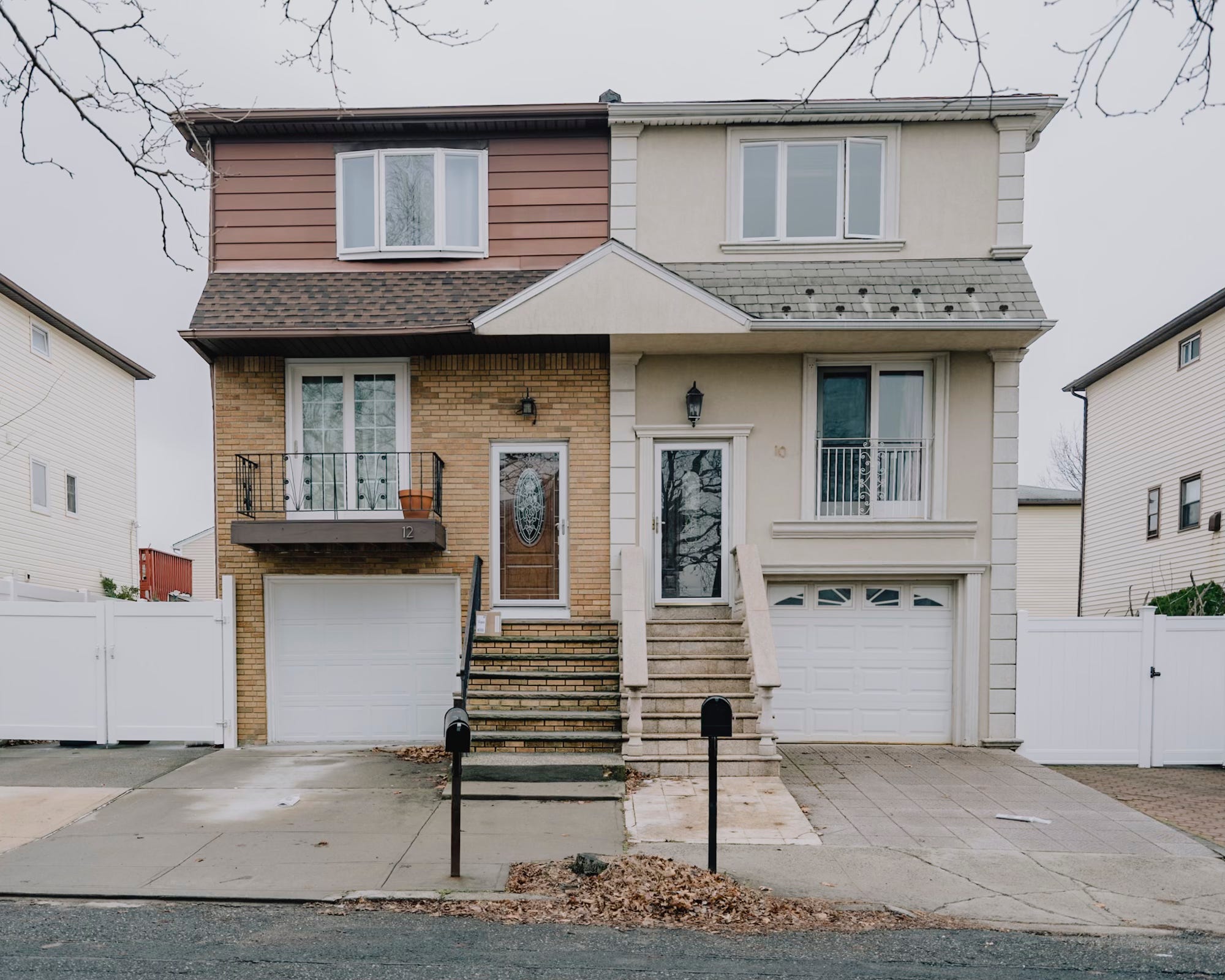
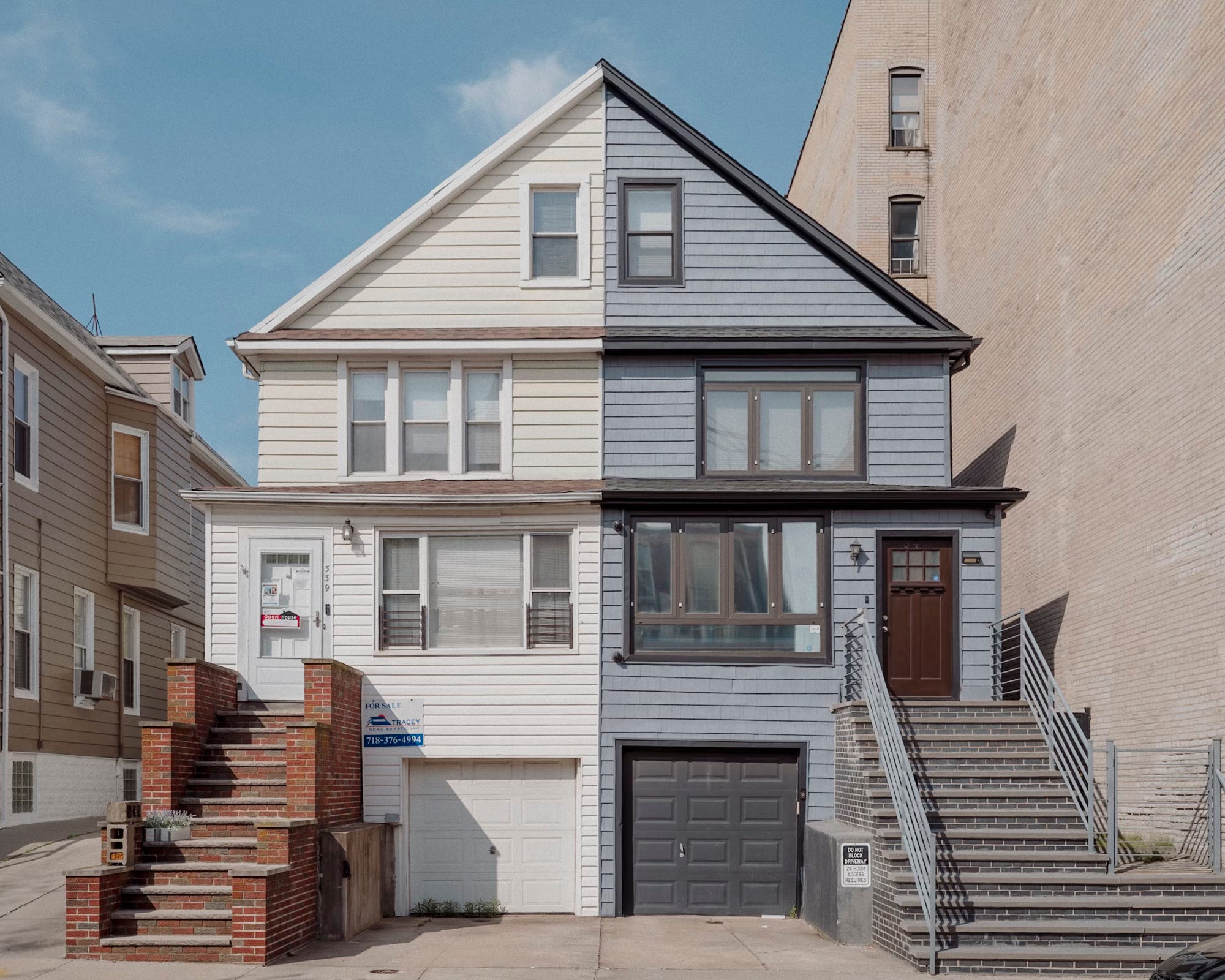
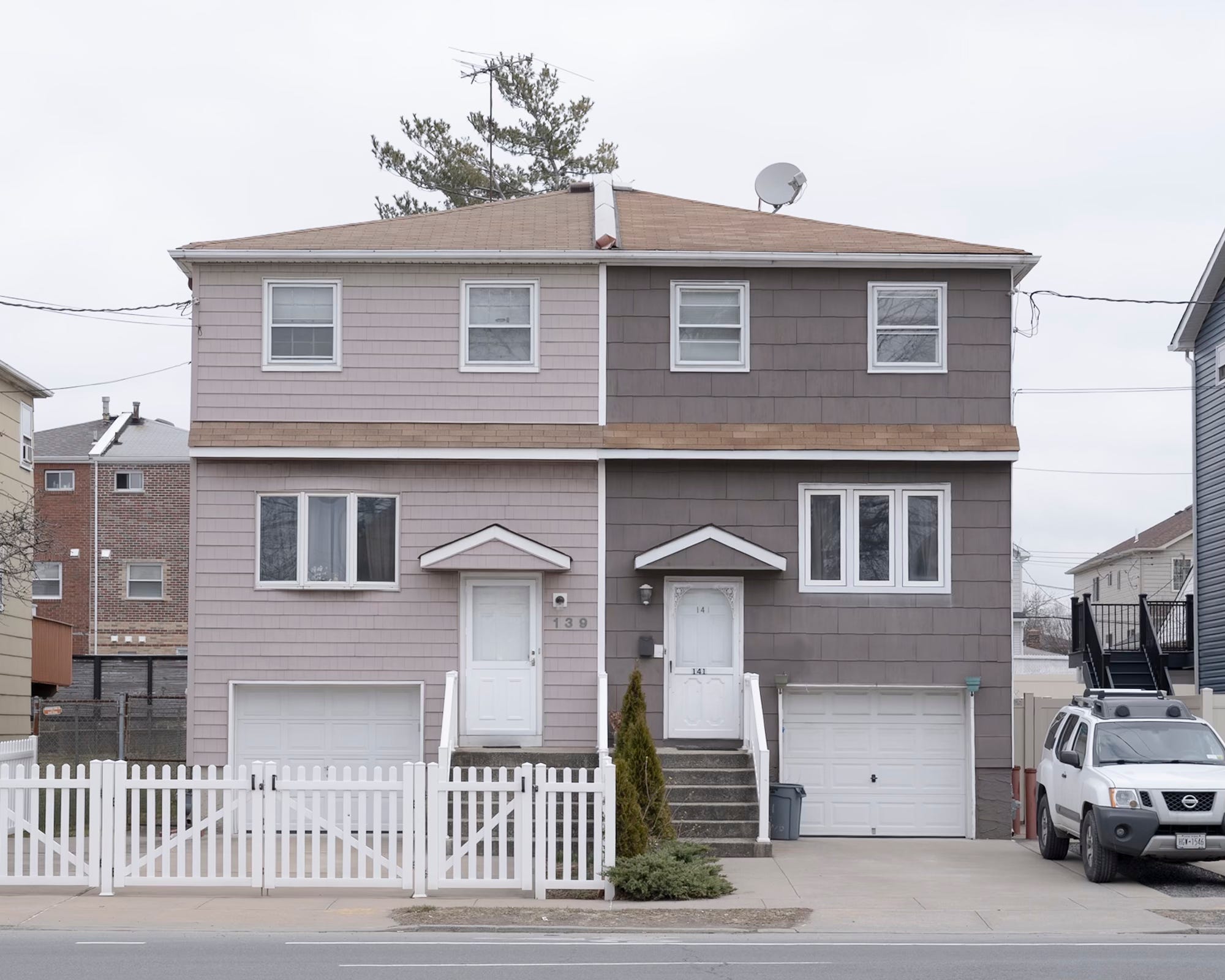
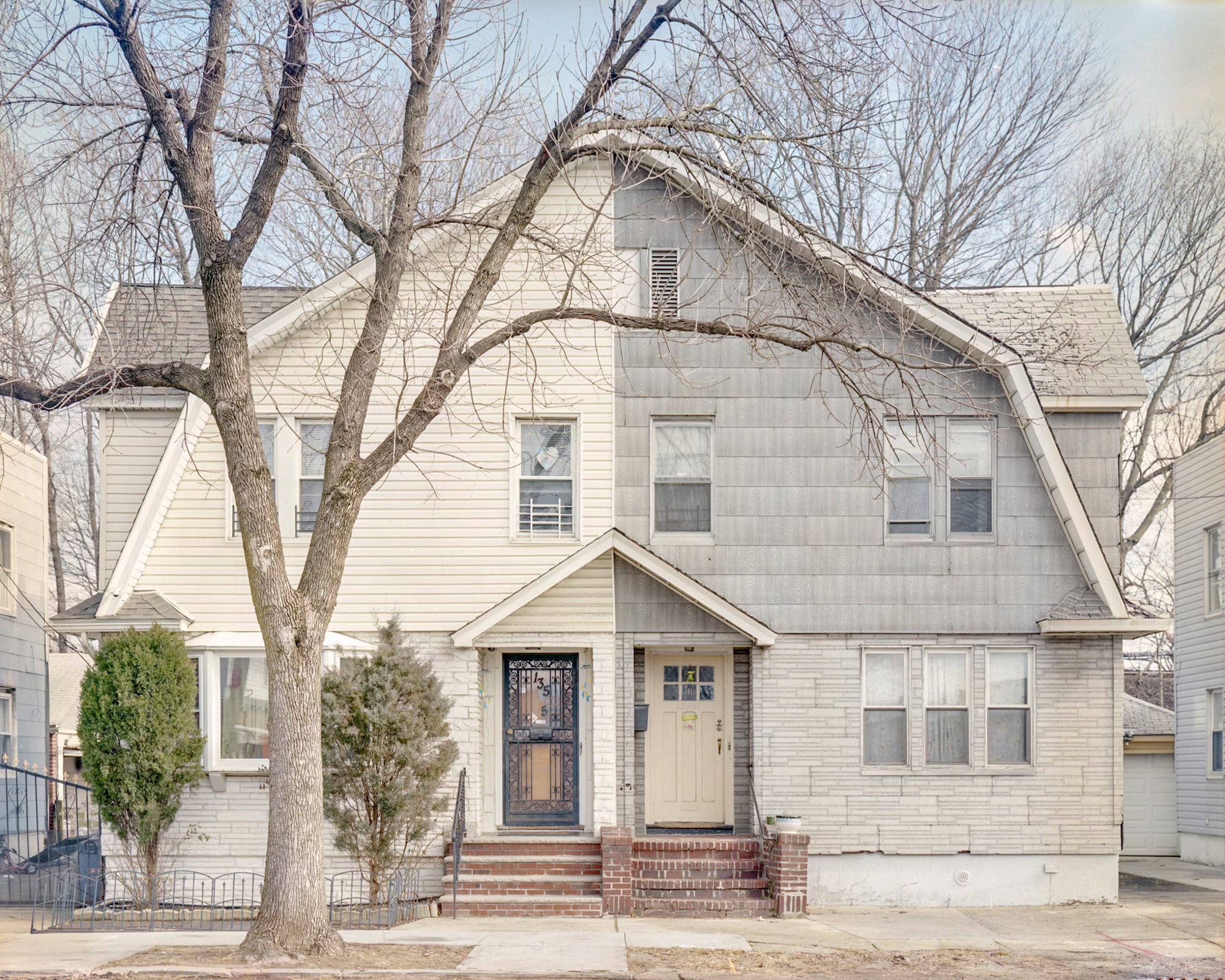
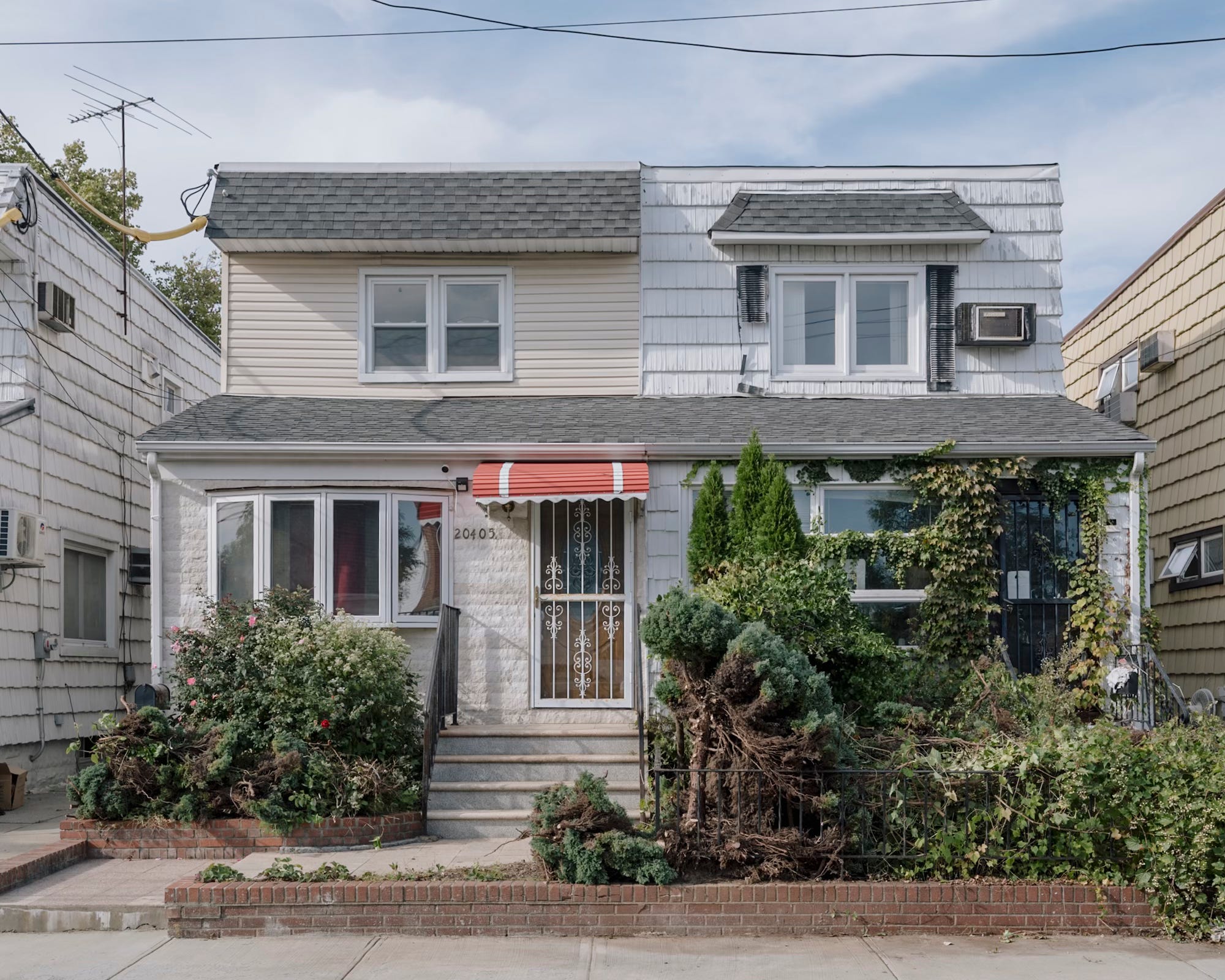
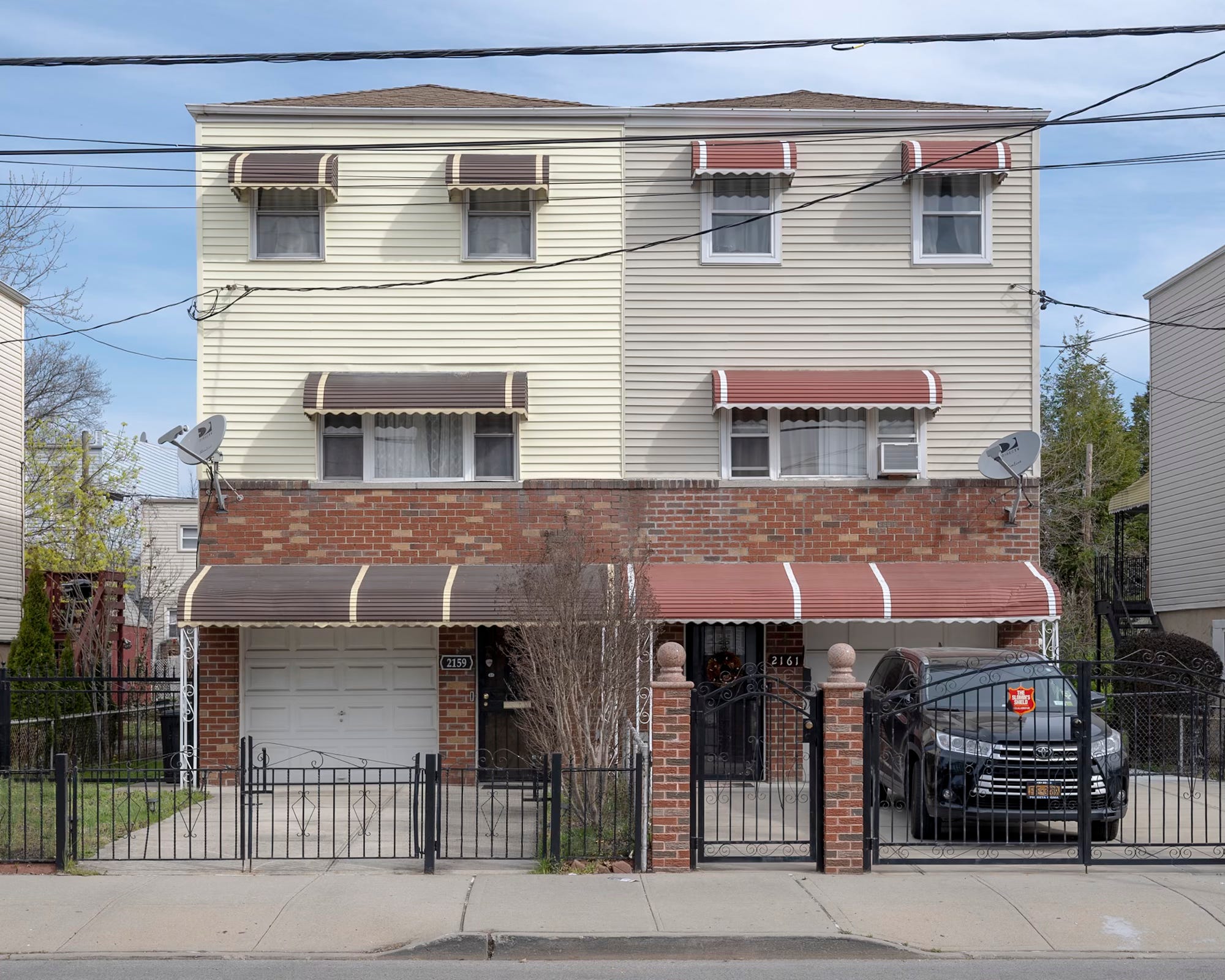
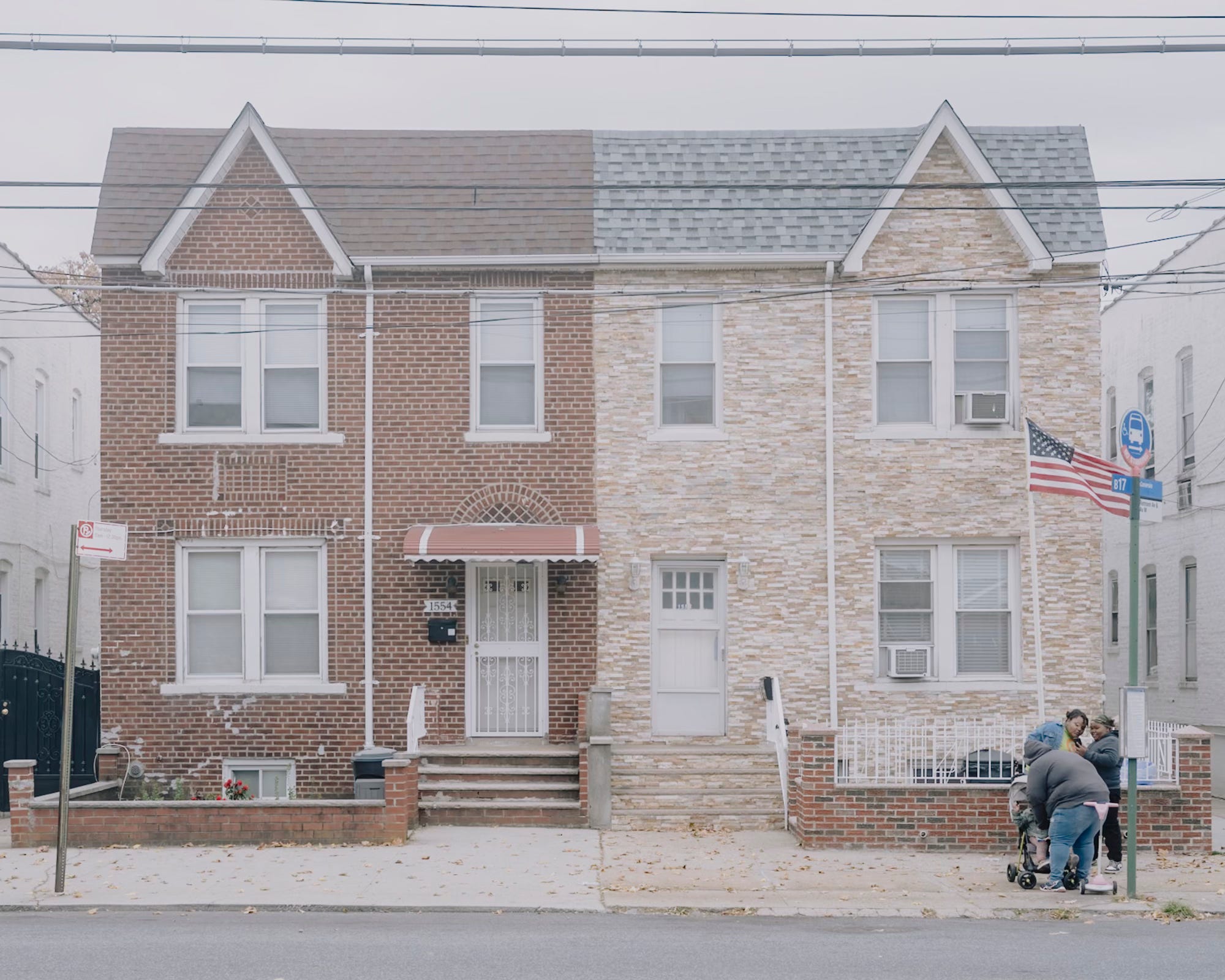
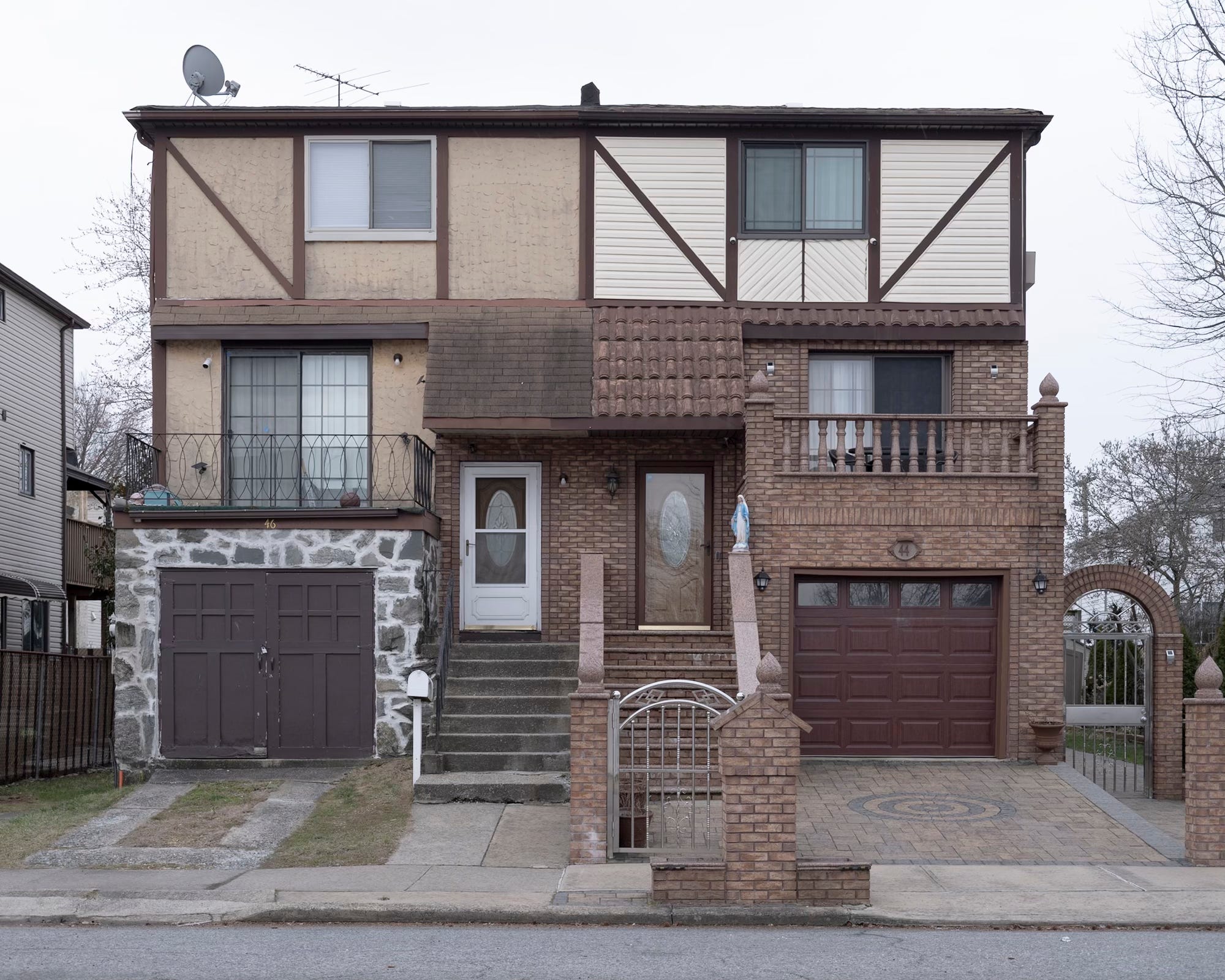
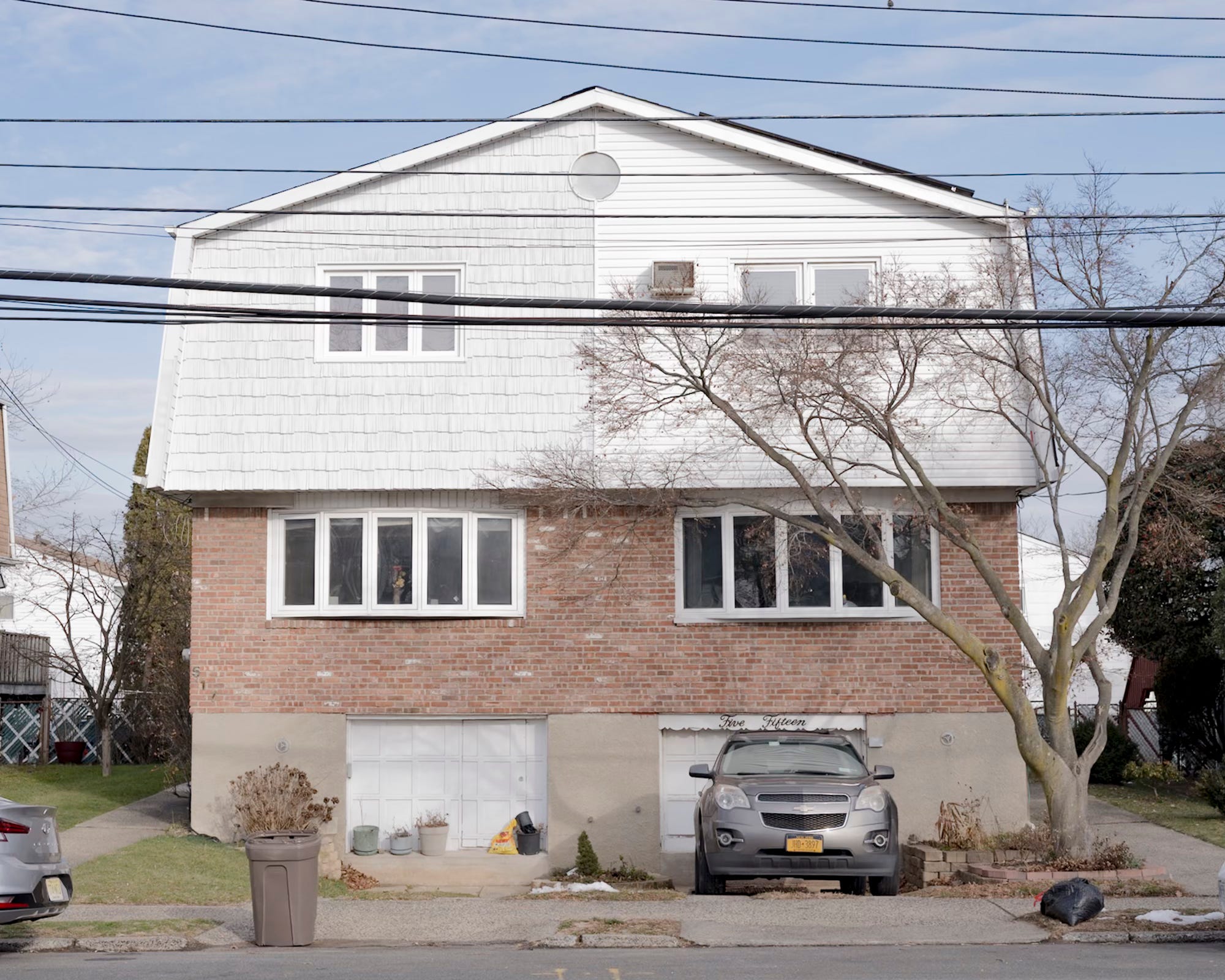
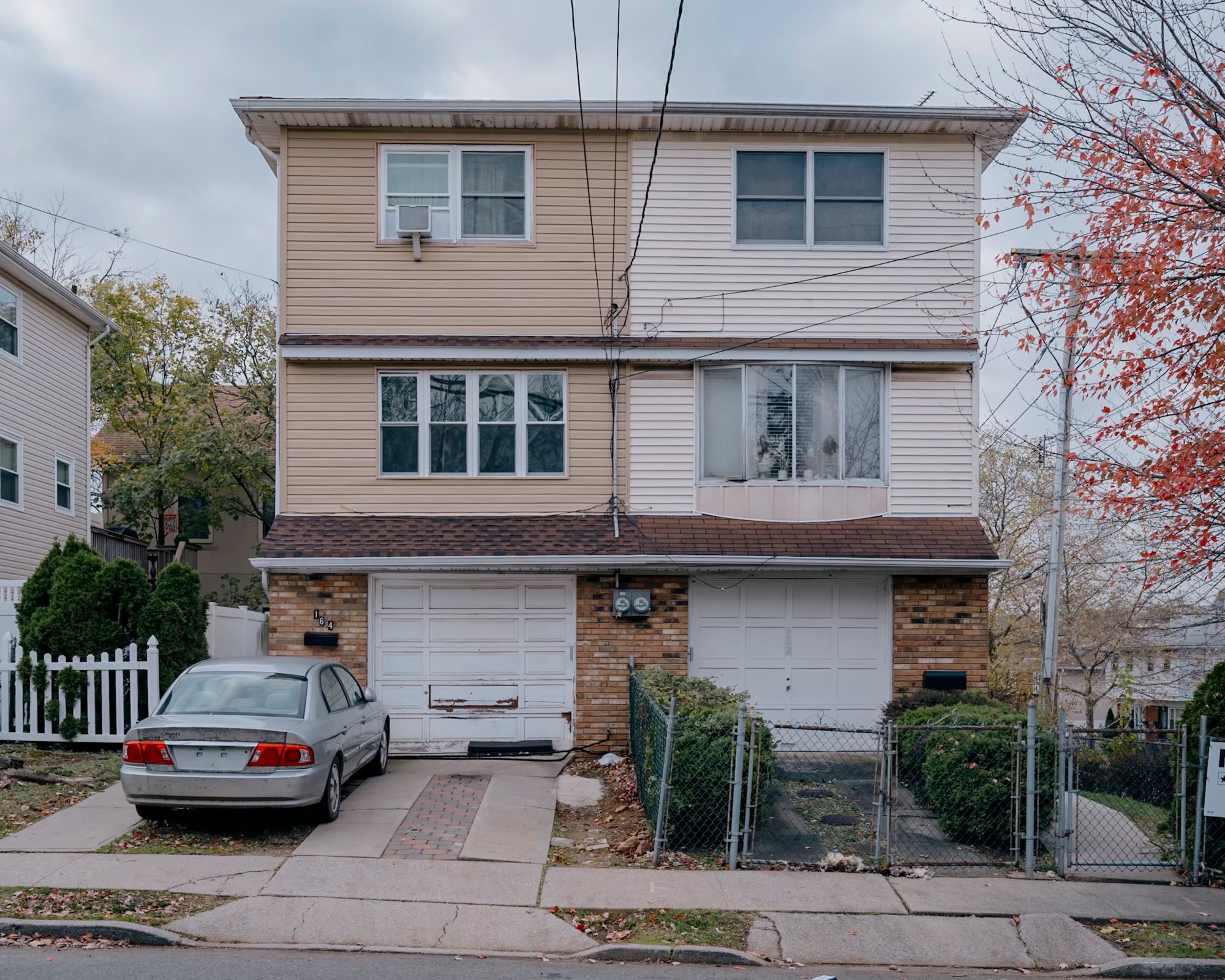
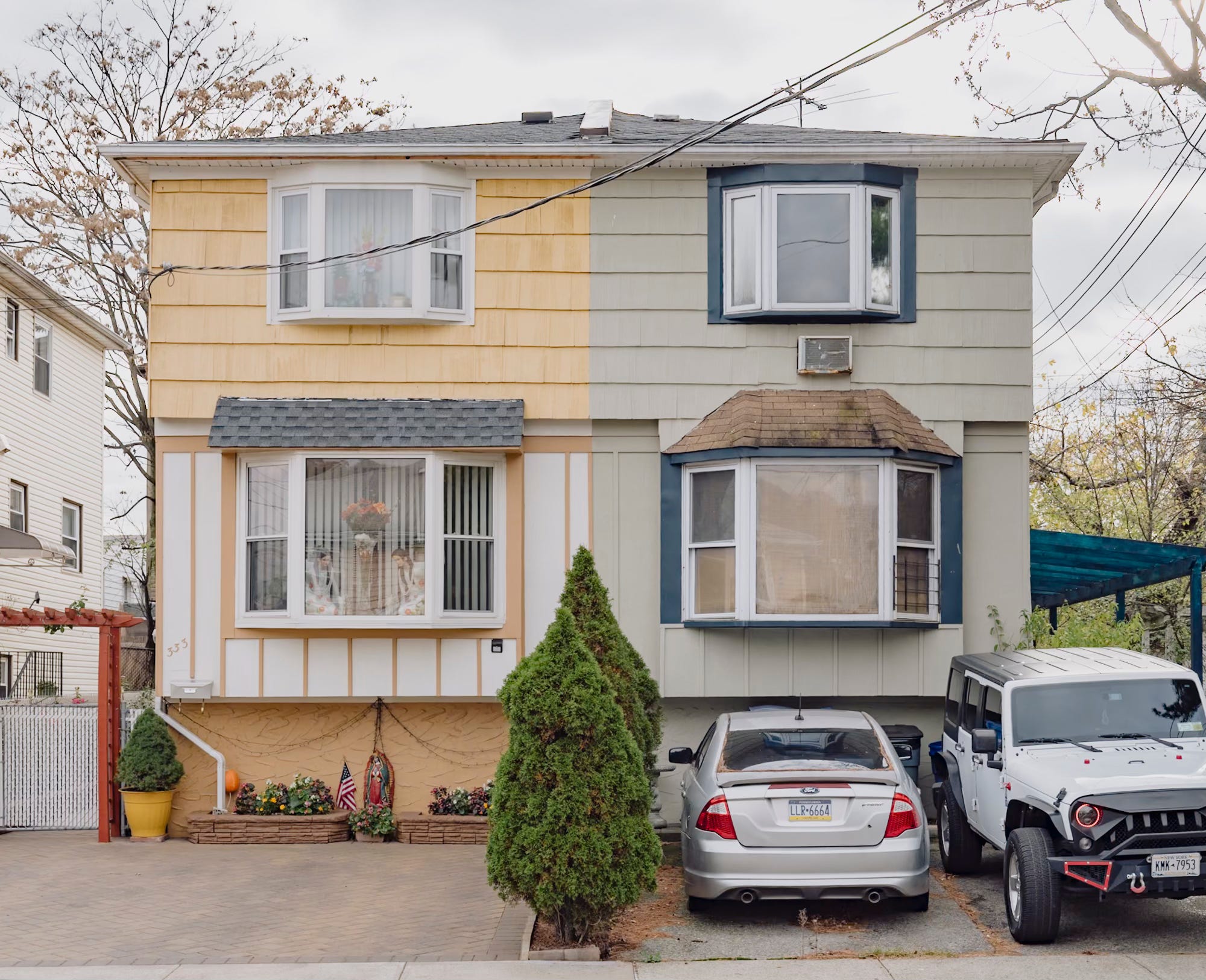
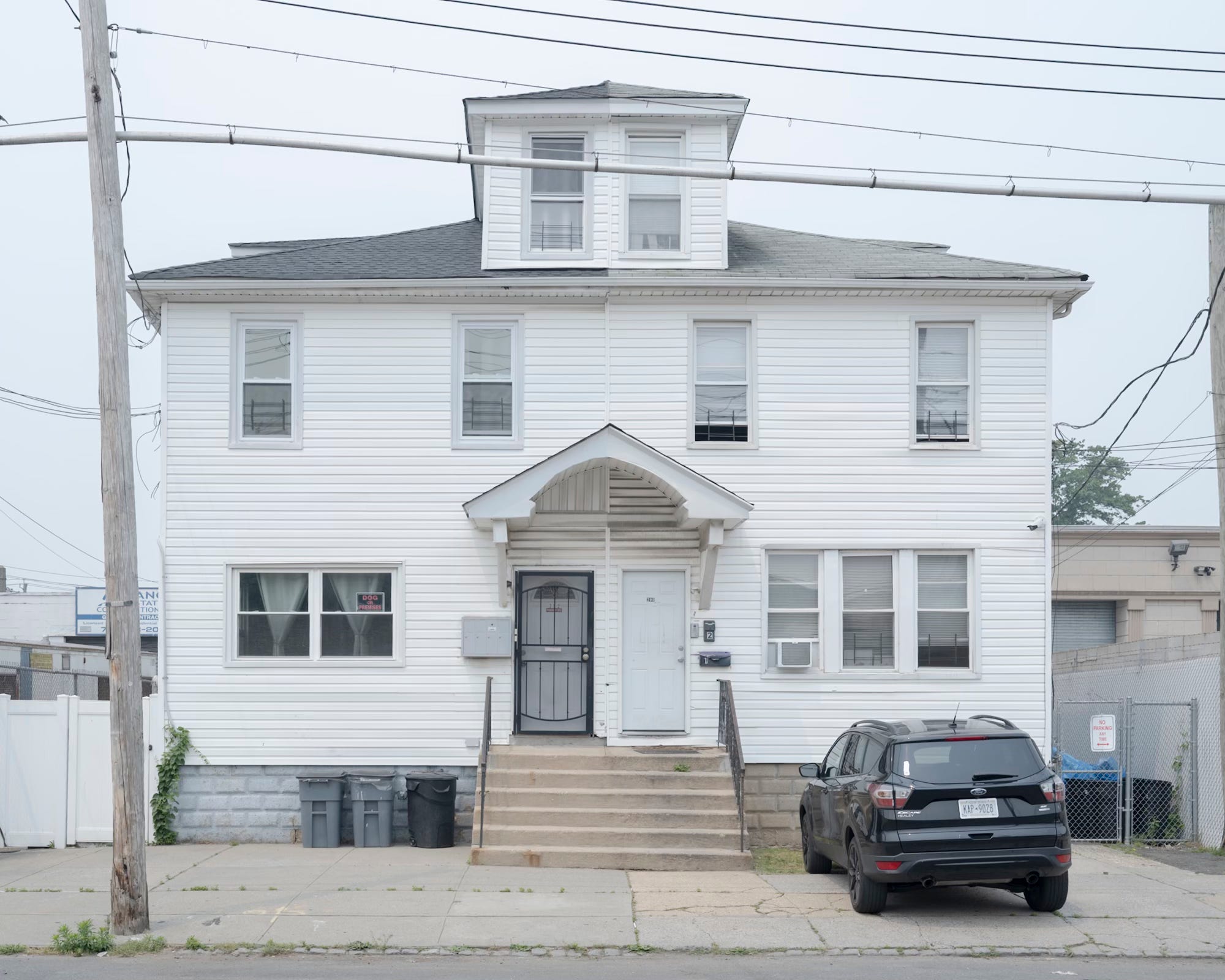
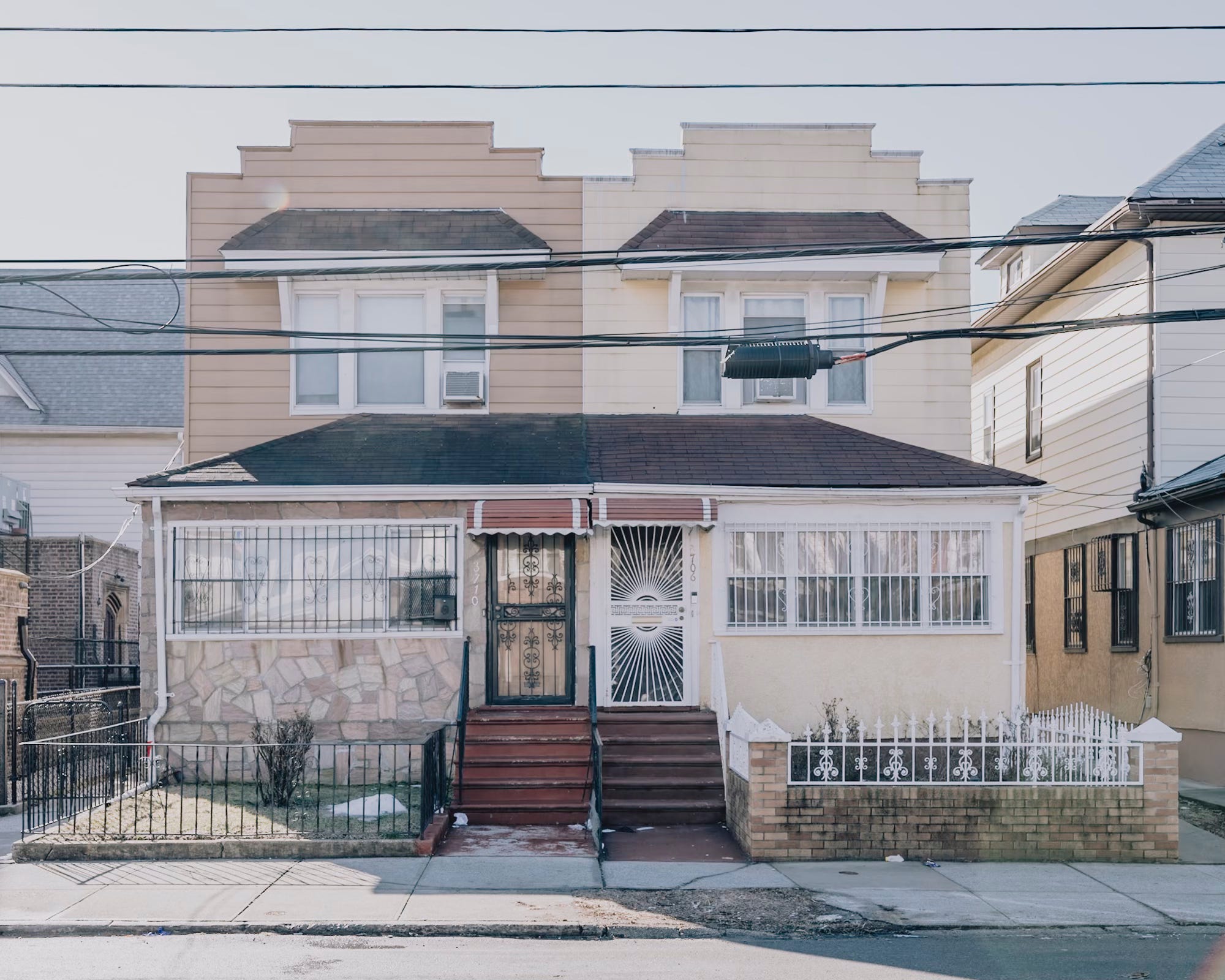
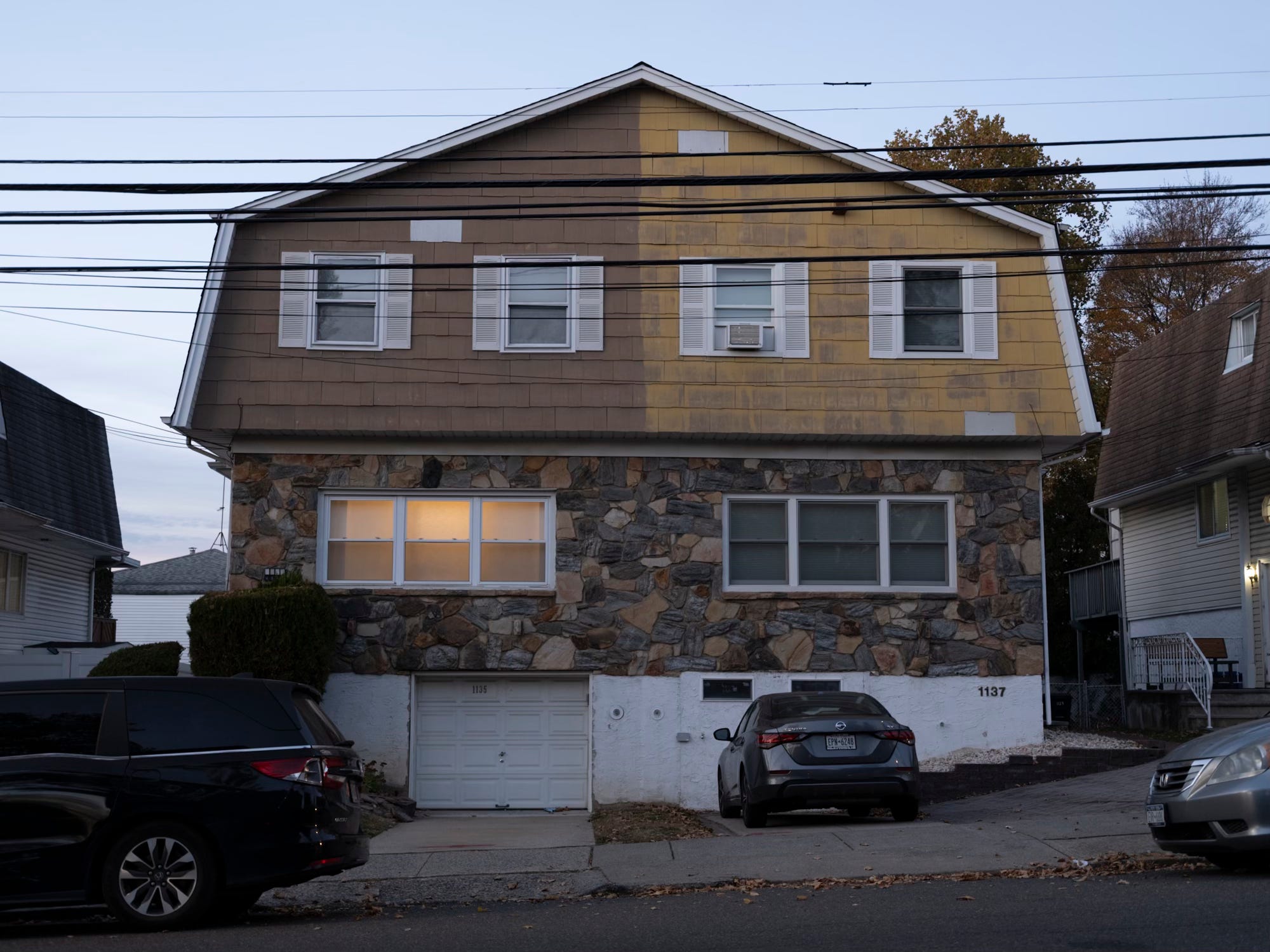
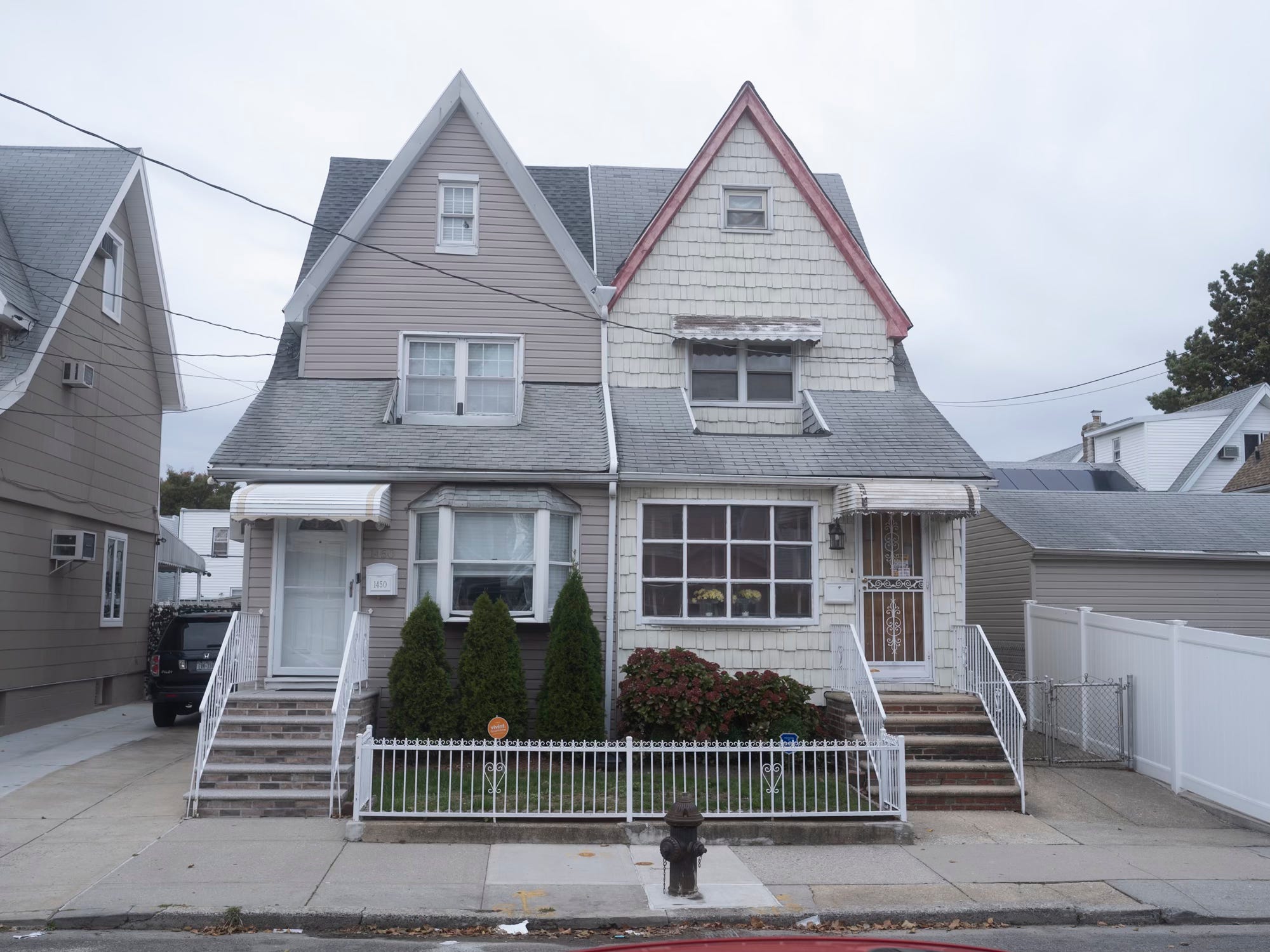
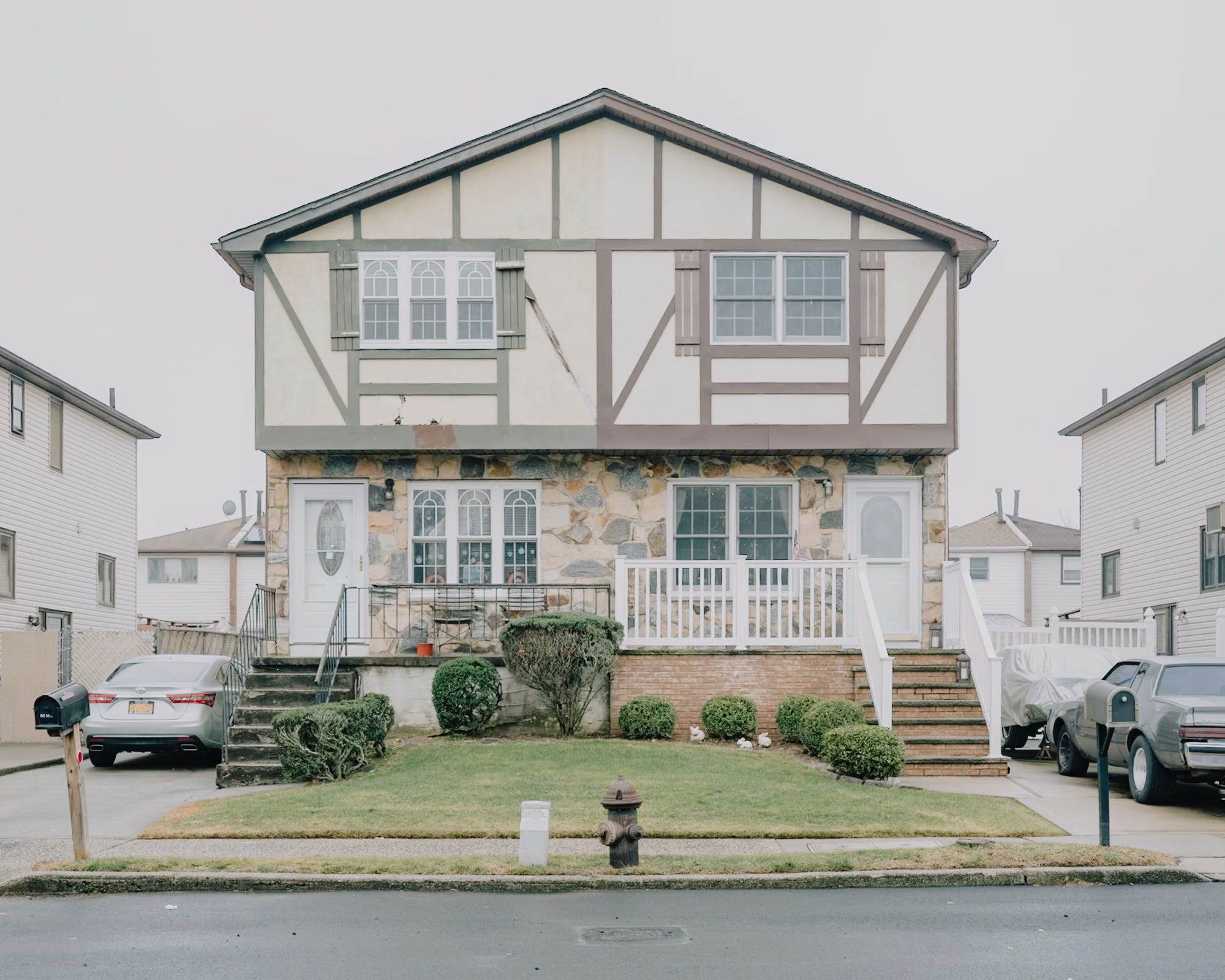
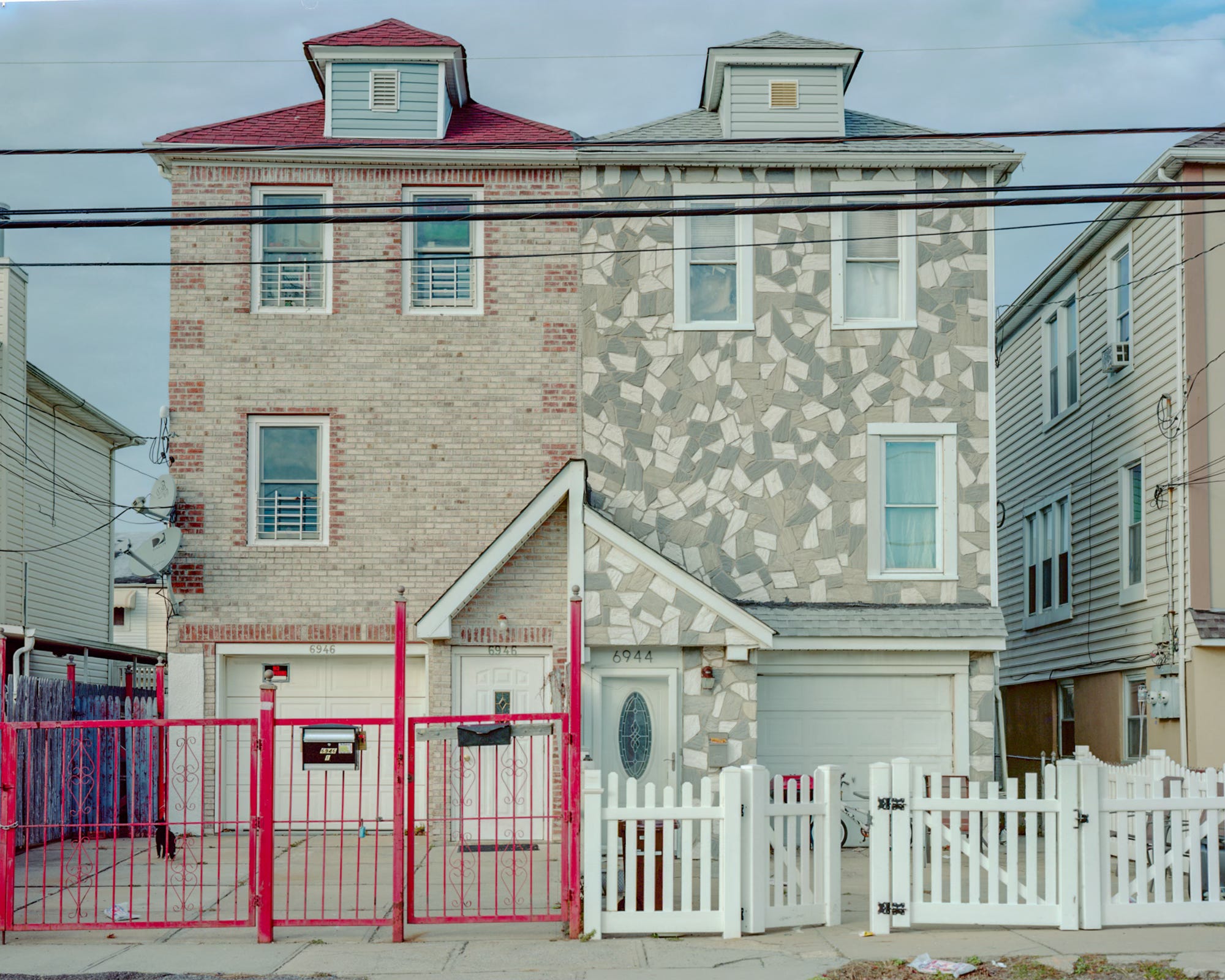
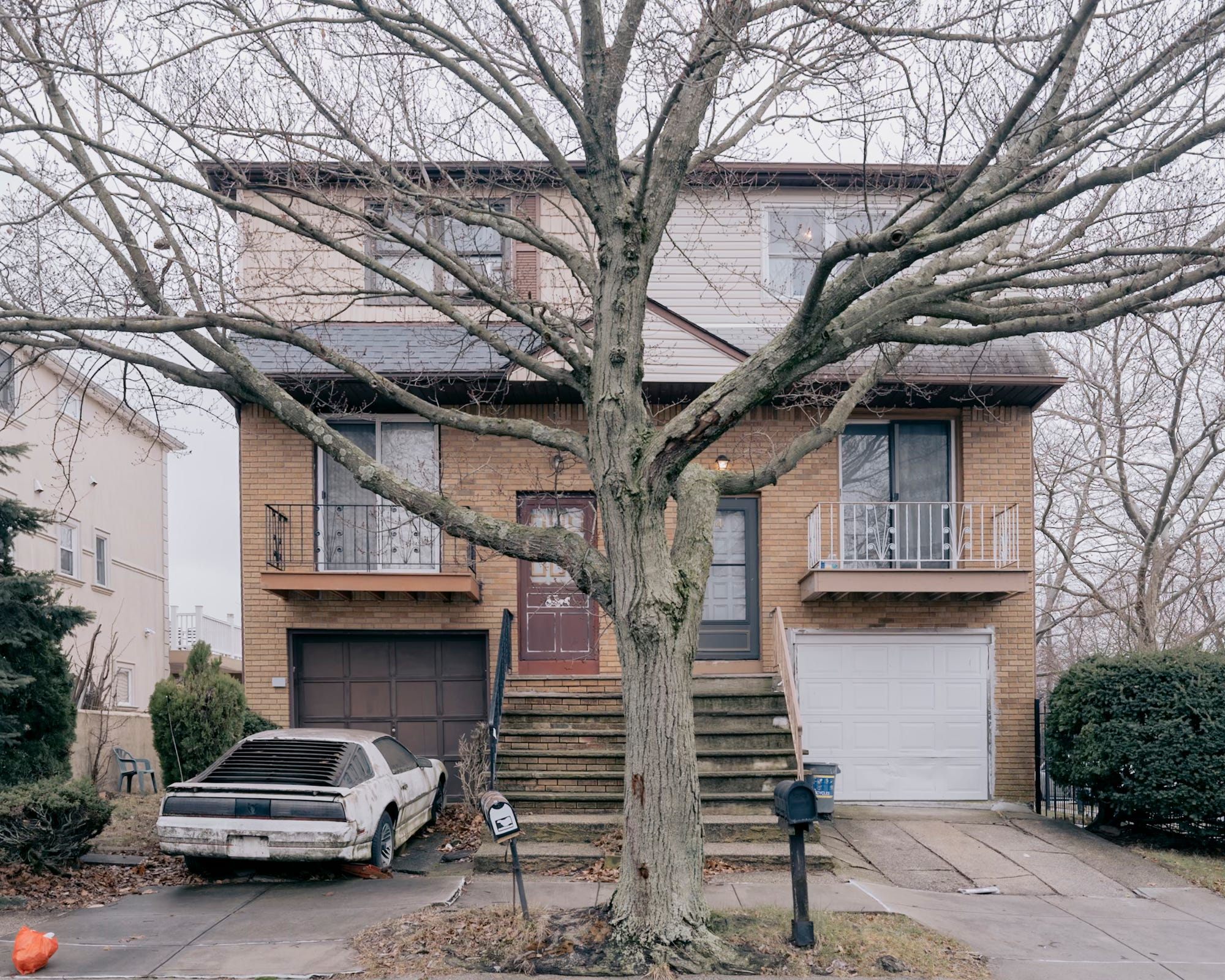
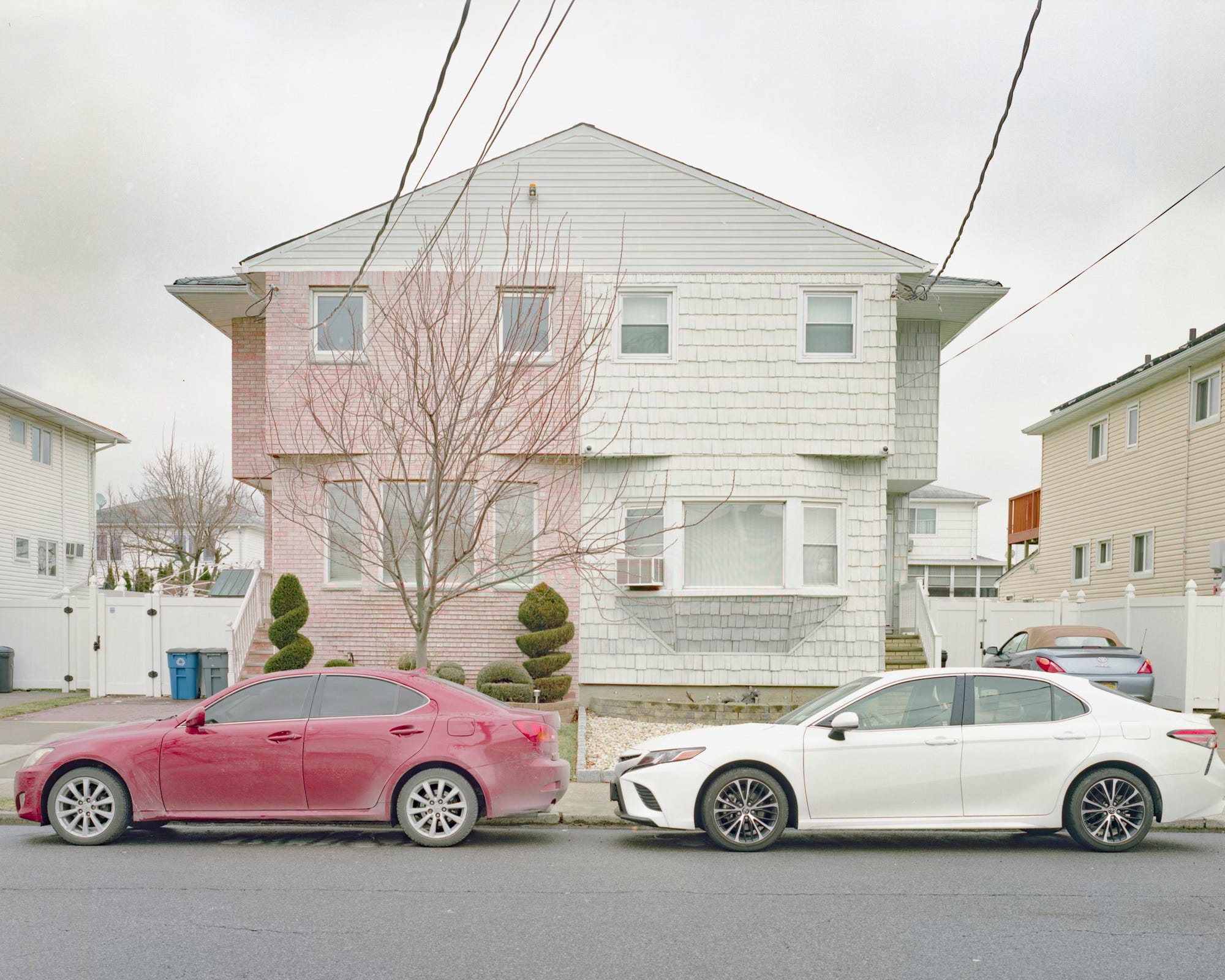
They are among the city’s most unique residential buildings, houses that resemble single-family homes until a closer look reveals that they have been divided into two independent residences sharing a single party wall, which is not nearly as fun as it sounds.
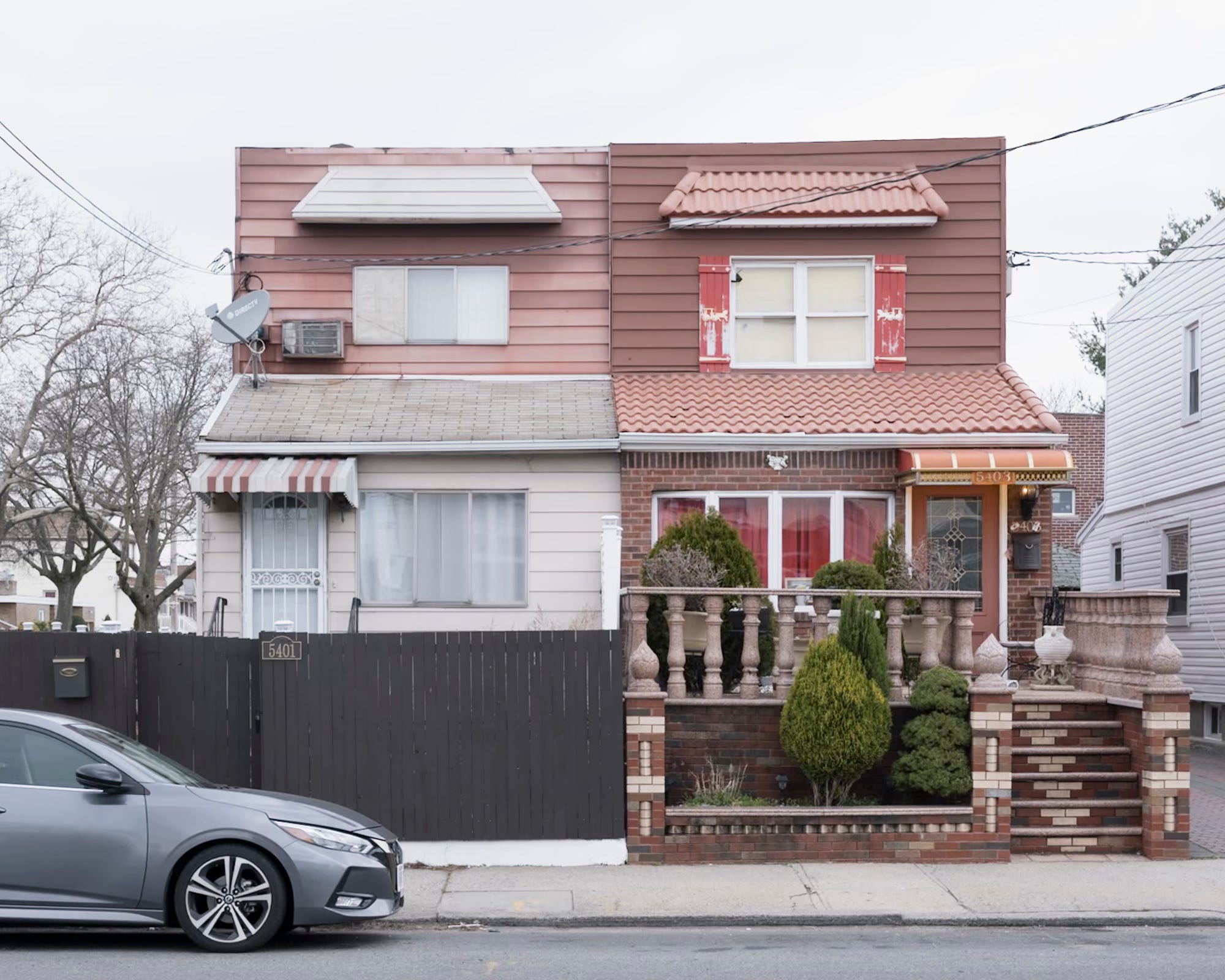
Over the past several years, I’ve photographed hundreds of them, particularly in the outer reaches of Queens, Staten Island, and Brooklyn, where they are most abundant. Many of these houses owe their existence, at least indirectly, to New York City’s 1961 zoning resolution, which encouraged the construction of two-family homes in neighborhoods previously zoned for lower-density development.
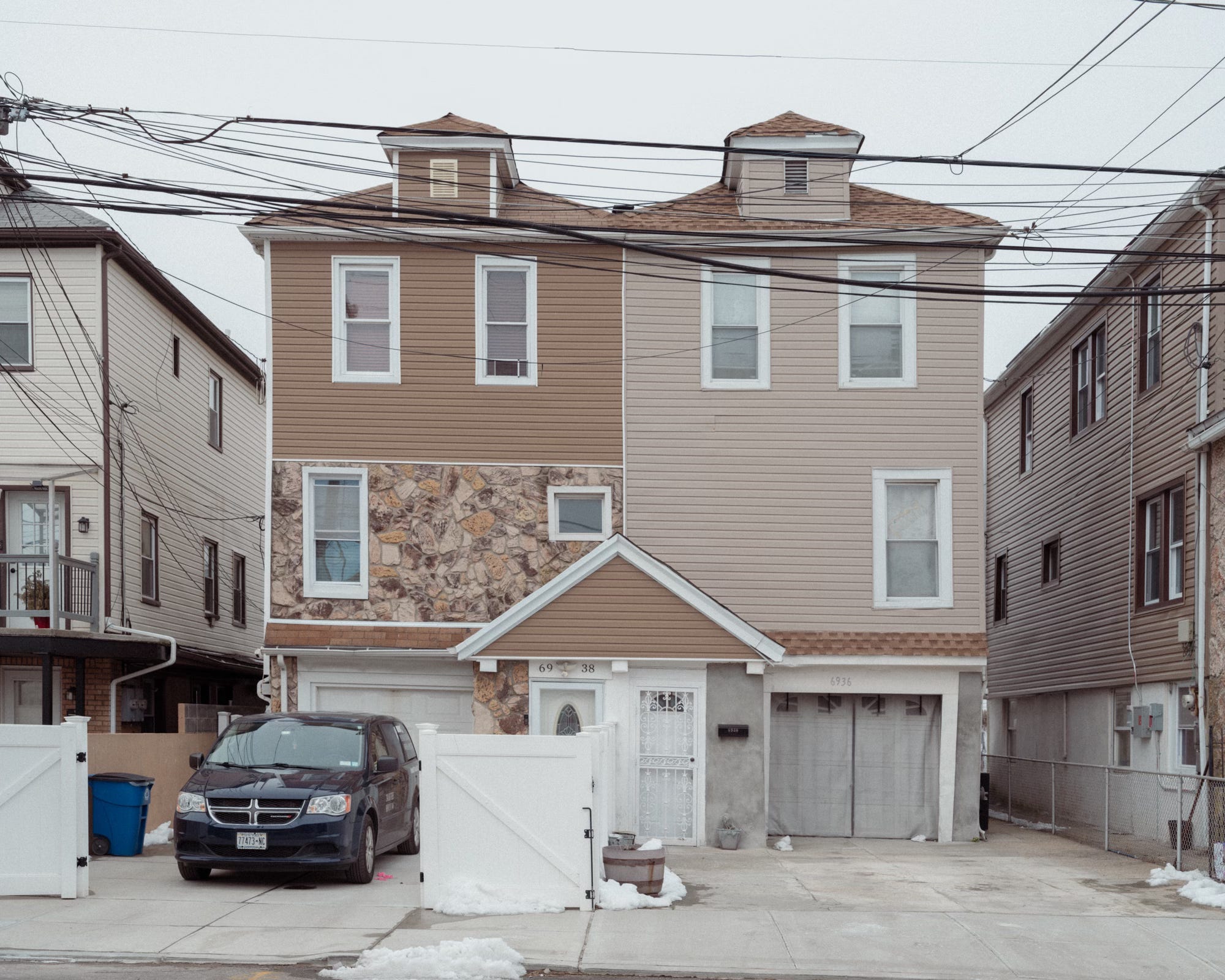
It was around 2013, a few months after Hurricane Sandy, that I really began paying attention to this peculiar architectural conjoinment, when a modest three-story building in Arverne, Rockaway, caught my eye.
The first two stories of the left side were clad in a faux rusticated stone, giving way to cream-colored vinyl siding manufactured to imitate the rough-edged shakes of cedar shingles. The facade of the right side was covered almost entirely in a lighter shade of the same shingle siding, except where sections of it had been peeled away by Sandy's winds, exposing an earlier layer in the architectural strata, this one printed with a tan brick pattern. Other differences included an extra second-floor window and a garage that had been converted into living space.
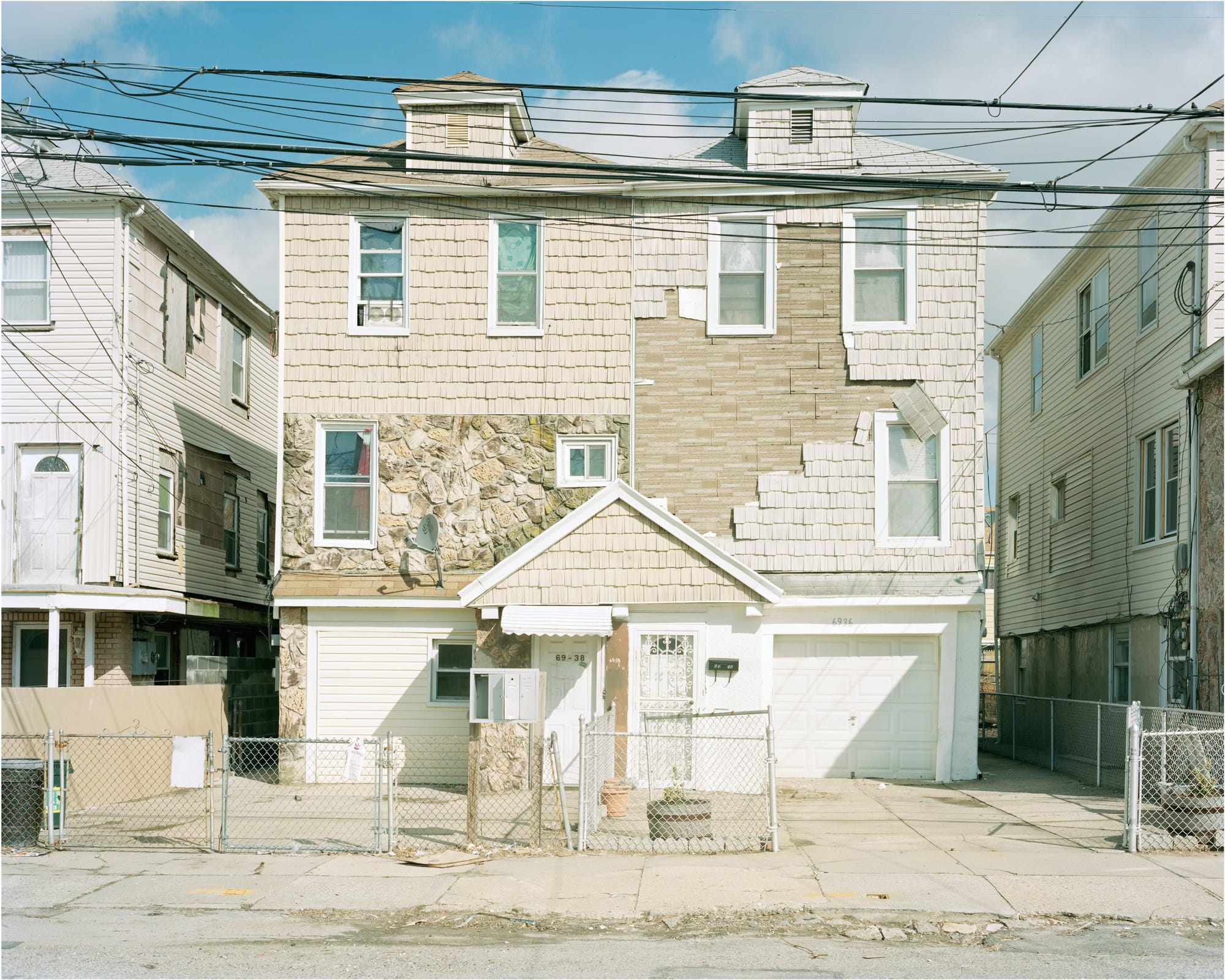
In this particular case, the patch of missing siding revealed not just the differing preferences of the building's current owners, but the choices of its previous occupants as well. This visible collision of decisions, an accumulation of small interventions over time, is what makes these buildings more than mere shelters. Architecture functions as a legible record of civilization, what Daniel Libeskind once described as “the biggest unwritten document of history.”
Here is the house again, twelve years later. The fake stone survived, the fake shingles did not. Probably as a reaction to Sandy’s storm surge, the bottom level has been converted back into a garage.
One can say that the city itself is the collective memory of its people
-Aldo Rossi
Though I’ve always referred to these buildings as “split houses,” it’s not exactly a satisfying classification. The title I eventually settled on for the project was Syzygy, because impossible-to-pronounce words are clearly a genius marketing strategy, and vowels are for suckers.
I briefly considered the German term for these buildings, Doppelhaus, but that somehow sounded even more pretentious than Syzygy.
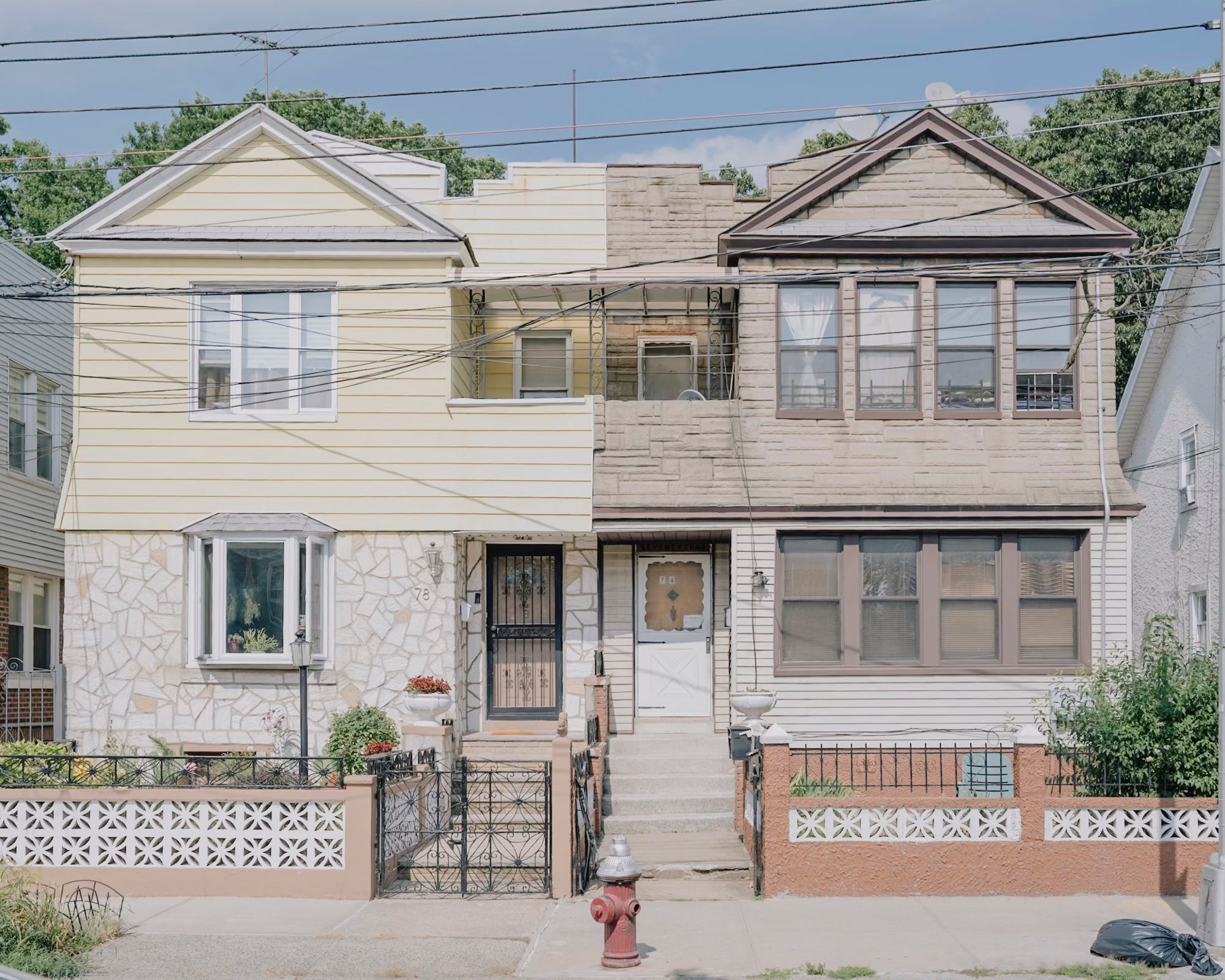
I actually do think the word, which comes from the Greek syzygos, meaning “yoked together,” works well. In astronomy, syzygy describes the alignment of three celestial bodies, such as the Sun, Moon, and Earth, in a straight line. But it was Carl Jung’s use of the word to describe a union of opposites, “the conjunction of two organisms without the loss of identity,” that feels especially fitting here.
There buildings are the architectural equivalent of Jung’s “divine couple,” two independent households, two distinct personalities, two separate histories, permanently fused into a single structure.
BOOK
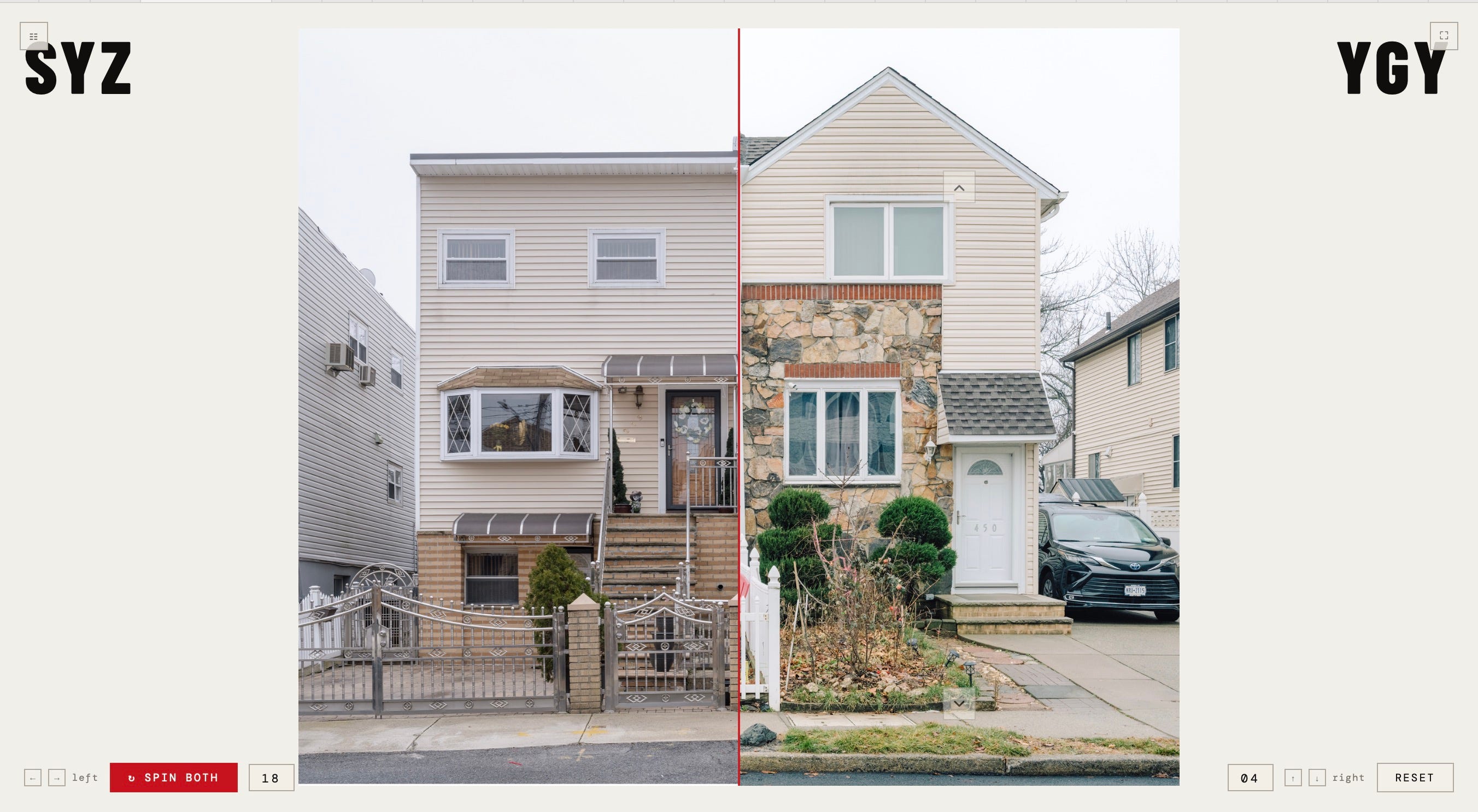
I’m currently working on a book devoted to the Syzygy series which I envision as a sort of exquisite-corpse-style flip book, allowing readers to create their own improbable and wacky syzygies by recombining the left and right halves into entirely new pairings. In the meantime, I built a website based on the same idea. If you’d like to play around with it, you can find it here:
http://syzygy.theneighborhoods.nyc
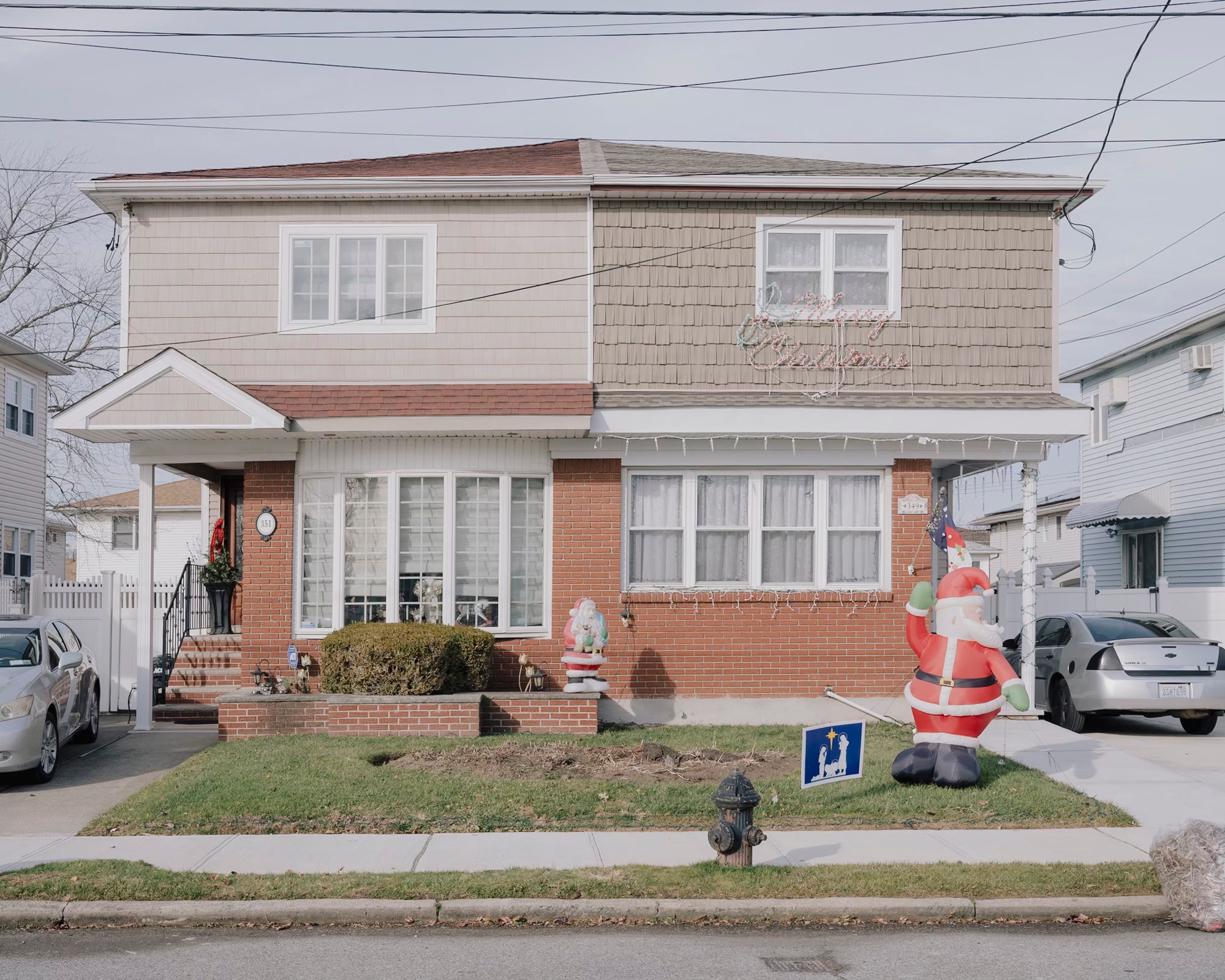
Here is a small sampling from the project. Some pairs differ only in the color of their siding or the design of an entryway suggesting, perhaps a harmonious neighbor relationship or a least a collective approach to home ownership. Other differences are more extreme.
NOTES
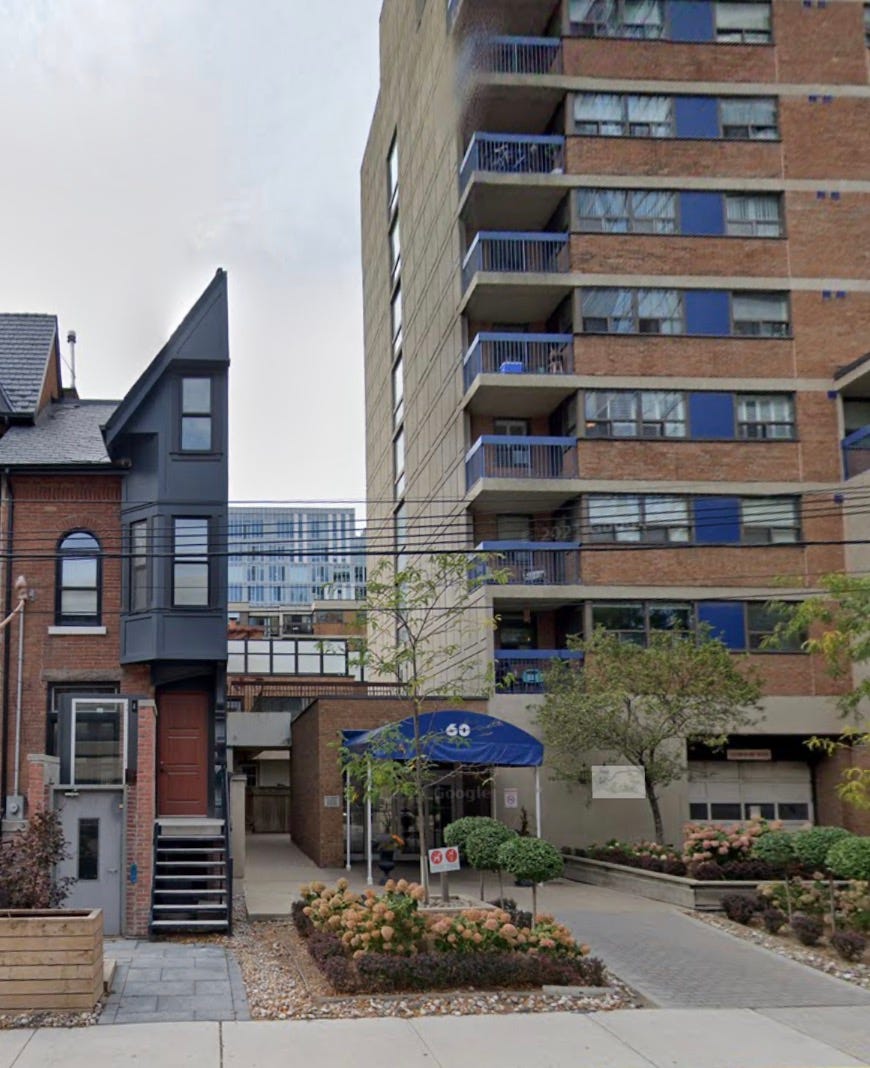
There is a townhouse in Toronto that really took the split concept and ran with it. The building is reminiscent of China’s nail houses, where homeowners’ refusal to yield to redevelopment has produced some remarkable architectural juxtapositions.
While the owners of the neighboring buildings accepted a developer’s buyout, the owners of 54 Saint Patrick Street did not. In a feat that would have impressed Johannes Fatio, the northern side of the row house was carefully deconstructed leaving what is now a half house standing on its own.
Though I was planning on releasing Vol. 2 of my Neighborhoods newsprint edition, I've put that on hold to focus on this book instead. A handful of copies of Vol. 1 are still available on my site or sign up for a paid subscription and I'll send you one for free.
Back with a regular neighborhood next week. Stay cool!
These are standard in UK and are called semi,s shortened from semi detached.
I lovelovelove looking at these. The almost-symmetry... the surprising, playful contrasts in shape, texture, and color... I especially like ones where a power line hangs down in a swag, adding some curving movement to the rectangles and triangles. What a delight. <3 <3 <3