

Sunset Park - Brooklyn
Finntown, Bush’s Folly, and Dancing Grannies

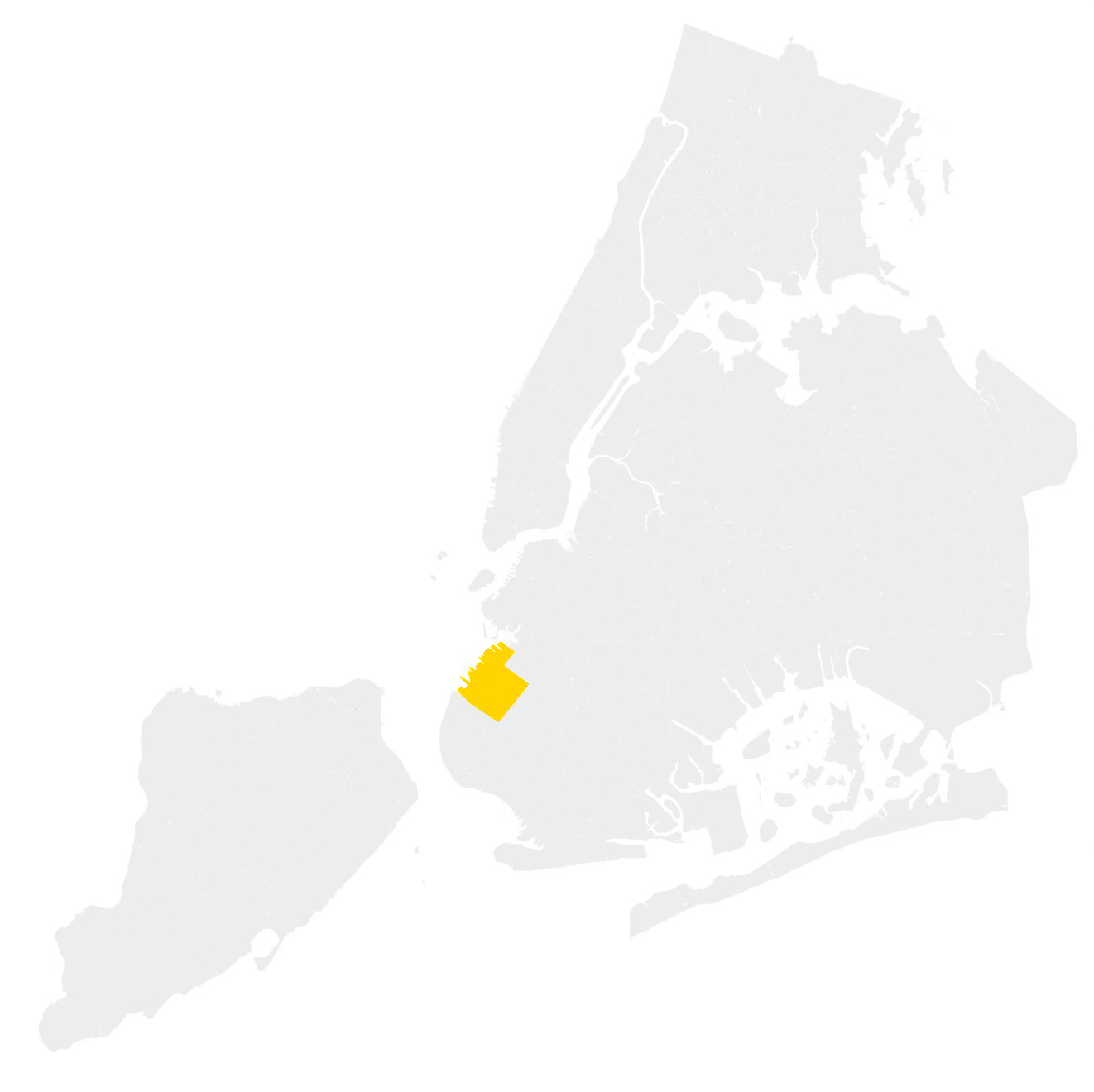
As far as New York City neighborhoods go, Sunset Park is enormous. It spans nine avenues and at least twenty-five cross streets. Over the centuries, this sprawling area has undergone dramatic transformations, from Lenape settlement to Dutch farmland, from Finnish enclave to industrial powerhouse, and, most recently, to a center for Brooklyn’s tech and creative sectors. The arrival of the 5th Avenue elevated railroad and the subway along 4th Avenue (the R train) spurred a building boom, and many residents found work at Bush Terminal, an “industrial city within a city,” on the neighborhood’s waterfront.
Sunset Park's fortunes began to shift again with the construction of the Gowanus Expressway, just as the neighborhood’s economic engine, the shipping terminal, began to decline. Puerto Rican families displaced by urban renewal in Manhattan moved into the homes that had been vacated by white flight. In the 1980s, Chinese, Mexican, Ecuadorian, and Dominican immigrants arrived in large numbers. The Chinese population, a mix of Cantonese and Fuzhou speakers, created New York’s second-largest Chinatown, linked to Manhattan by the N train.
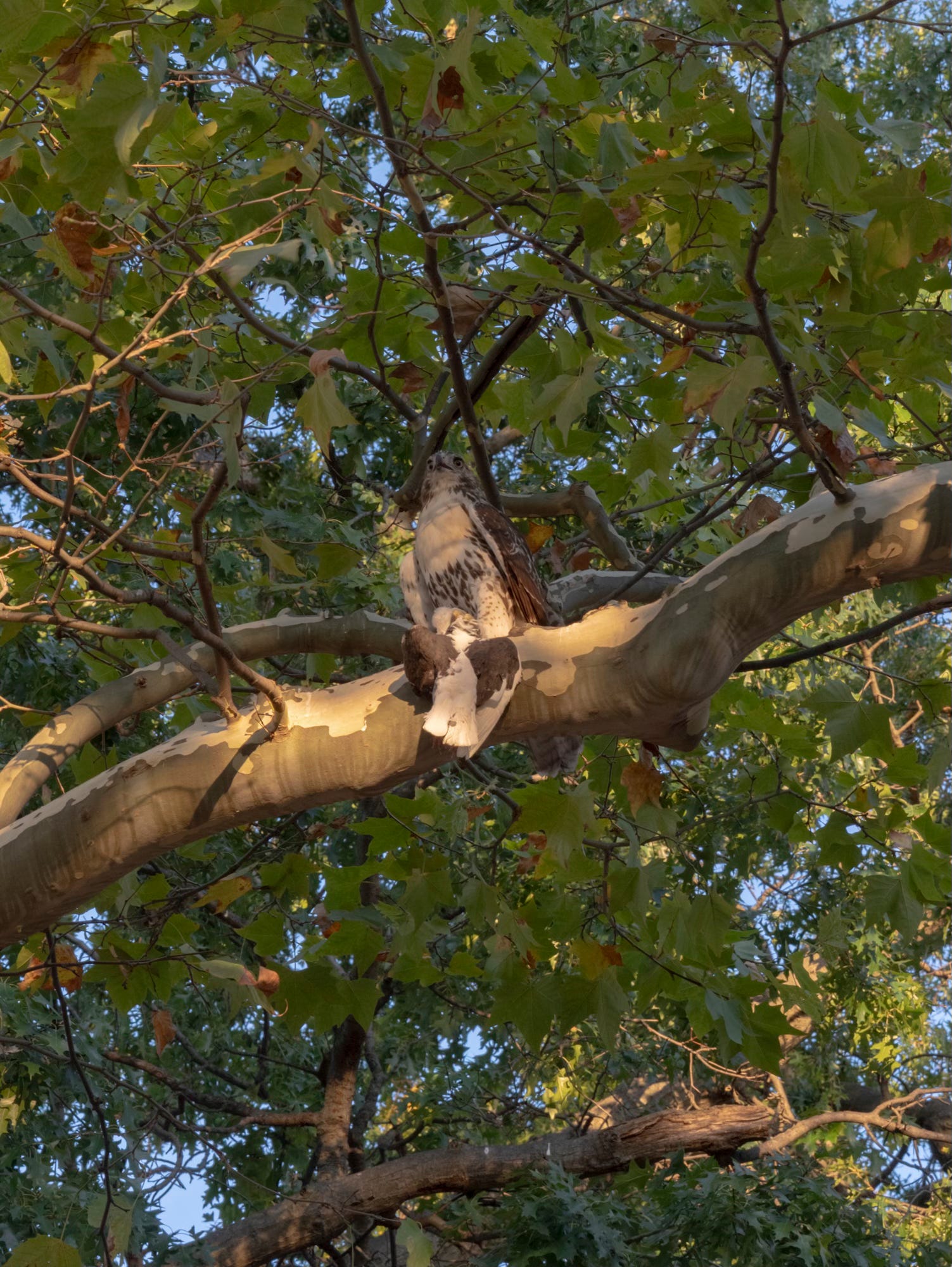
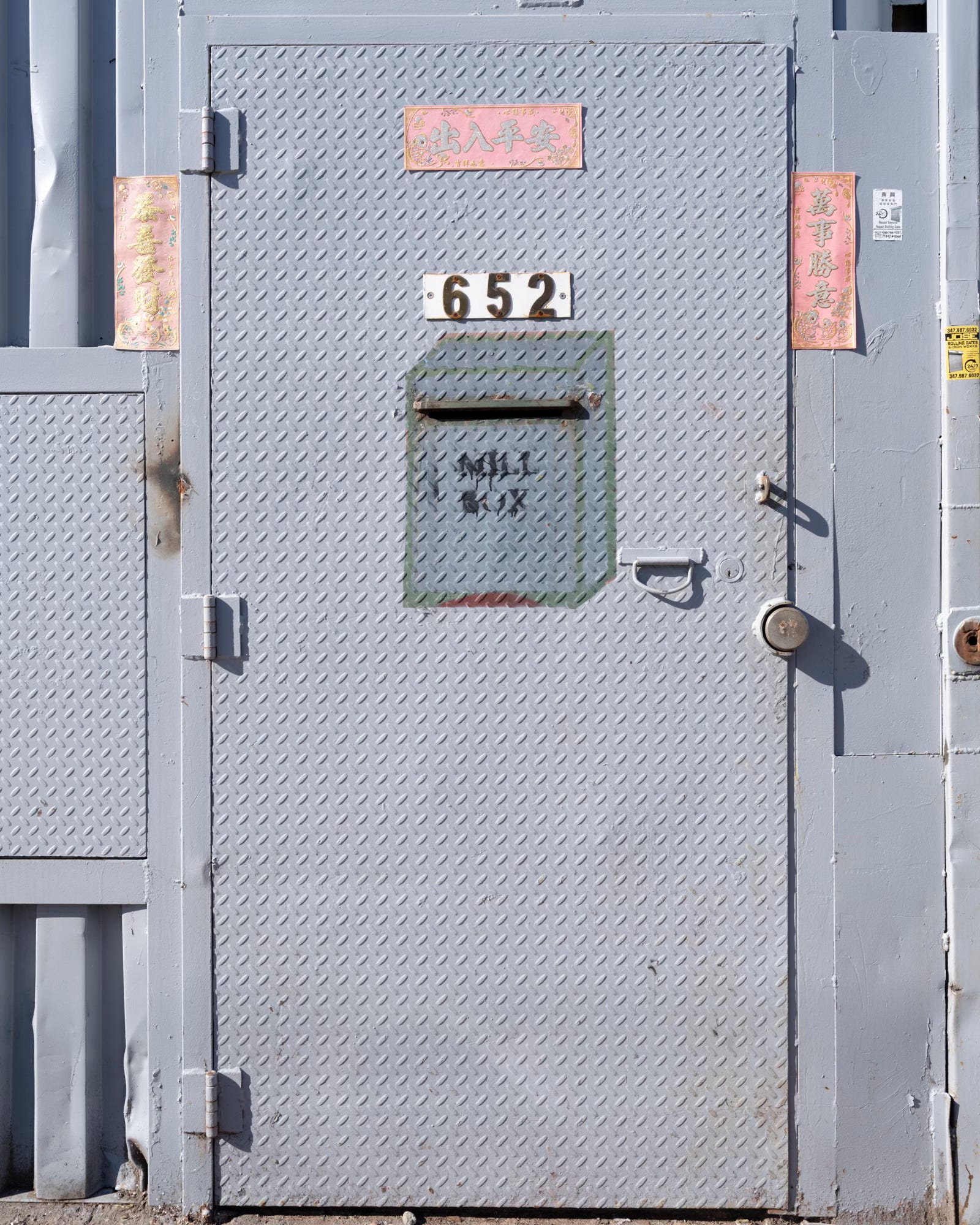
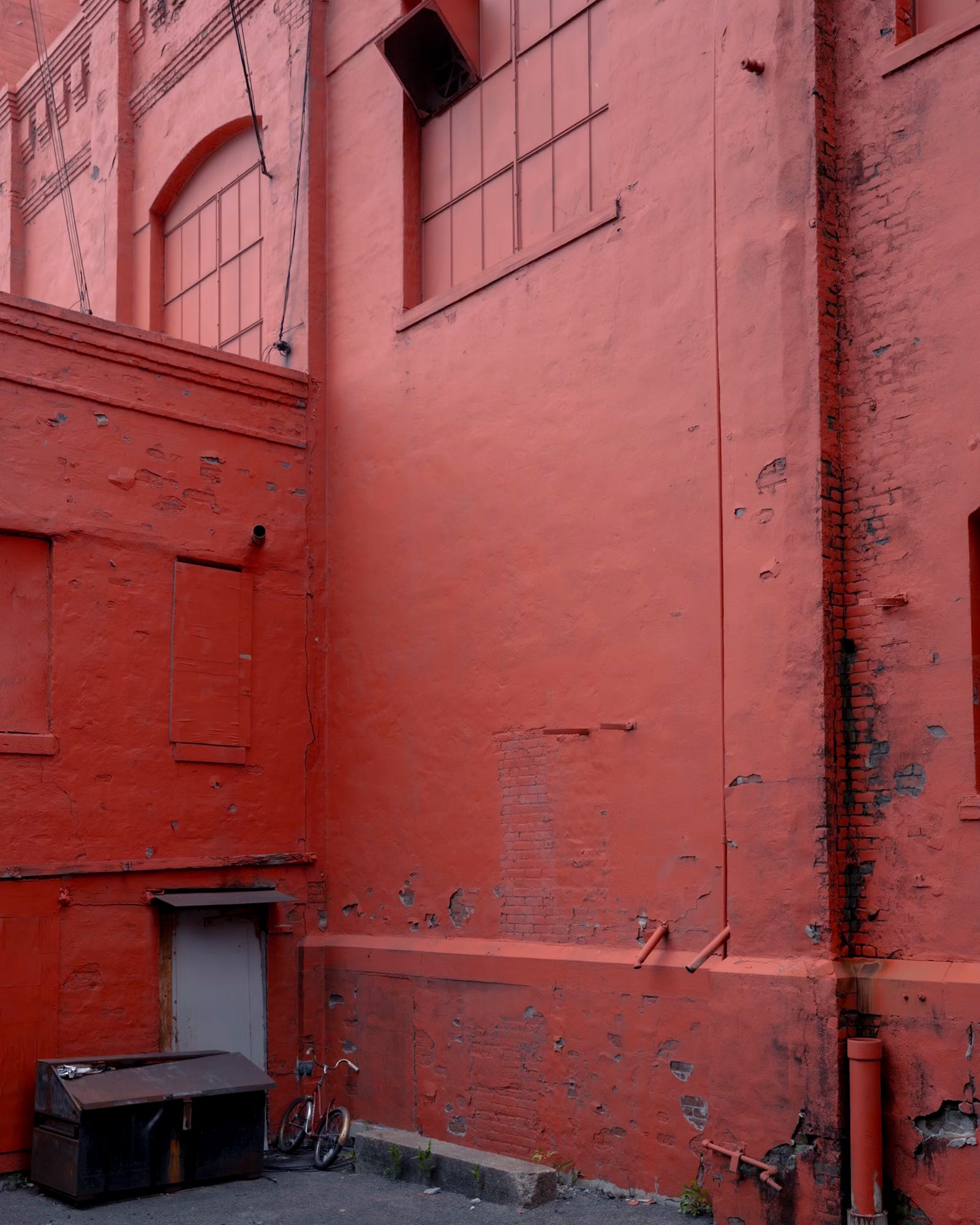
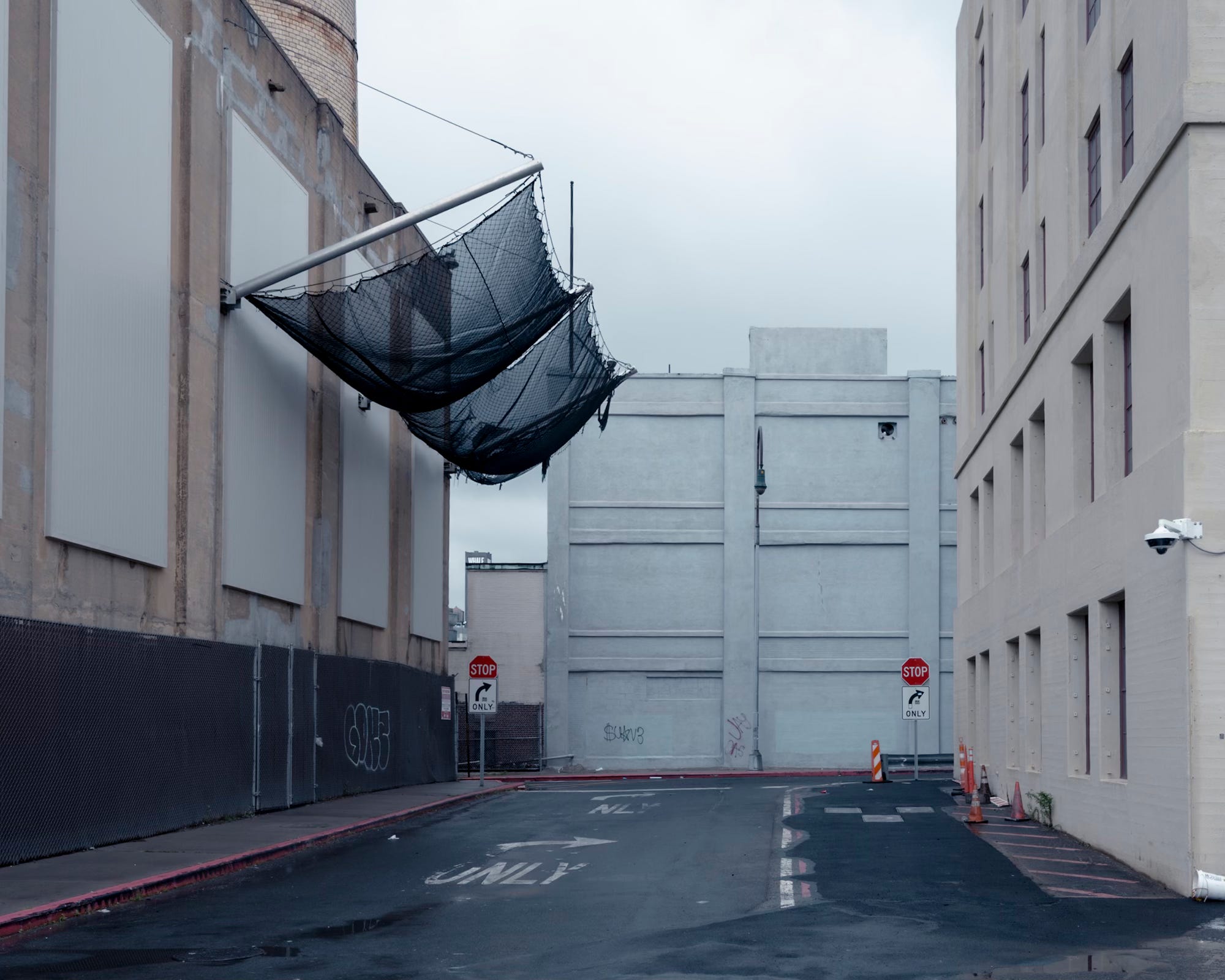
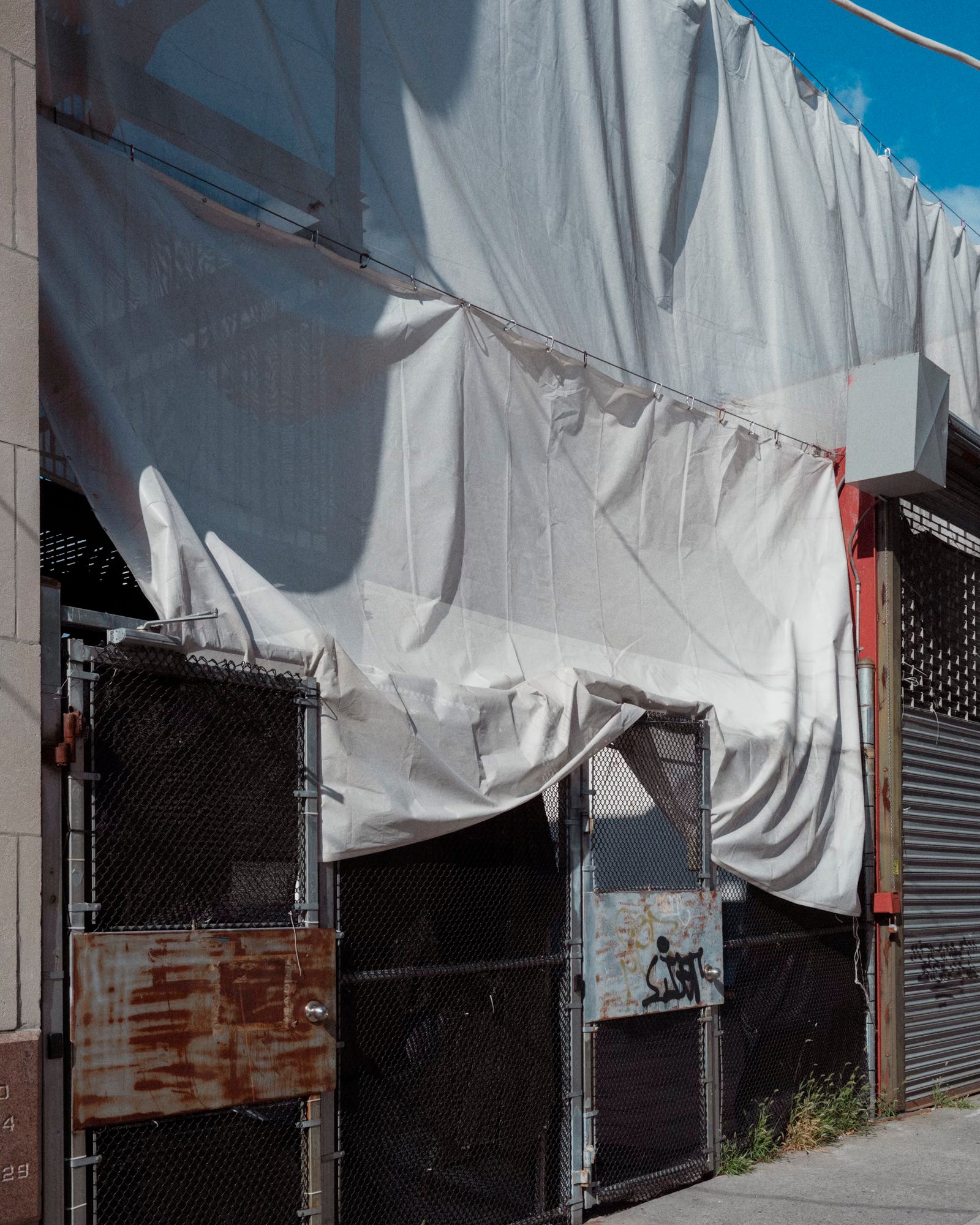
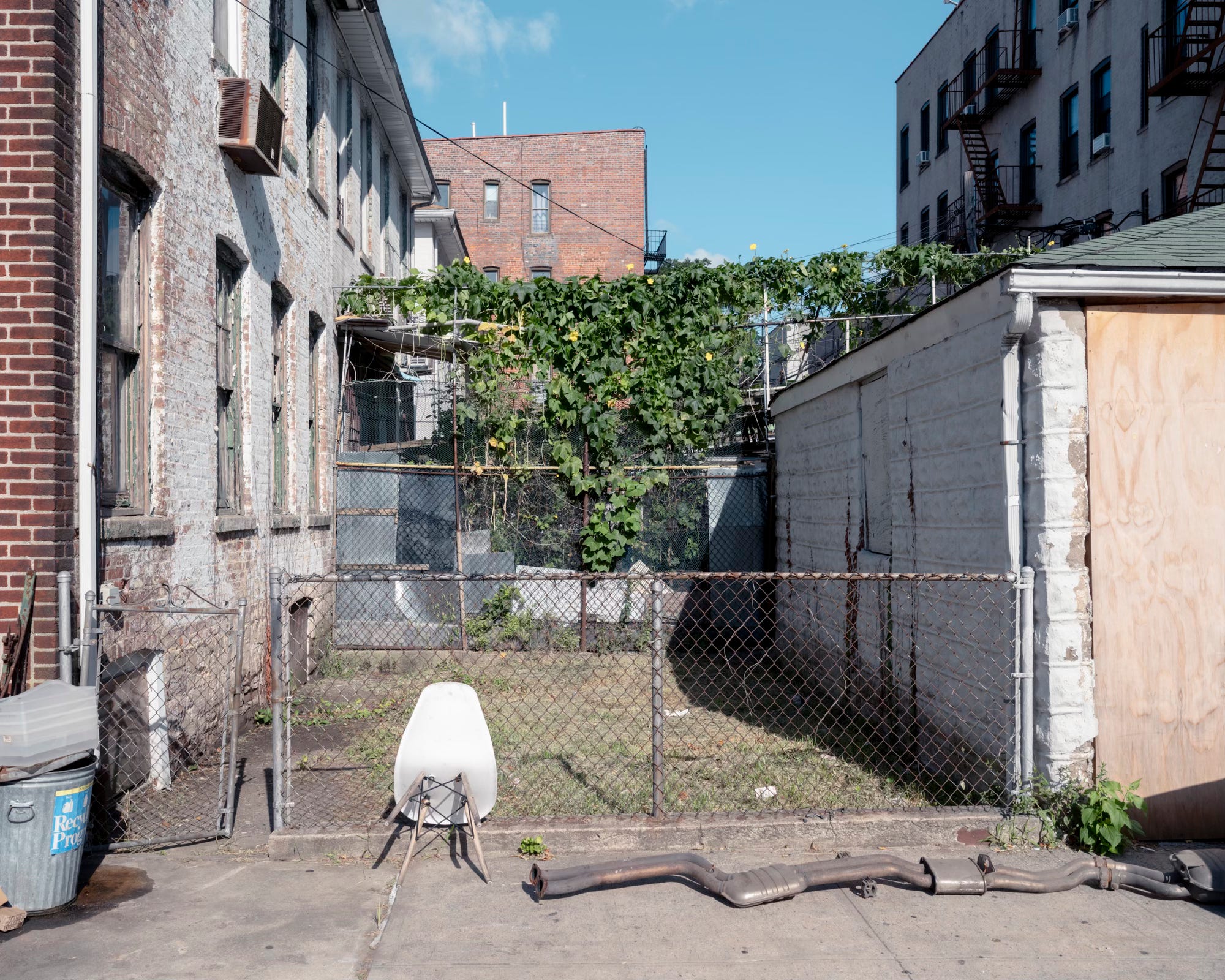
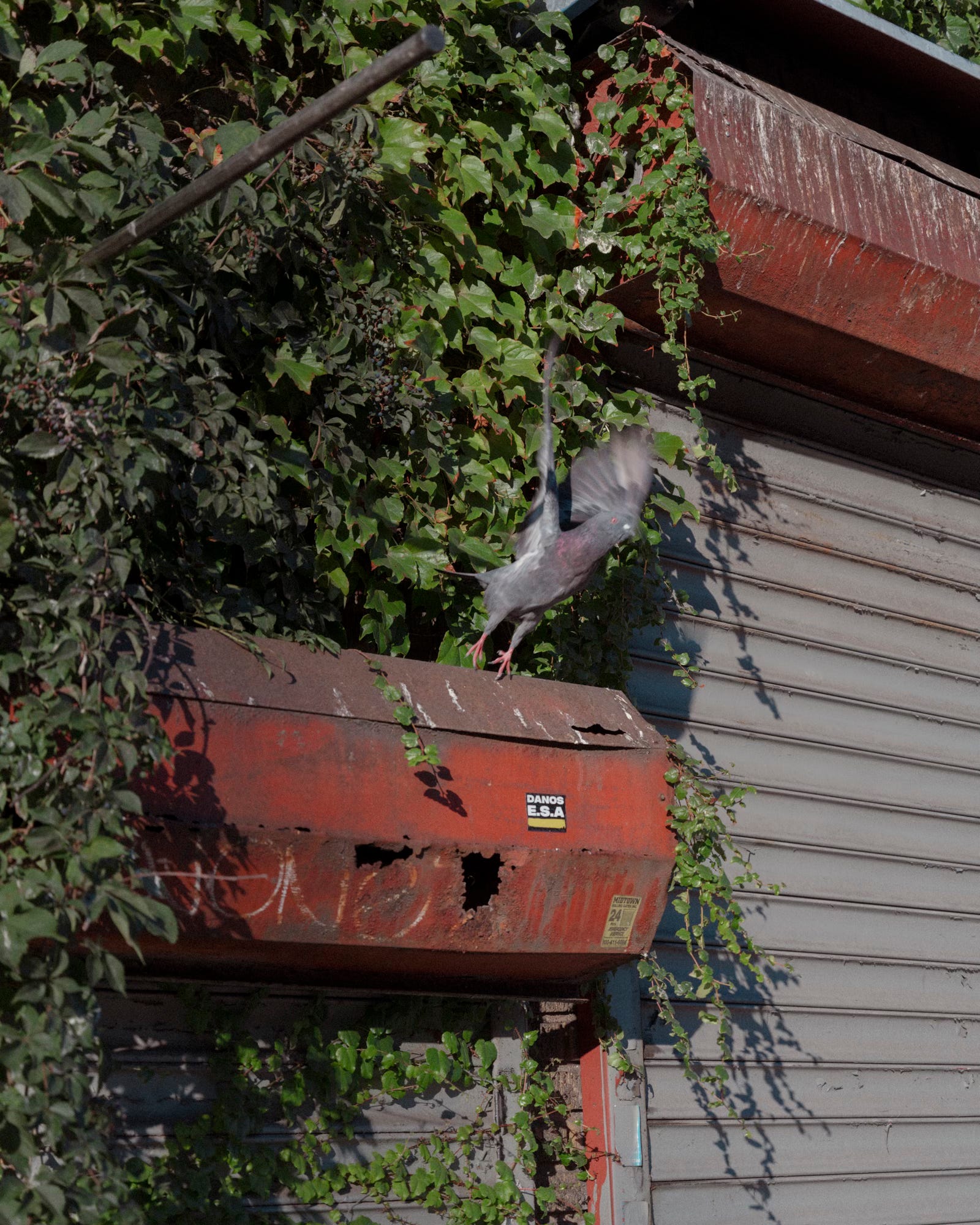
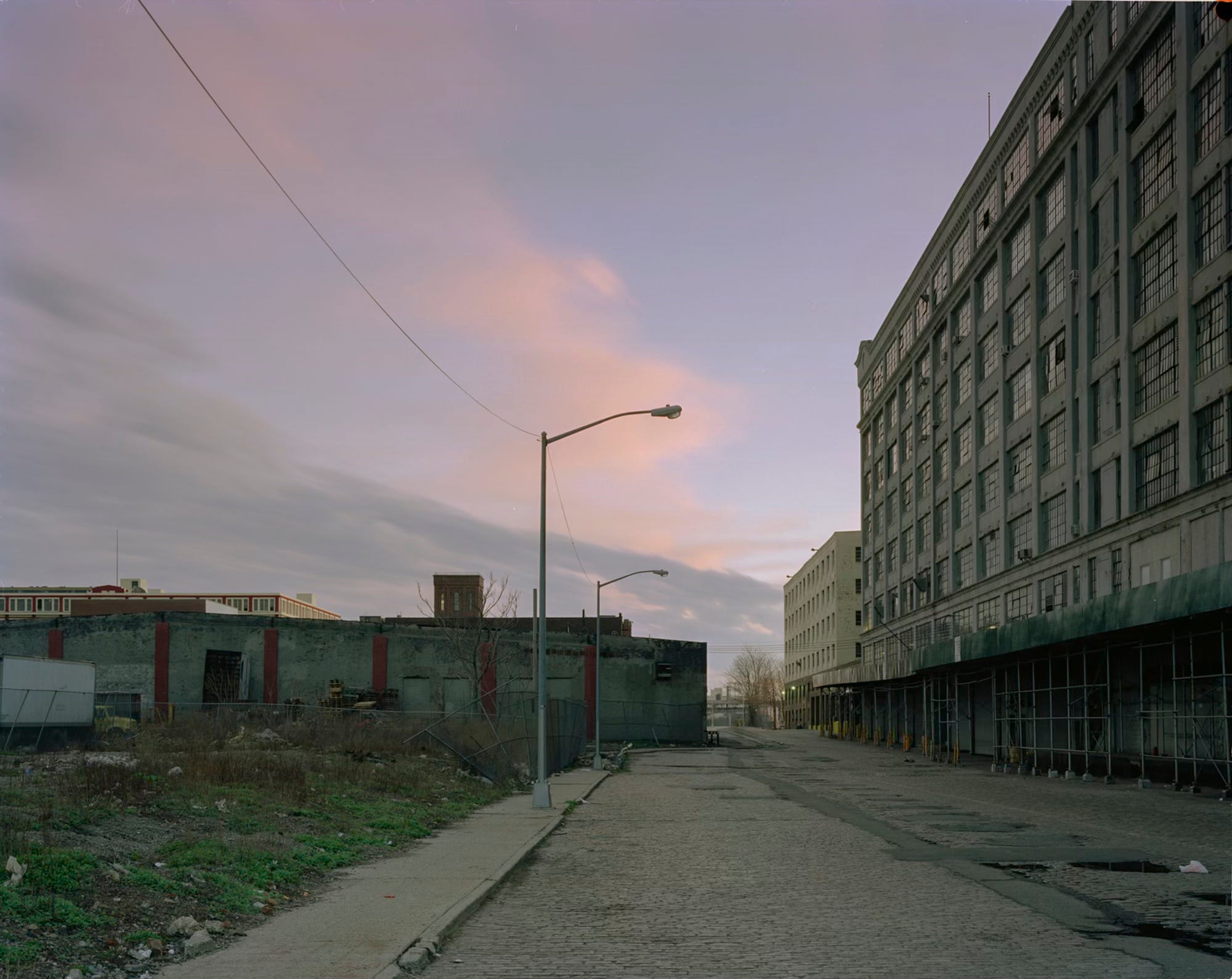
I logged a little over twenty miles exploring the neighborhood this week (Day 2 above) and came across many strange and wondrous things, including a Chinese ballroom dancing class at 9 in the morning, a hawk disemboweling a pigeon dangerously close to my head, and even master photographer, Joel Sternfeld.
Still, like every neighborhood in this project, I felt like I barely scratched the surface.
LENAPE
I found researching Sunset Park’s history a bit tricky, as the name didn’t really catch on until the 1960s. Before then, the area was considered part of Gowanus, or lower Bay Ridge, or simply “South Brooklyn.” Even today, the borders of the neighborhood remain ambiguous, with newcomer Greenwood Heights attempting to make inroads from the north, thanks to the best efforts of euphemistically inclined realtors. For this week’s newsletter, I am defining Sunset Park as the stretch between 65th Street and Greenwood Cemetery, from 9th Avenue to Gowanus Bay. I’m also throwing in the little slope under the Gowanus Expressway, home to Brooklyn’s only Costco and a federal detention facility. I don't think the realtors would disagree.
James A. Kelly’s 1946 map of Indian Villages, Paths, Ponds, and Places in Kings County indicates there was a Lenape settlement in today’s Sunset Park along one of the area’s main Lenape footpaths.
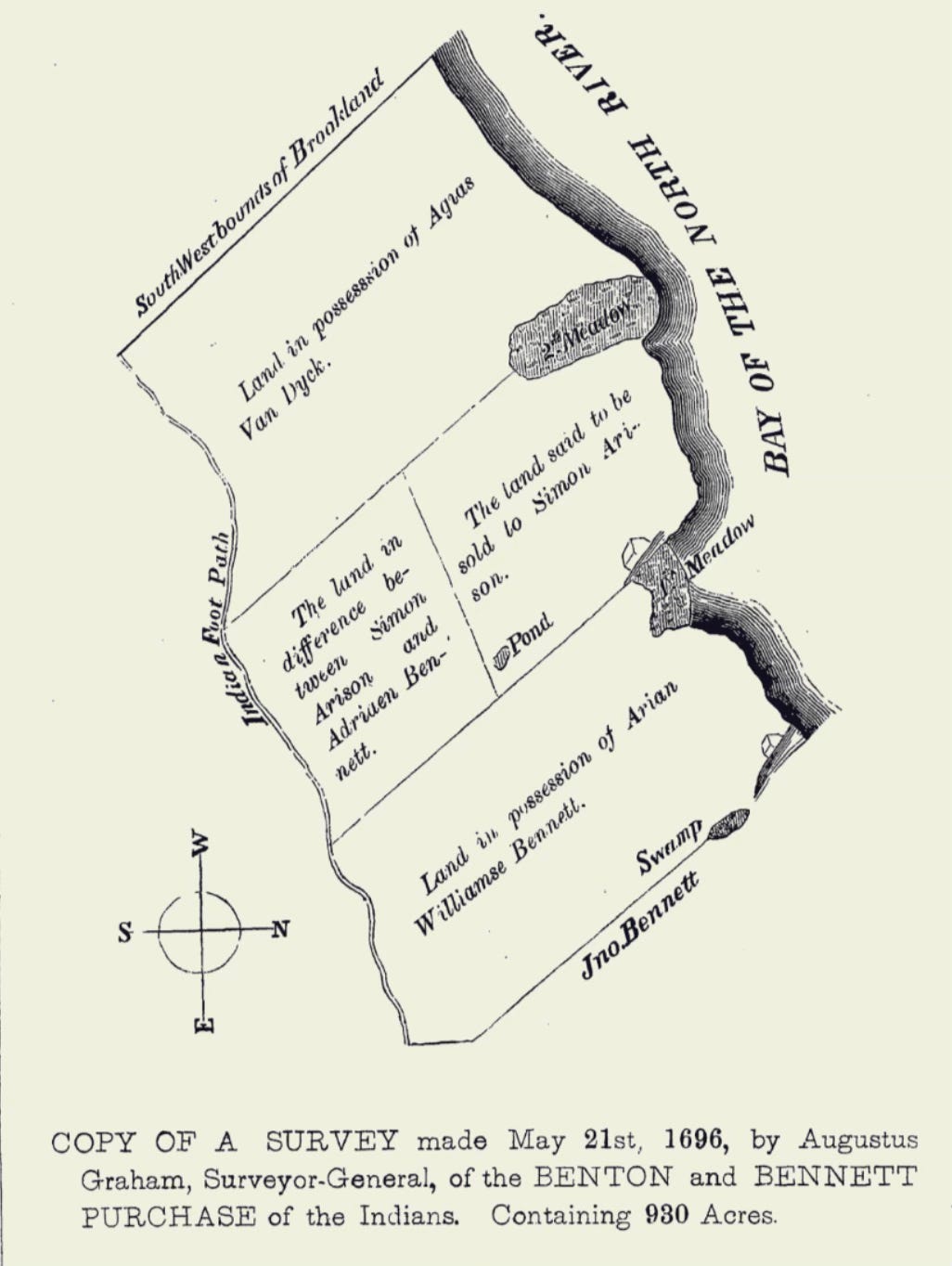
A History of the City of Brooklyn traces the origin of the neighborhood to a transaction between Sachem Ka, a Lenape Chieftain, and Dutch settlers Jacques Bentyn and William Ariensen (Bennett). The parameters of the deal specified that the property extended from "a certain tree or stump on the Long Hill on the one side, and on the other, the end of the Indian footpath, and that it extends to the creek of the third meadow.”
When that was found too vague, a second survey indicated that the property began "at a certain small lane near the house of said Adriaen Bennett, and from thence it runs along the said lane and marked trees to a certain chestnut standing on the top of the hill, marked with three notches, and thence to a black oak standing on the south side of the said hill, marked with three notches.”
That clears things up.
THE PARK
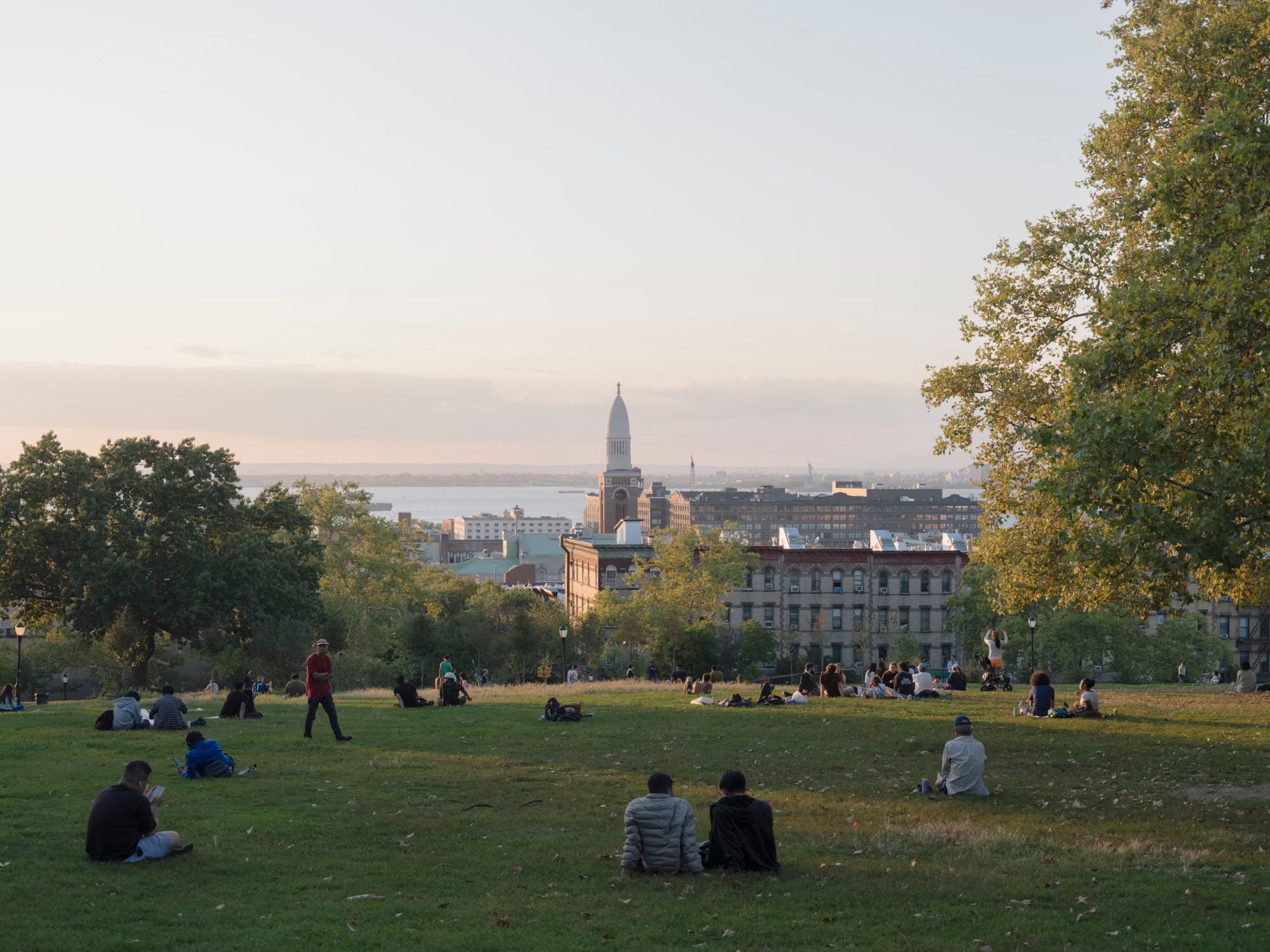
In 1891, the city of Brooklyn paid $165,000 for the land that would eventually become the neighborhood's eponymous park. The New York Times found the price outrageous, especially considering that the park's location on top of a bluff made it only accessible by 60-foot wooden ladders. They didn't have anything nice to say about the park rangers either:
The position of park keeper was regarded as a capital loaf …and there were few duties more onerous than lounging on the benches in a little open house on the grounds, in company with a number of choice spirits who knew more about the merits of the brands of whisky in the neighboring hostelries than they did about running a public park. Occasionally an inoffensive cow or horse which had strayed within the premises had to be driven off, but that was about all.
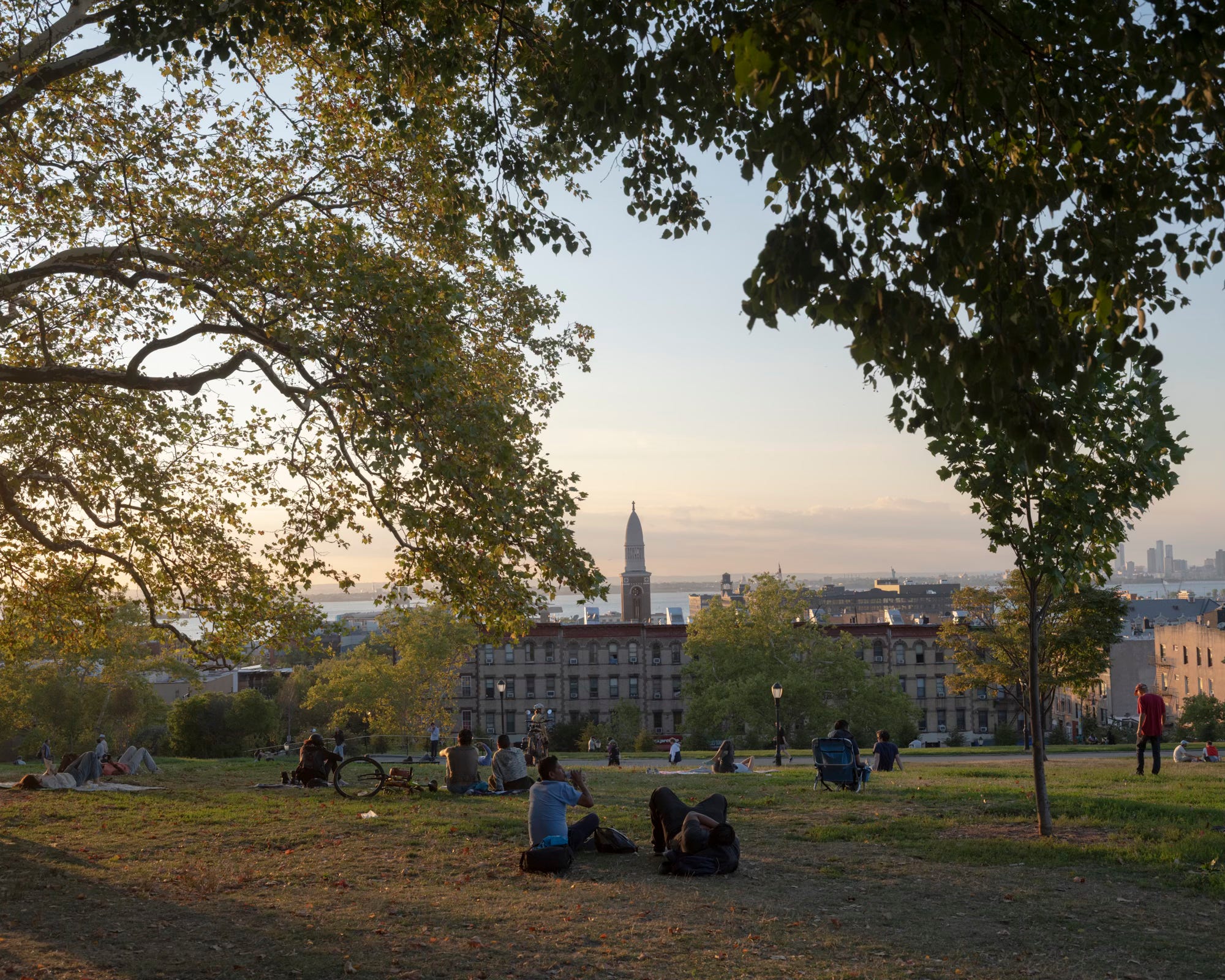
Still, the article conceded that the views were pretty spectacular with the “forest of masts in Gowanus Bay, the blue shores of Staten Island, and the sky-scraping buildings of Manhattan” all visible from one of Brooklyn's highest points.
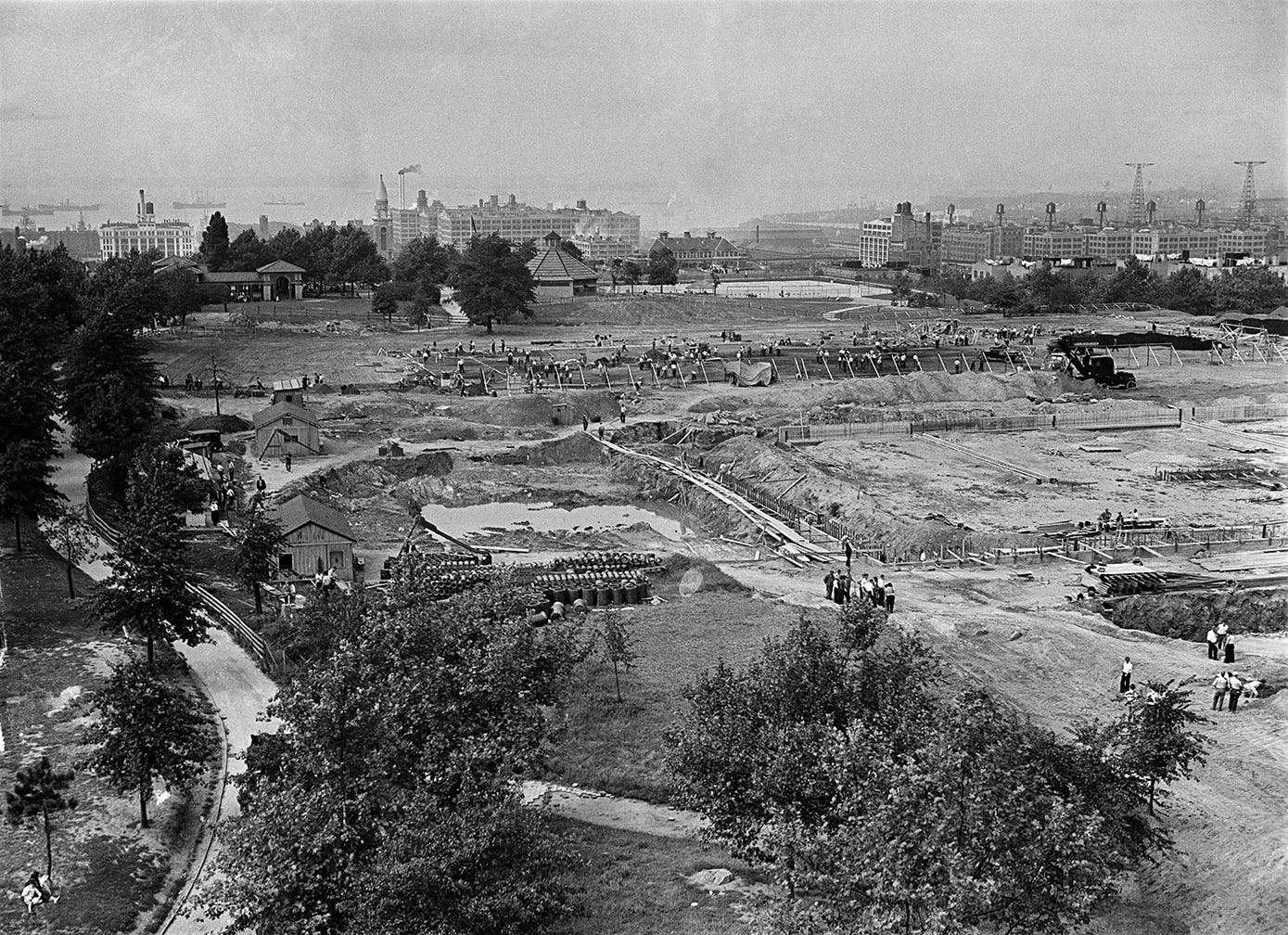
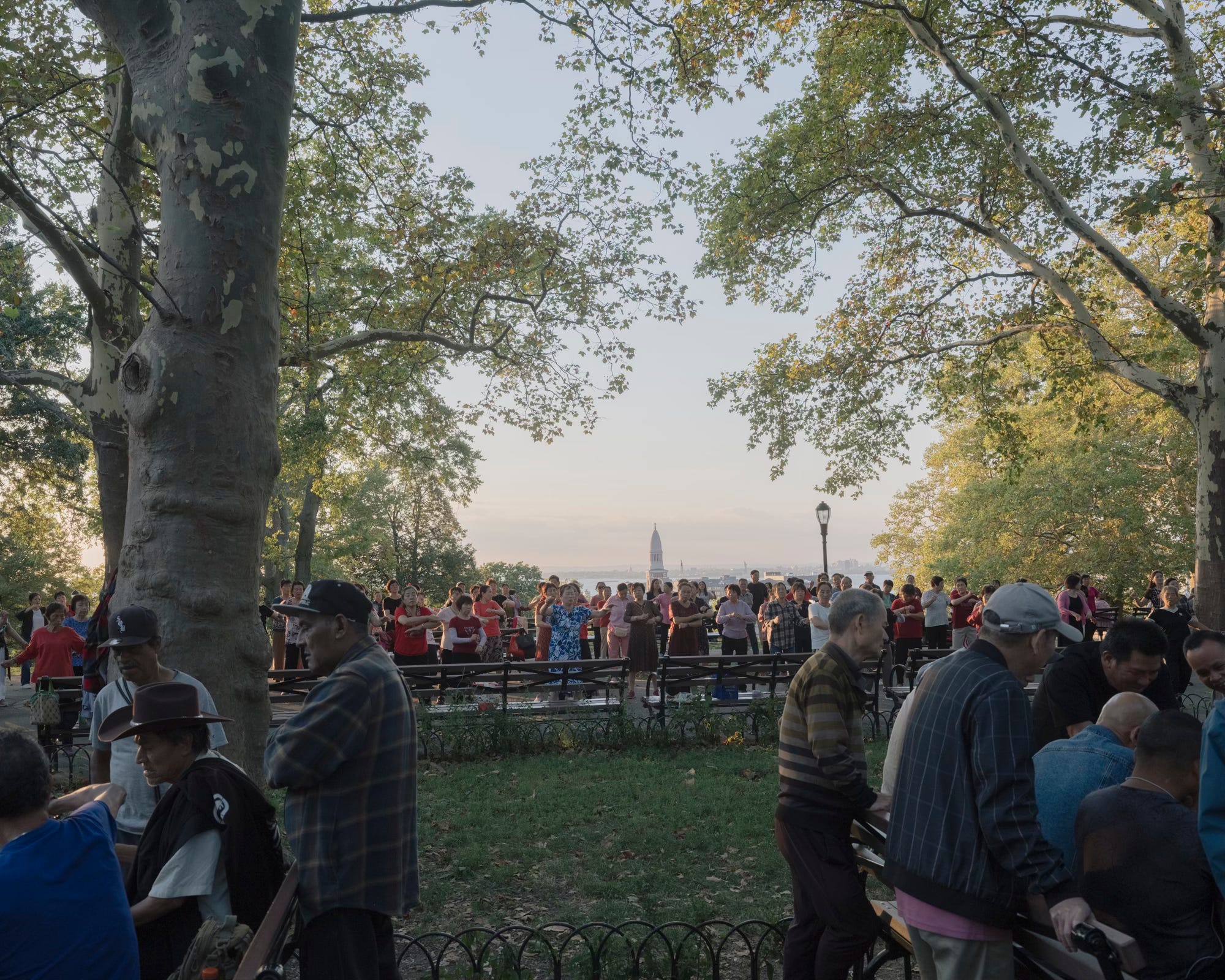
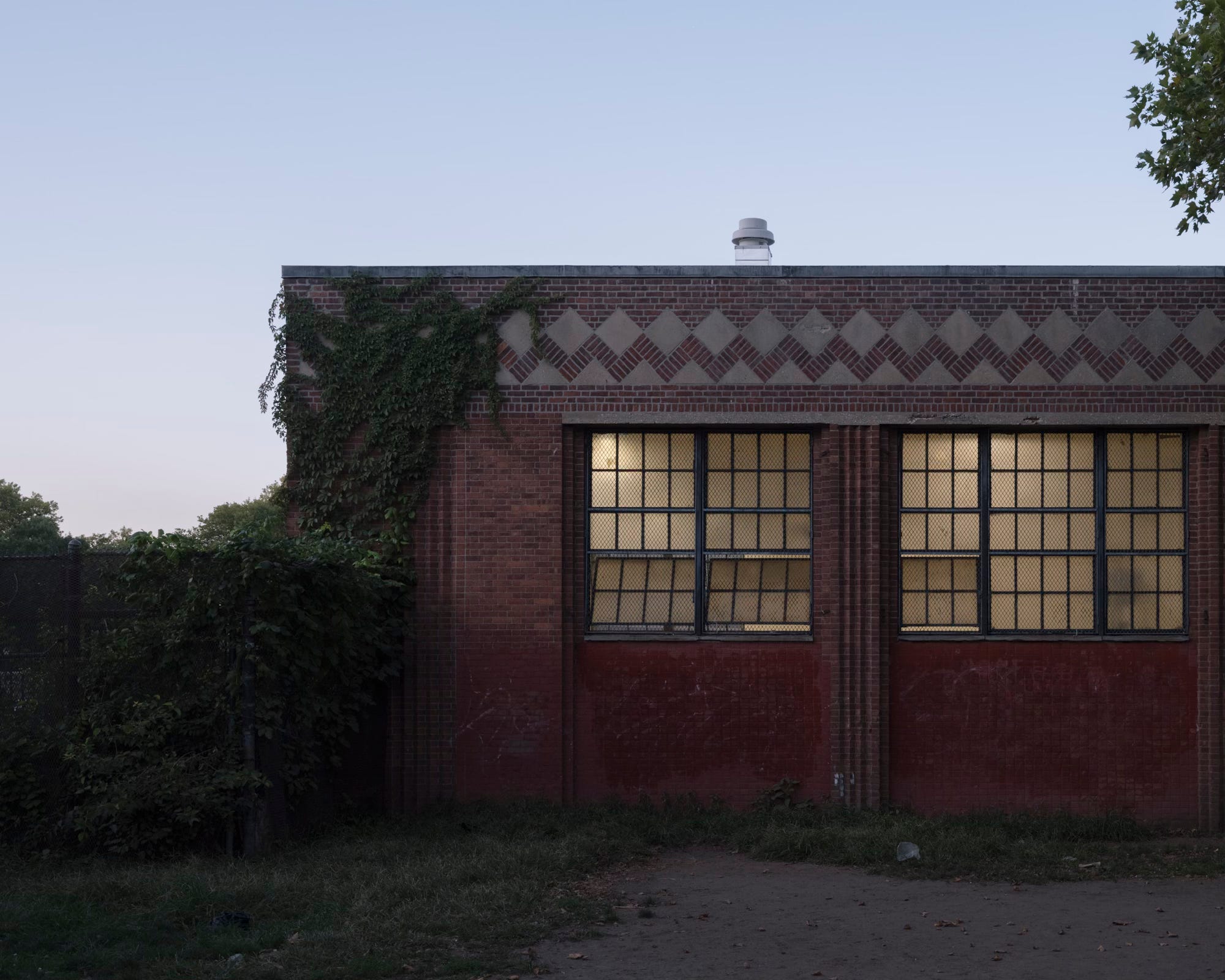
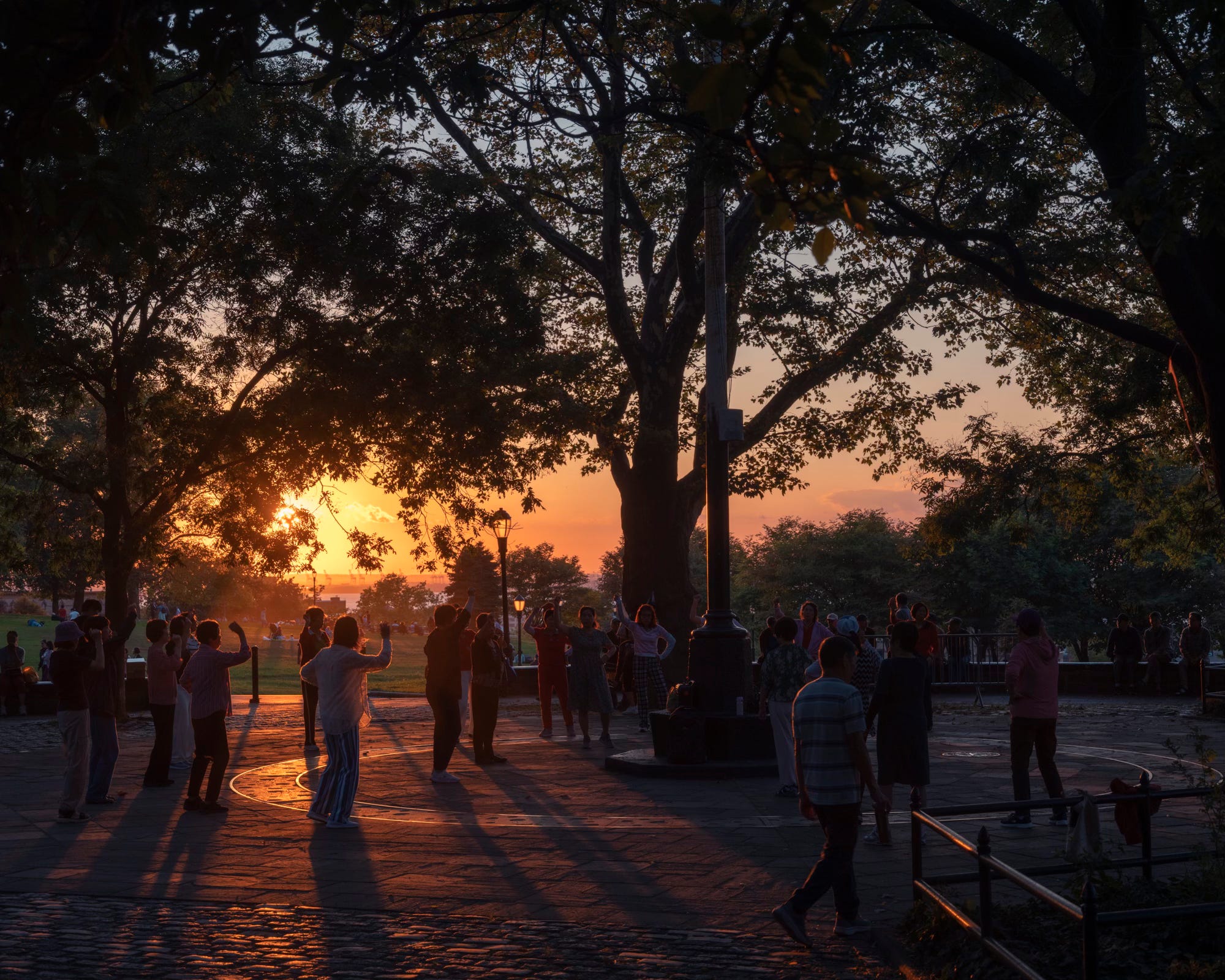
Today Sunset Park is the heart of the neighborhood, packed with thousands of locals square dancing, men playing cards on sheets of cardboard surrounded by other men watching them play, and throngs of kids shooting baskets, flying kites or lining up to get in the WPA-built pool.
FINNTOWN
In the late nineteenth century, a large number of Finns immigrated to the US in search of better job opportunities and to escape the increasingly anti-Finnish policies of the Russian government. Many of these Finnish immigrants began to settle in the streets surrounding the new park. At its peak, there were over 10,000 Finns in Sunset Park, and an untold number of saunas.
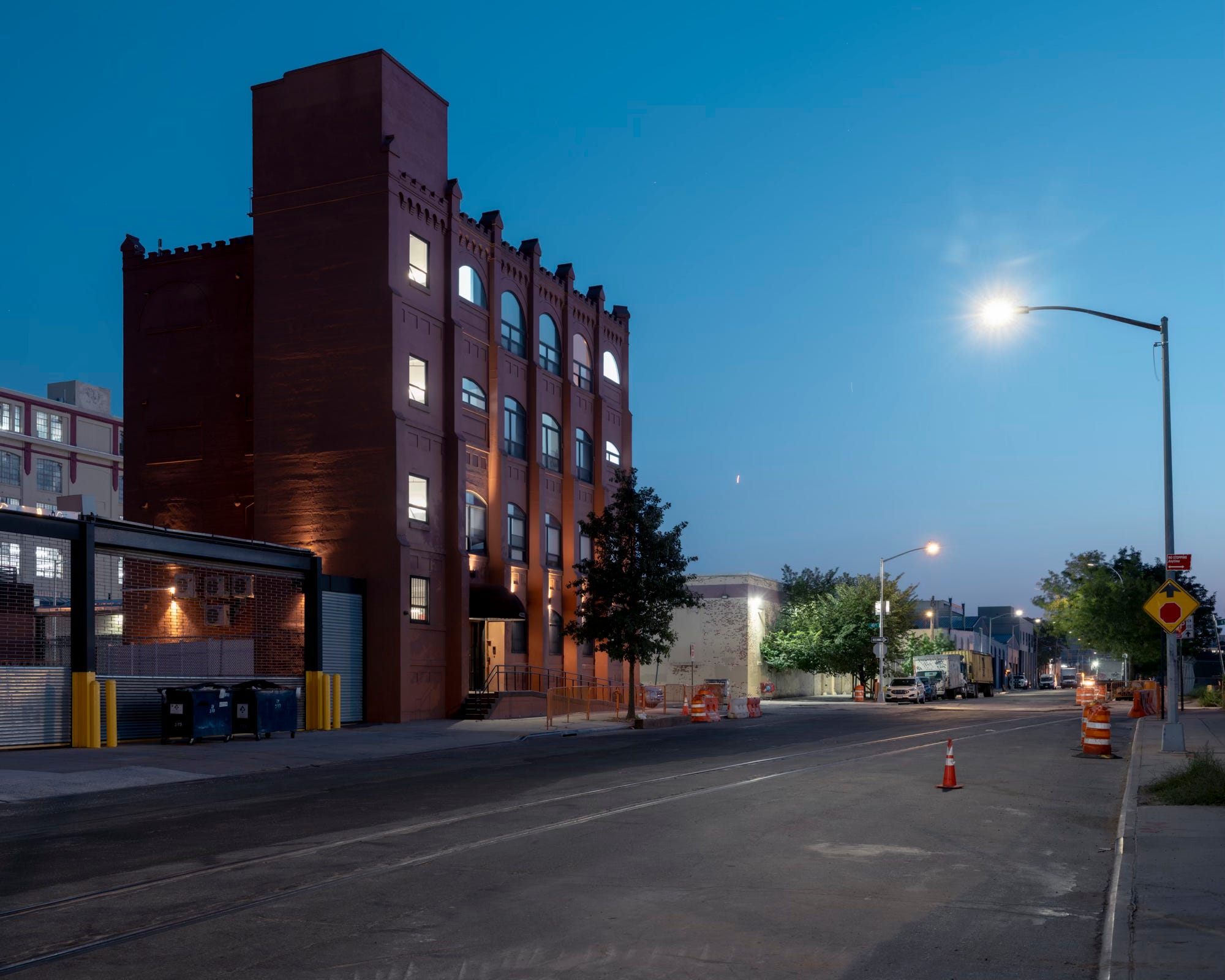
In 1916, sixteen families paid $500 each to purchase a lot on 43rd Street, between 8th and 9th Avenues, and built the Alku ("beginning" in Finnish), the country's first nonprofit housing cooperative. While the Rembrandt, built in 1881 on West 57th Street, was technically the city's first cooperative building, it catered to "people of means and good social standing" rather than working-class immigrants seeking affordable housing. The Alku made decent housing accessible to families of modest means.
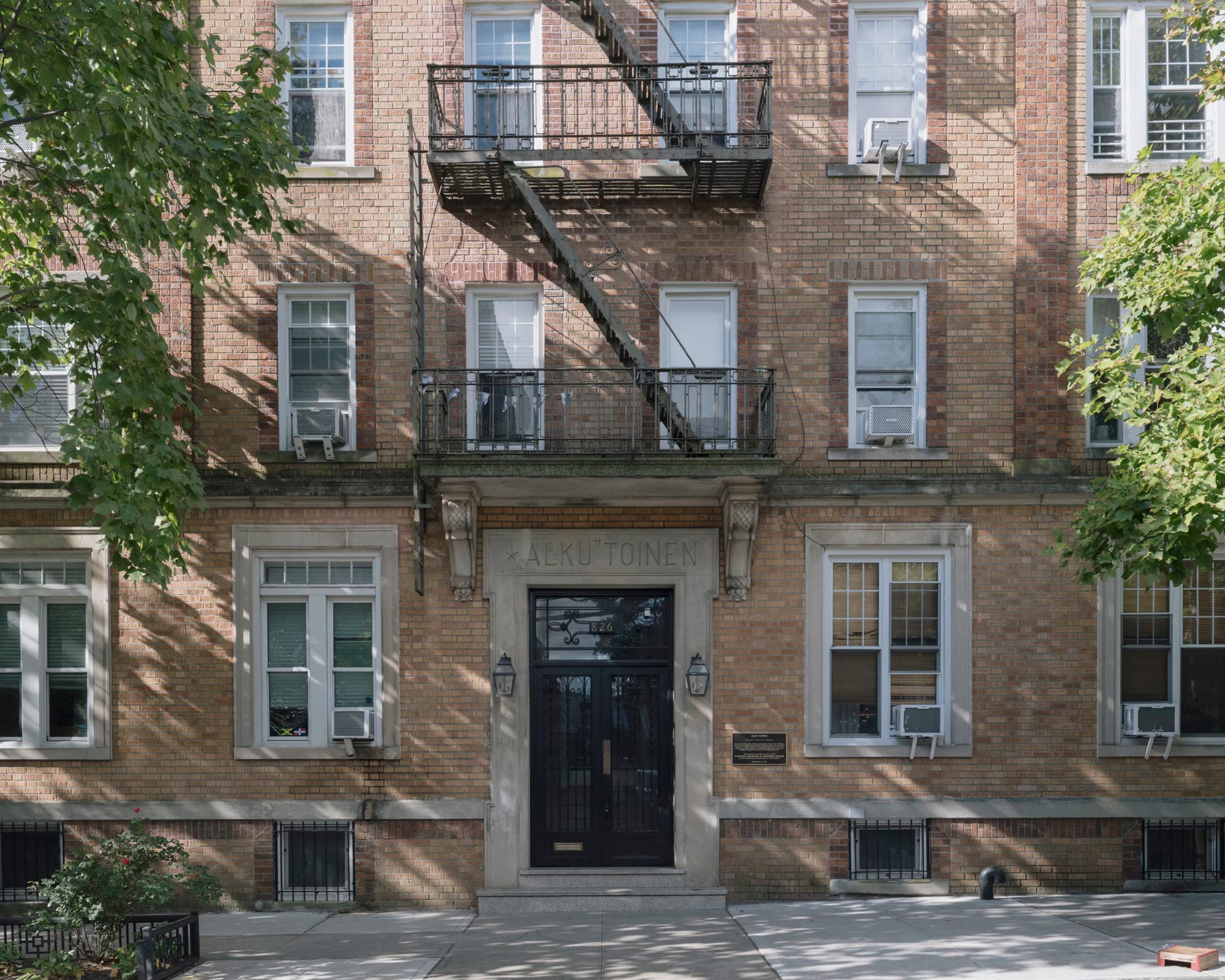
This pioneering effort sparked a movement that transformed Sunset Park and served as a template for the rest of the city. Eventually, the neighborhood housed more than 30 Finnish co-op buildings, and Finntown stretched from 40th to 45th Streets between Fifth and Ninth Avenues. Today, over 75% of the apartments in NYC are co-ops.
BUSH TERMINAL
In 1890, Rufus Bush, an American businessman, industrialist, and yachtsman, died from an accidental overdose of aconite, an extract from a highly poisonous flowering plant. For centuries, it was used on the tips of arrows and spears to kill prey and enemies. The Romans used it for executions. Pope Clement VII poisoned a pair of prisoners with aconite-laced marzipan. Some people claim it was aconite, rather than hemlock, that did Socrates in. The Father of Western Philosophy may have reconsidered his pronouncement that "Death may be the greatest of all human blessings," when the effects of the toxin kicked in: beginning with an intense prickling of the skin, sweating and nausea, followed by severe vomiting, colicky diarrhea, intense pain and then paralysis of the skeletal muscles before culminating in a massive heart attack.
And if you thought Ivermectin was dumb, in April 2021, the president of Kyrgyzstan, Sadyr Japarov, promoted aconite root as a treatment for COVID-19.
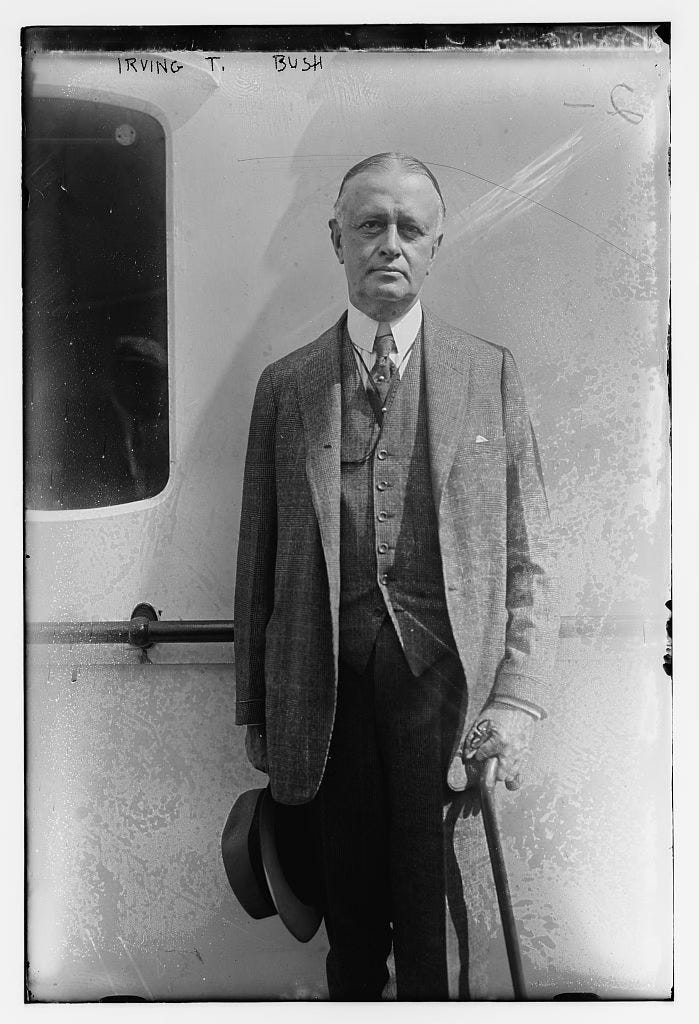
Back to the Bush family. After Rufus Bush died, his son, Irving, inherited $2 million and a plot of land on the shore of Sunset Park, an ash dump for an adjacent oil refinery that once belonged to his father. It occurred to Irving that this would be the perfect place to build a massive intermodal shipping terminal, a way for goods shipped across the country to bypass the narrow, traffic-clogged streets of Manhattan entirely. His peers thought it was a terrible idea and gave it the nickname "Bush's Folly."
Construction began in 1895 with six warehouses between 44th and 50th Streets. Within twenty years, the complex spanned twenty waterfront blocks, with eighteen piers and forty-three miles of railroad track. Freight cars were floated across the harbor on barges, then rolled directly into warehouses.
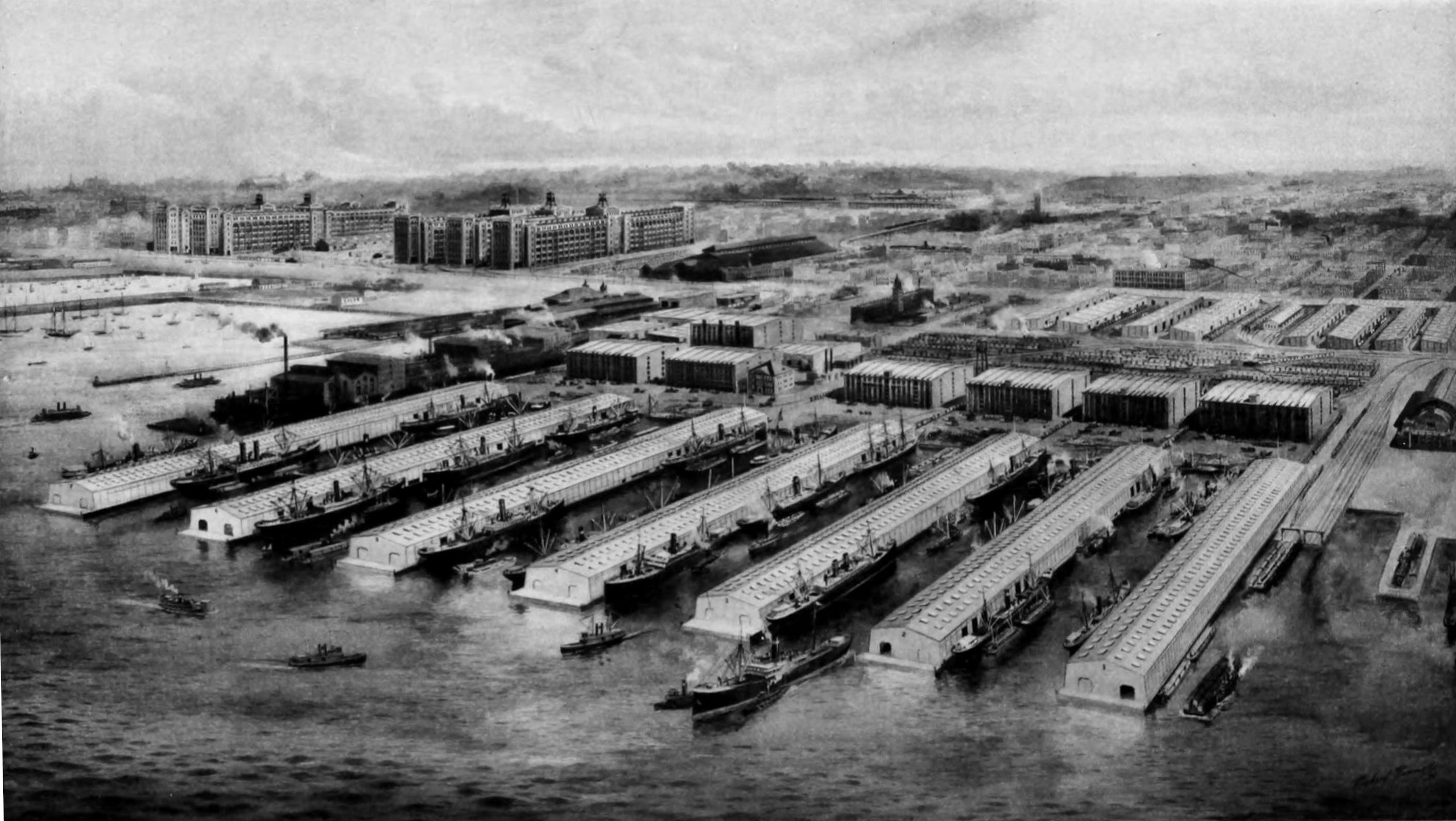
During WWI, the entire facility was commandeered by the Army, which built its own compound, the Brooklyn Army Terminal, a mile south. It was the main departure point for troops and supplies to Europe, with 70% of all ammunition, clothing, and food shipped to American soldiers overseas departing from the Sunset Park waterfront.
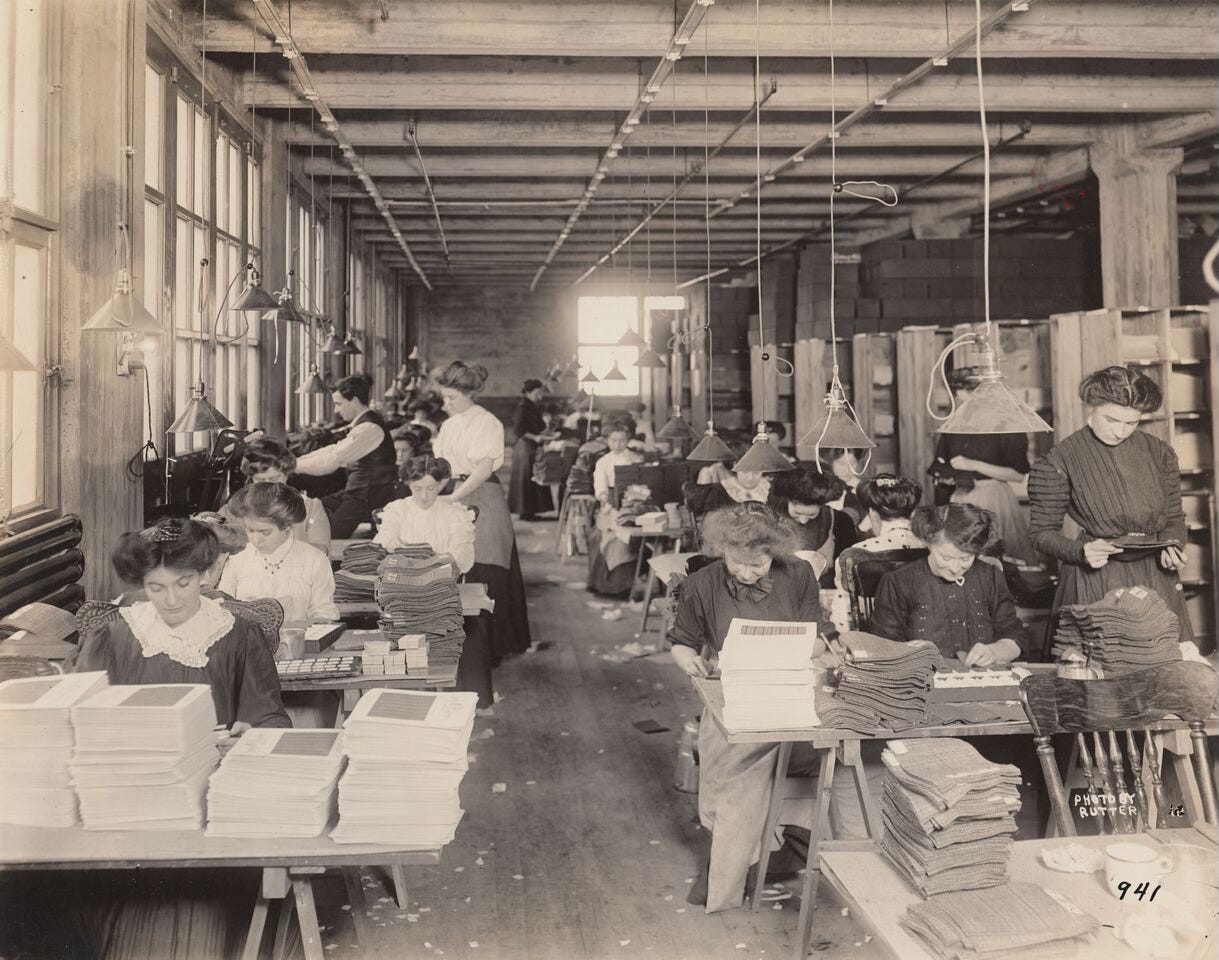
By 1938, the complex employed 35,000 workers and had its own police force, courts system, power plants, and restaurants.
On December 3, 1956, one of the largest explosions in the city’s history happened on Pier 35, owned by the Luckenbach Steamship Company.
Longshoremen ignited a pile of foam rubber scraps when sparks from their welding project fell to the pier below. While firefighters were attacking the conflagration from the water, the fire made its way to a cache of 37,000 pounds of Primacord, a plastic-coated explosives fuse that is itself explosive. At 3:41 p.m., the Primacord ignited, triggering a massive explosion that demolished the pier and launched steel beams half a mile, creating what witnesses described as a mushroom cloud.
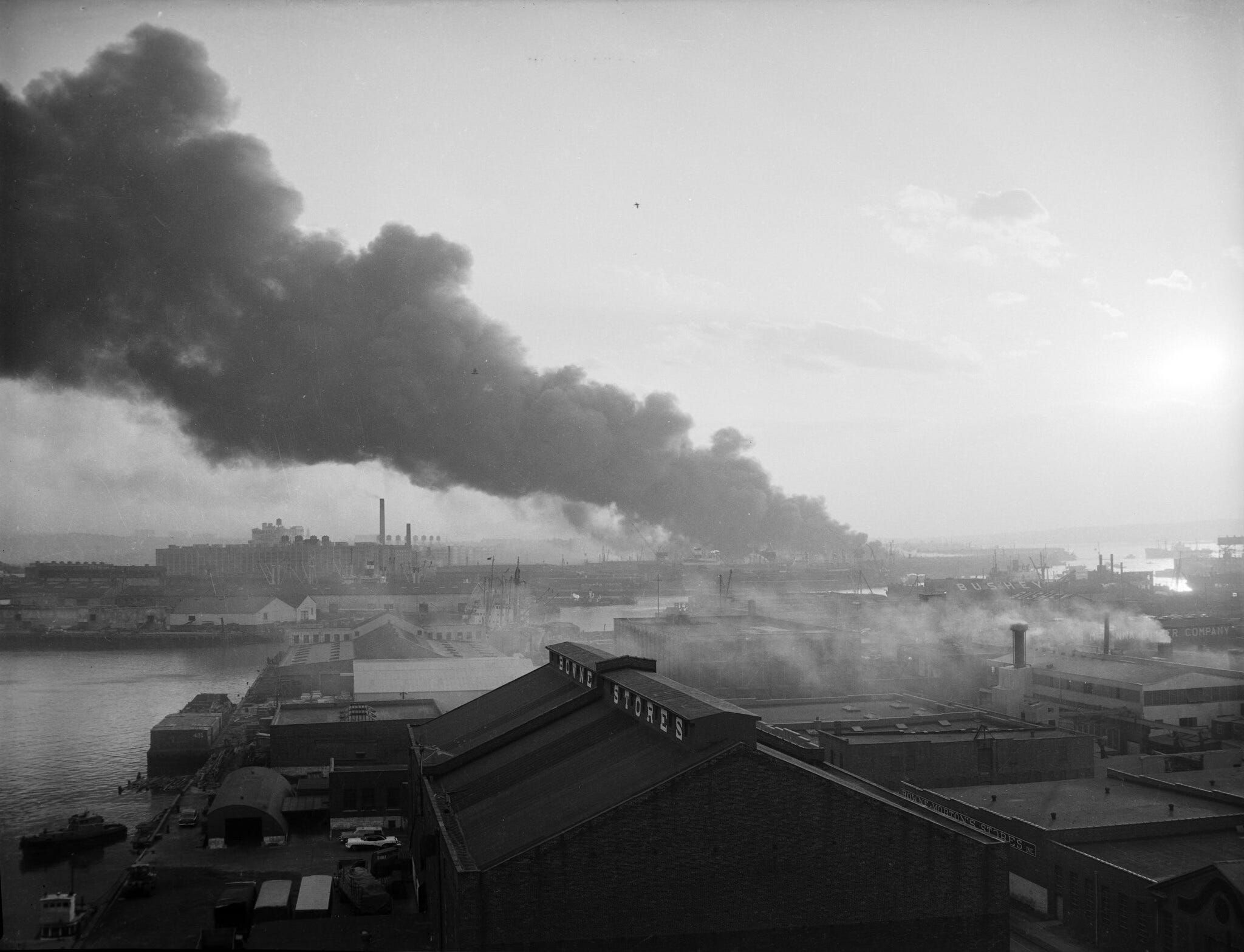
The blast killed 10 people, including a man standing over 1,000 feet away, injured 274 others, rattled buildings in Lower Manhattan and shattered windows up to a mile away. The explosion was heard 35 miles from the site.
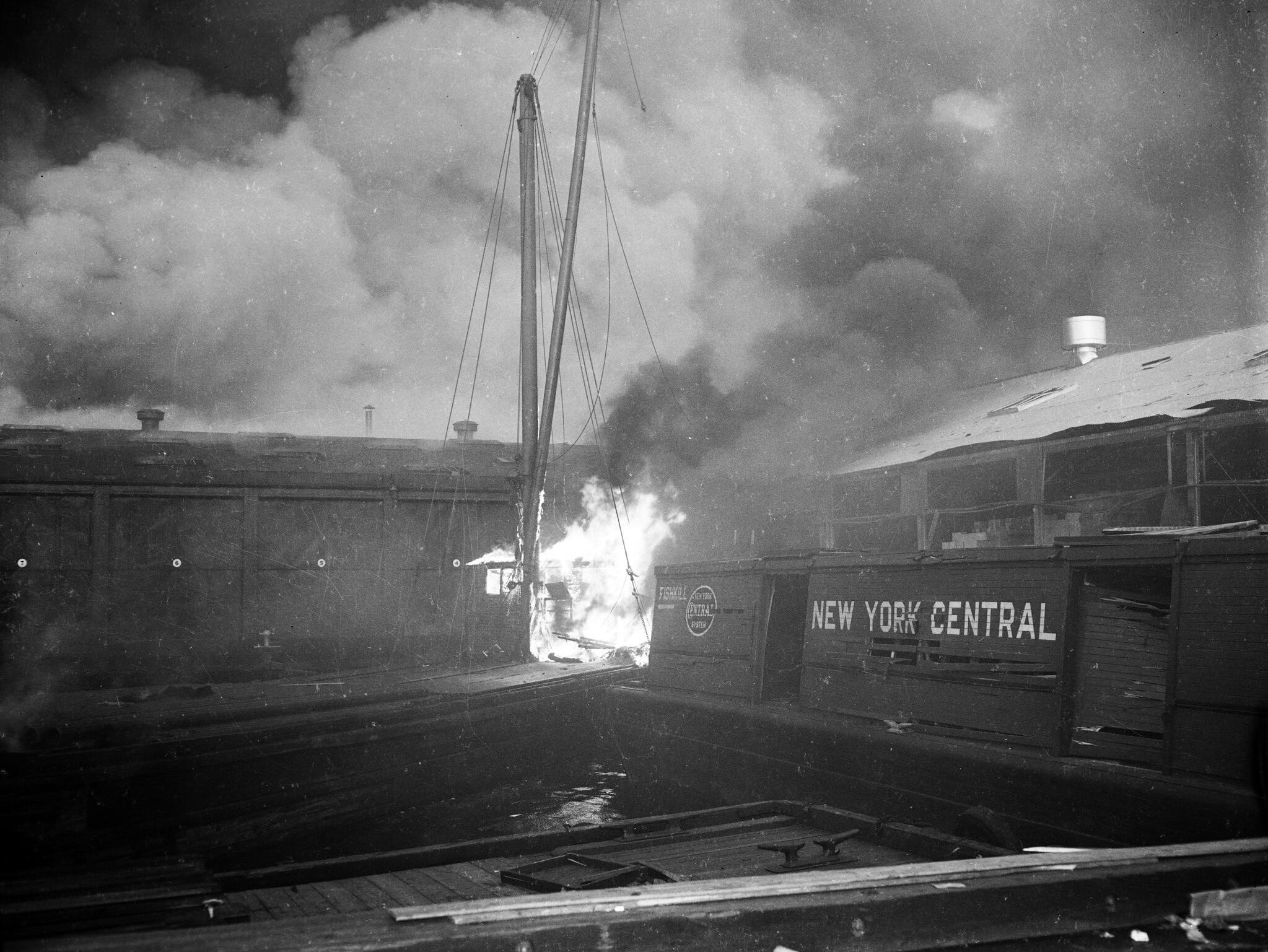
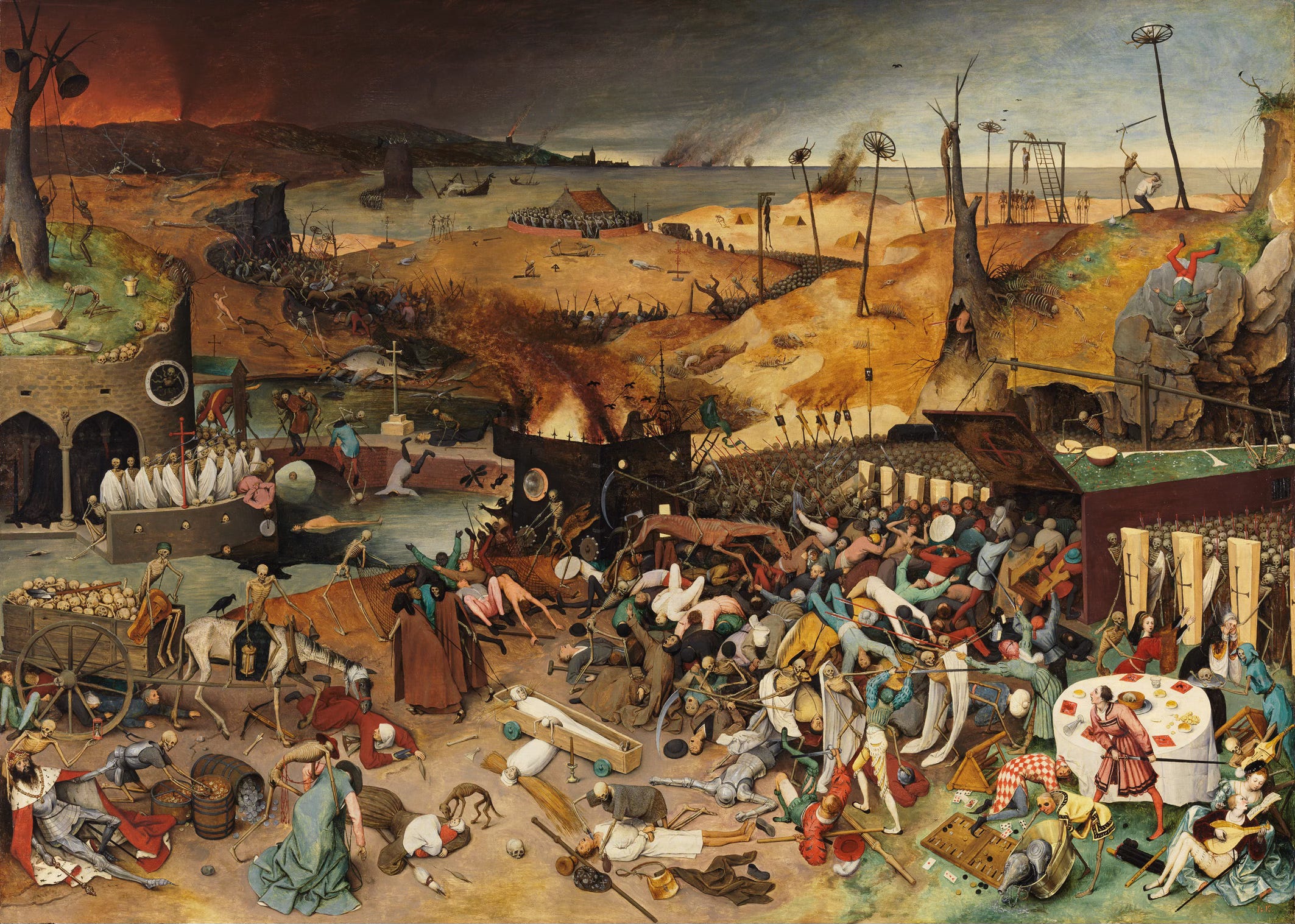
As evening fell, the New York Times compared the scene, with its
”odd and ugly shapes of docks and cranes, the billowing smoke suffused with red, the jets of water and the dark outlines of the firemen” to a Pieter Bruegel painting.
MOSES STRIKES AGAIN
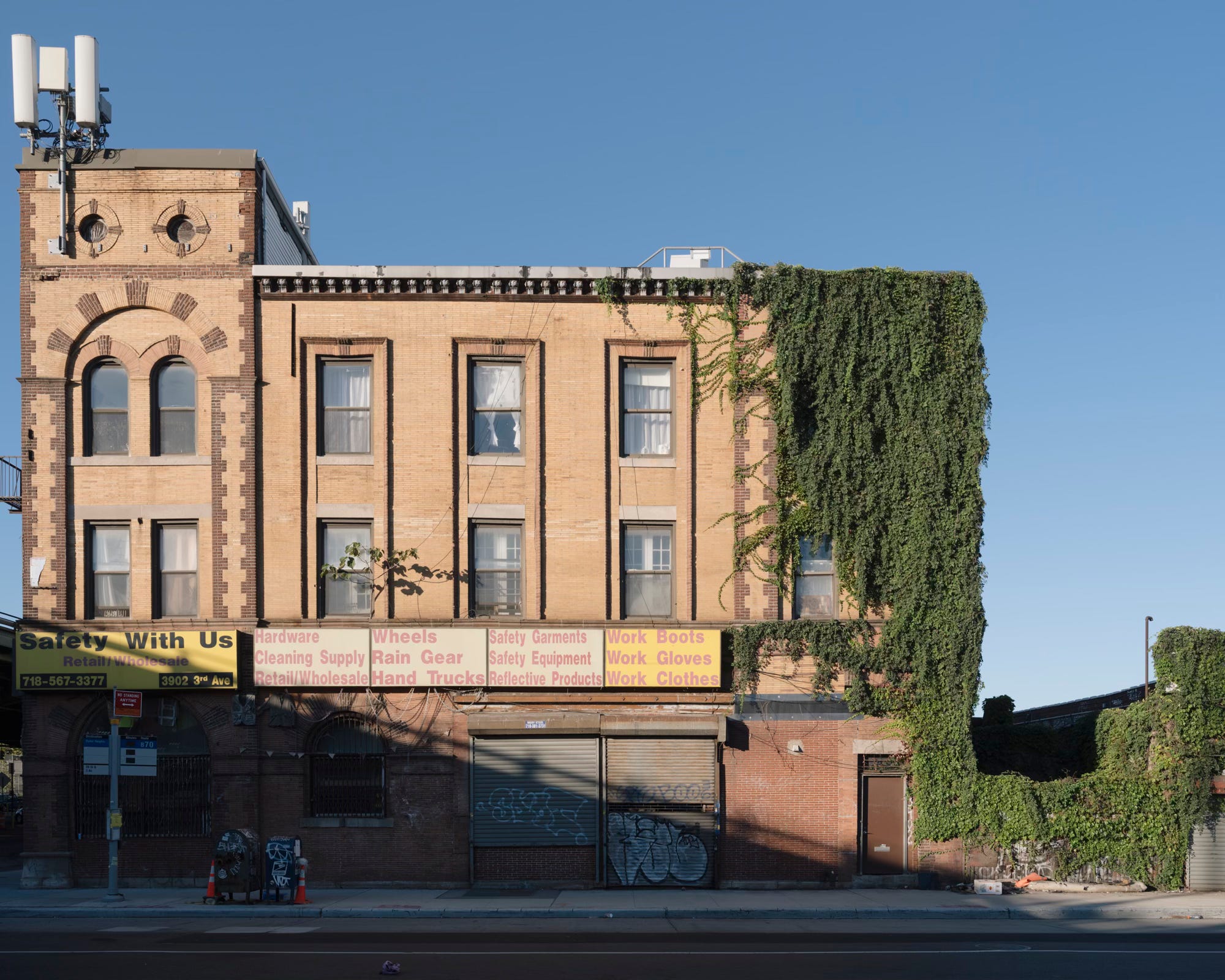
The avenues near the terminal were always rougher around the edges, but Third Avenue thrived under the shadows of the elevated train. Restaurants, movie theaters, and small shops lined the street, drawing steady foot traffic.
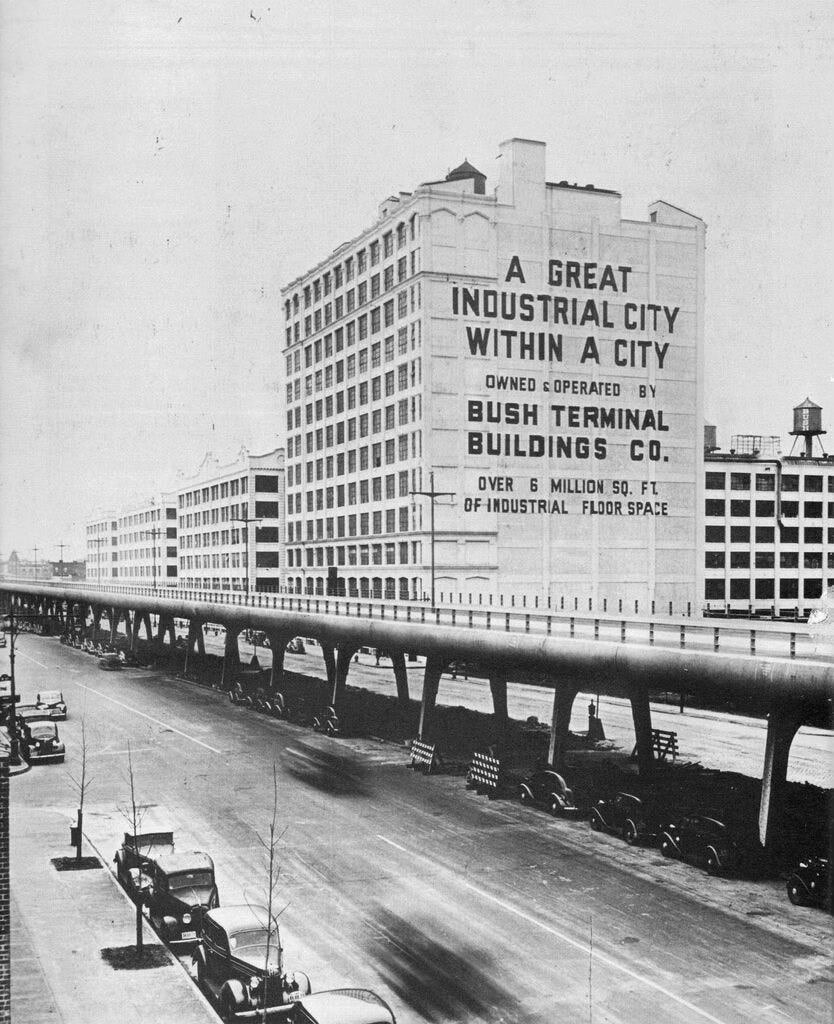
That didn't stop Robert Moses from declaring the area a slum and replacing the tracks of the EL with the Gowanus Expressway. Despite local pleas to route it along 2nd Avenue, Moses, squandering whatever goodwill he had earned by building Sunset Park’s massive pool, began construction on the expressway in 1941. The forty-foot train tracks gave way to a ninety-four-foot-wide concrete viaduct. Over a hundred stores and countless homes were demolished to make way for ramps and right-of-way.
With its heart gone, the neighborhood had no will to resist the invasion. There was nothing to hold its people—and as they saw the blight creeping closer, they simply moved away. For more than thirty years, the blight in South Brooklyn had been confined to the waterfront area. Now, thanks to Robert Moses and his parkway, it was on the loose, spreading across Sunset Park. The world of neat little houses and block parties vanished beneath it along the entire twenty-six-block length of the Gowanus Parkway, as far east as Fourth Avenue and, except for a few isolated blocks, as far west as Sixth—where the parkway was far enough away so that the community put up a stand, and won. Moses’ steel and concrete, “lifted into the air” above a neighborhood for the convenience of motorists driving through the neighborhood to get somewhere else, had destroyed the neighborhood. ROBERT CARO - THE POWER BROKER
The rise of the expressway coincided with the gradual decline of the maritime shipping industry. Bush Terminal suffered the same fate as nearby Red Hook as the maritime industry began to embrace the even more efficient containerization approach to shipping. The very intermodal system Bush pioneered paved the way for its own obsolescence.
The area around the waterfront devolved into a den of prostitution and gang activity, famously evoked in Hubert Selby’s collection of stories, Last Exit to Brooklyn.
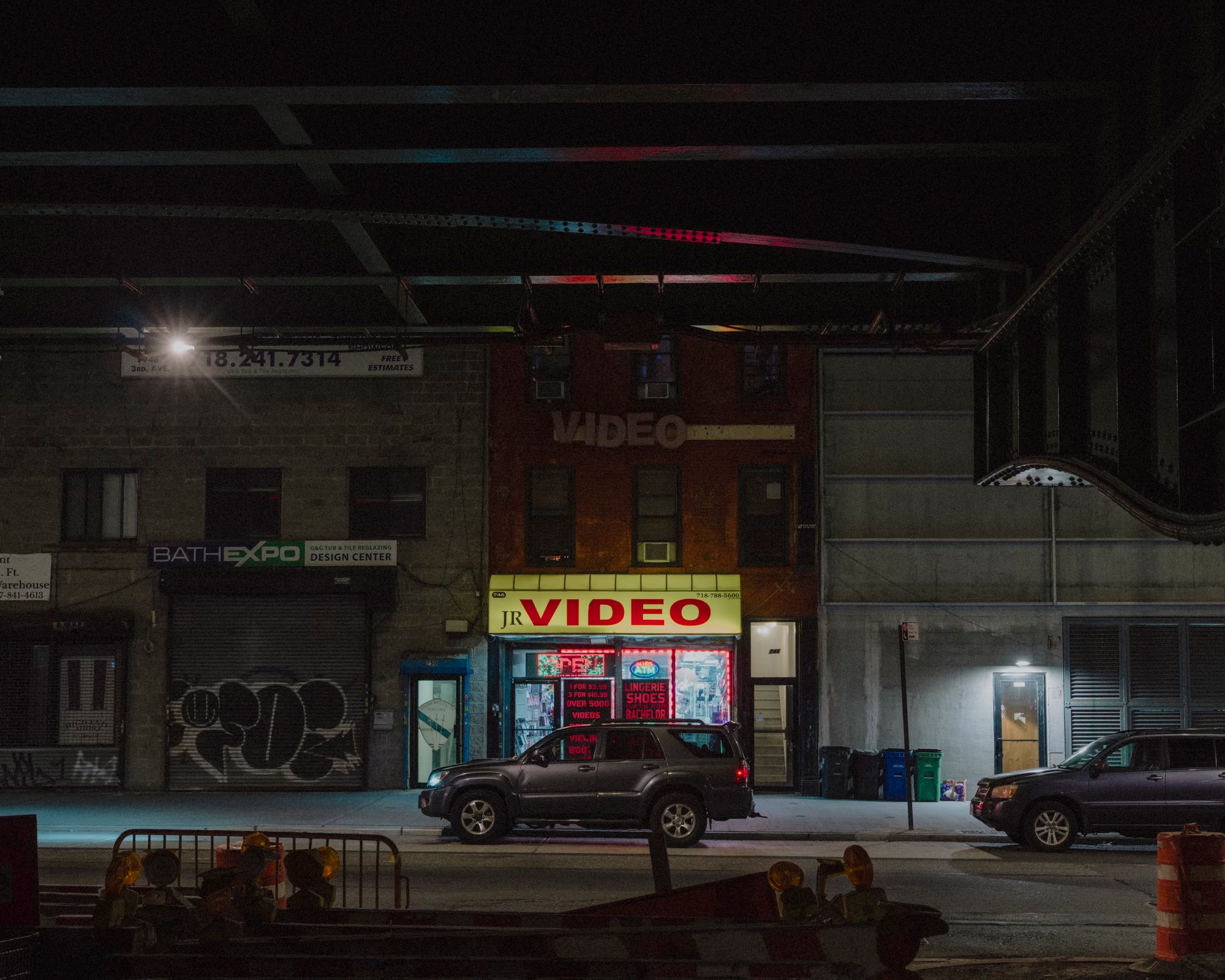
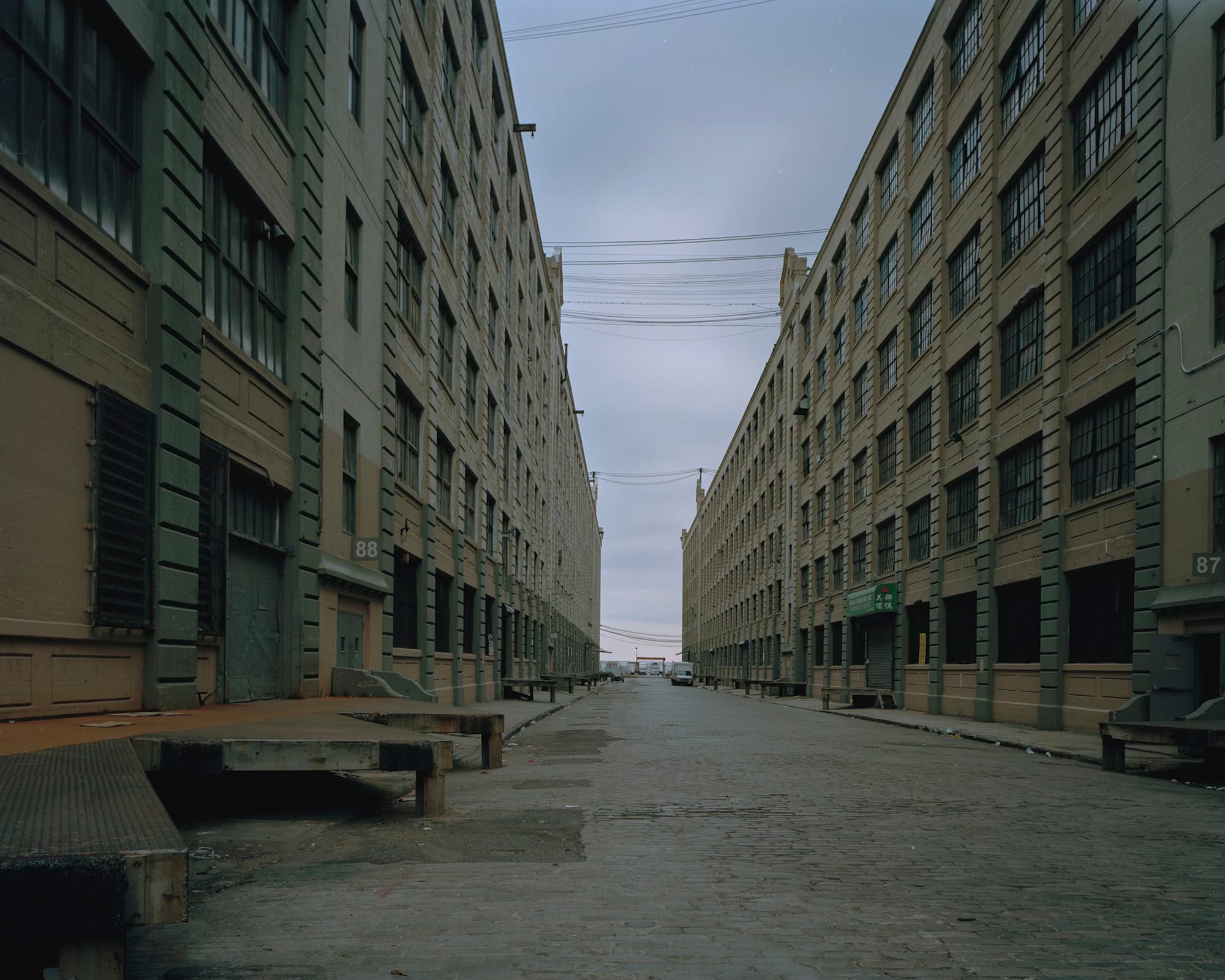
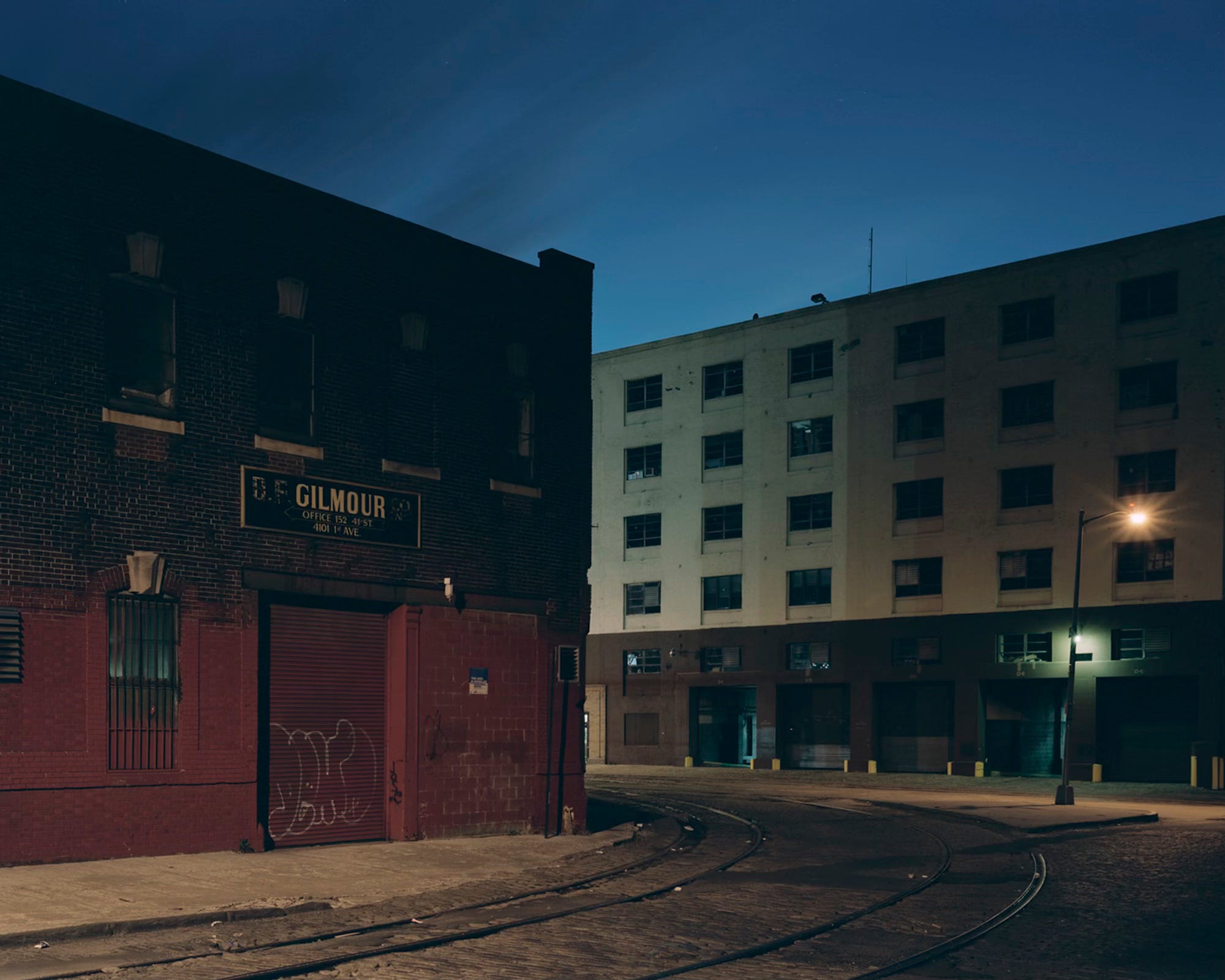
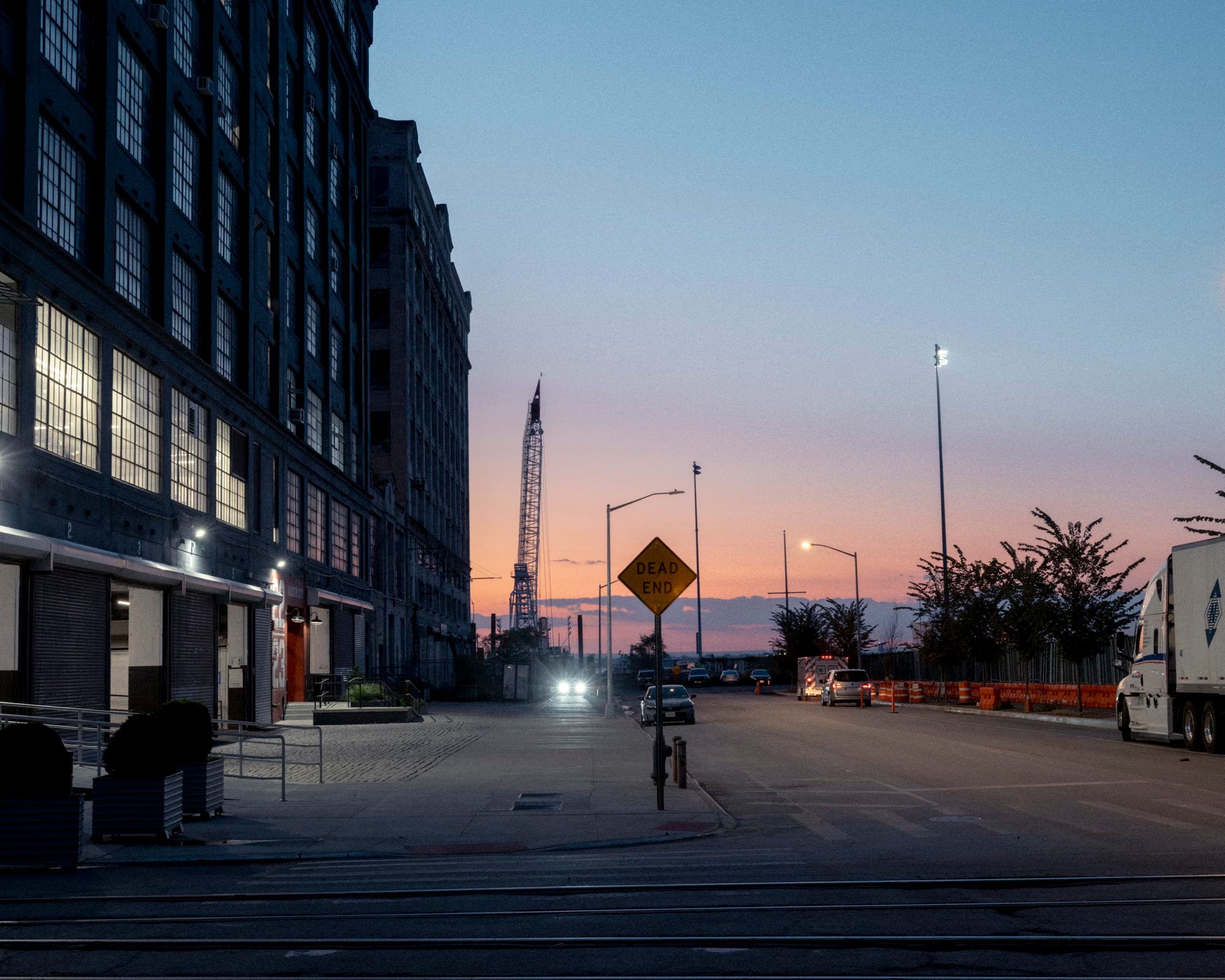
While the streets beneath the expressway, perpetually dark, filled with the ceaseless rumble of traffic, and heavy with exhaust, still bear traces of their seedy past, the former warehouses of the Bush Terminal have undergone a remarkable transformation.
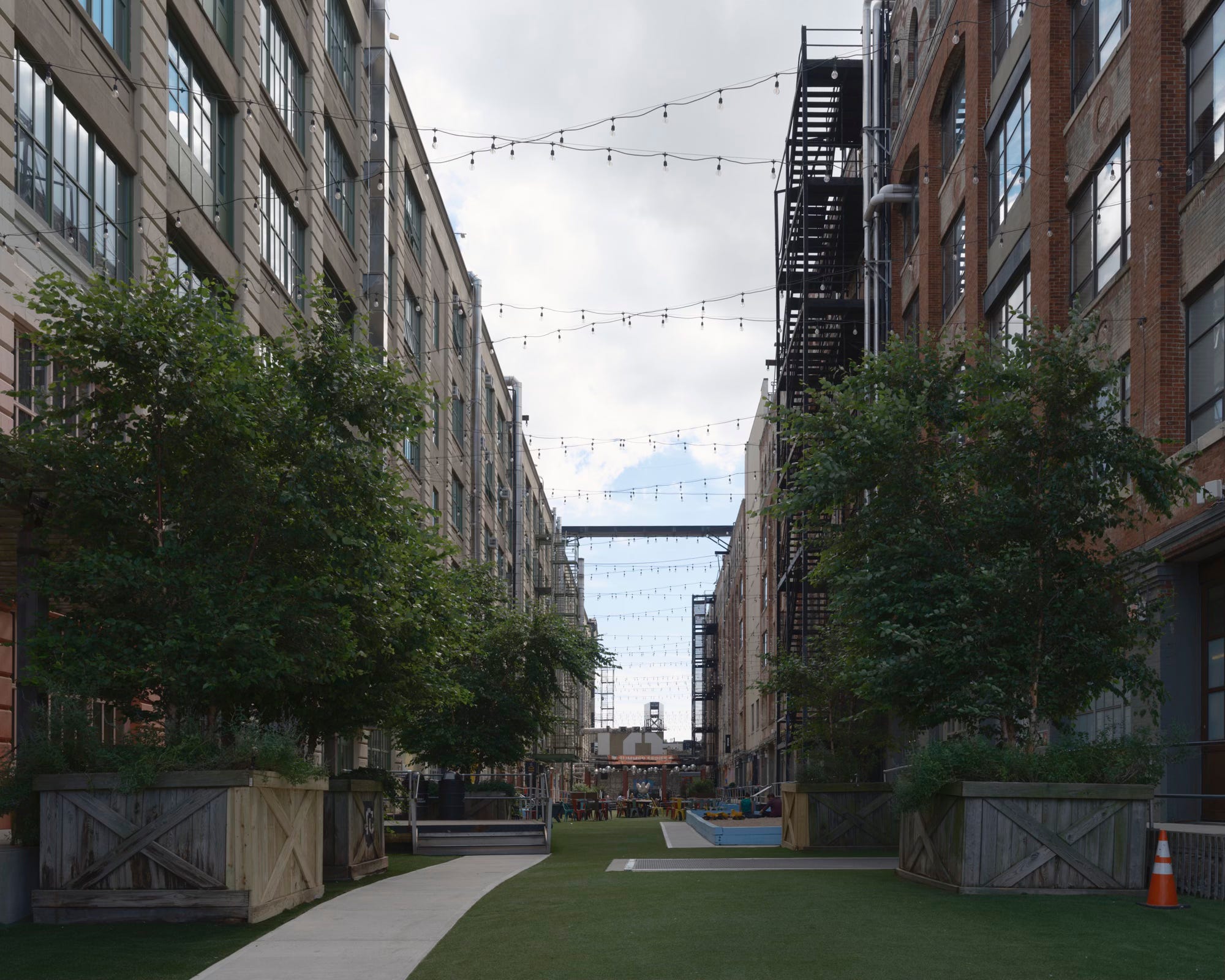
Industry City is a 6-million-square-foot complex of industrial, office, and retail space described as “a hotbed for innovation, collaboration, and community." The junkies, prostitutes, and pickpockets of Selby’s stories would be amazed to see the former derelict docks and dives replaced by 35 acres of climbing gyms, fire pits, and outdoor yoga classes. There is even a 20,000-square-foot Japanese-themed marketplace and a Porsche dealership.
MDC
The Metropolitan Detention Center (MDC) sits at the far northern end of Industry City. Conditions at the facility, which primarily serves as a way station for prisoners with pending cases in the United States District Court for the Eastern District of New York, are notoriously bad. It has been described as "one of the most troubled, if not the most troubled facility in the Bureau of Prisons,“ and that assessment came from a former warden. R. Kelly, Ghislaine Maxwell, Martin Shkreli, and Sam Bankman-Fried have all spent time in the prison. Sean "Diddy" Combs and Luigi Mangione are both there now. Recently, the facility has also been used to hold ICE detainees.
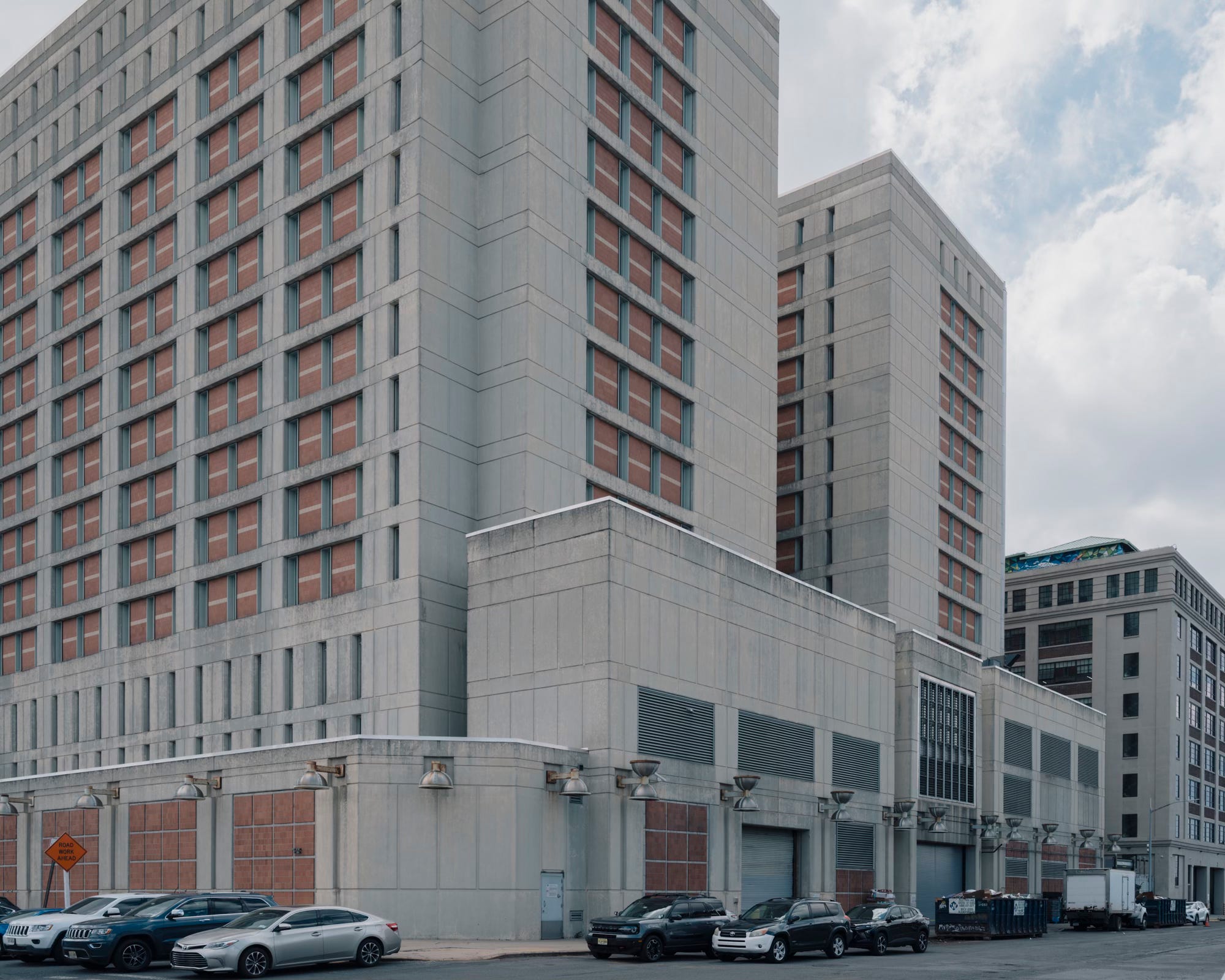
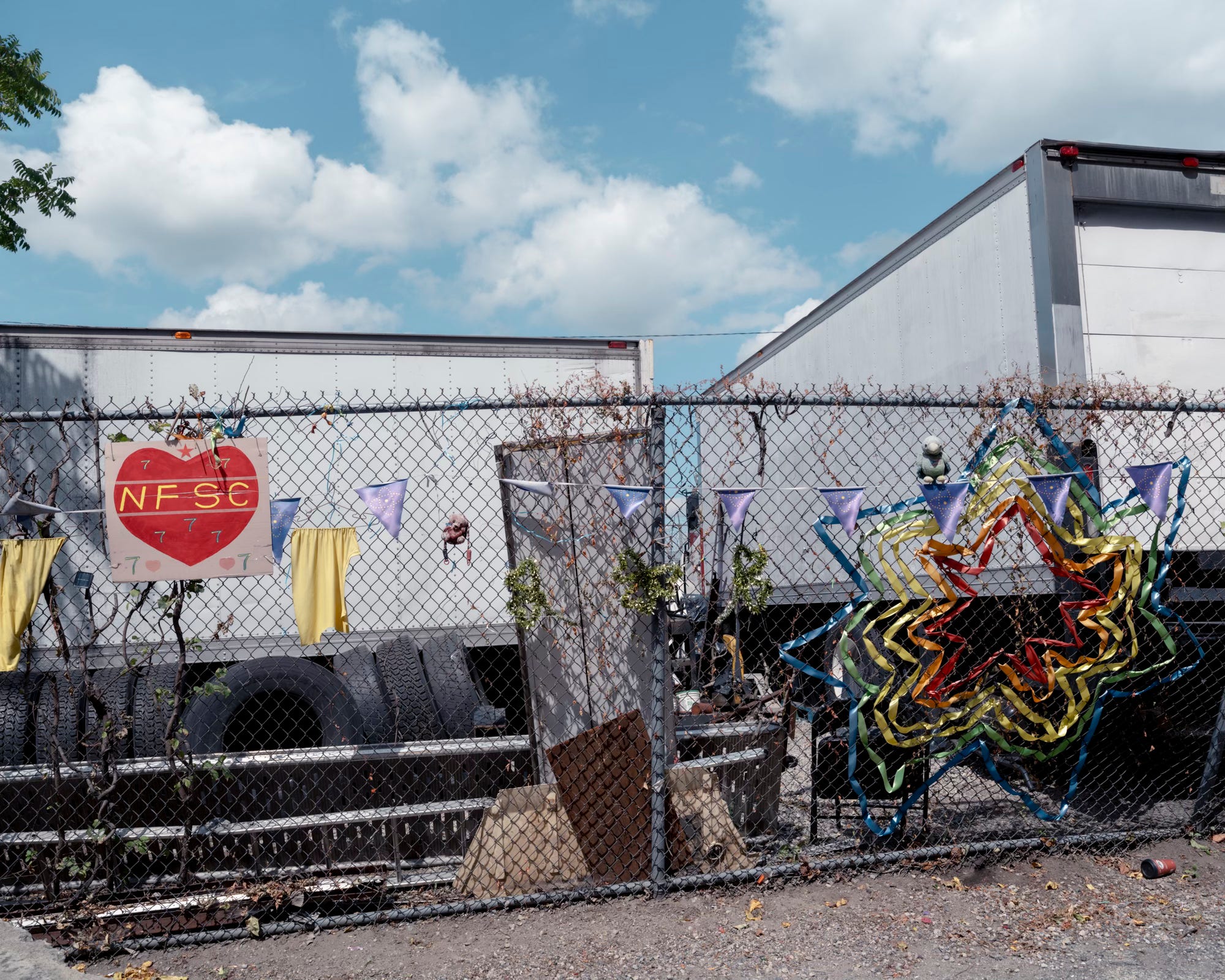
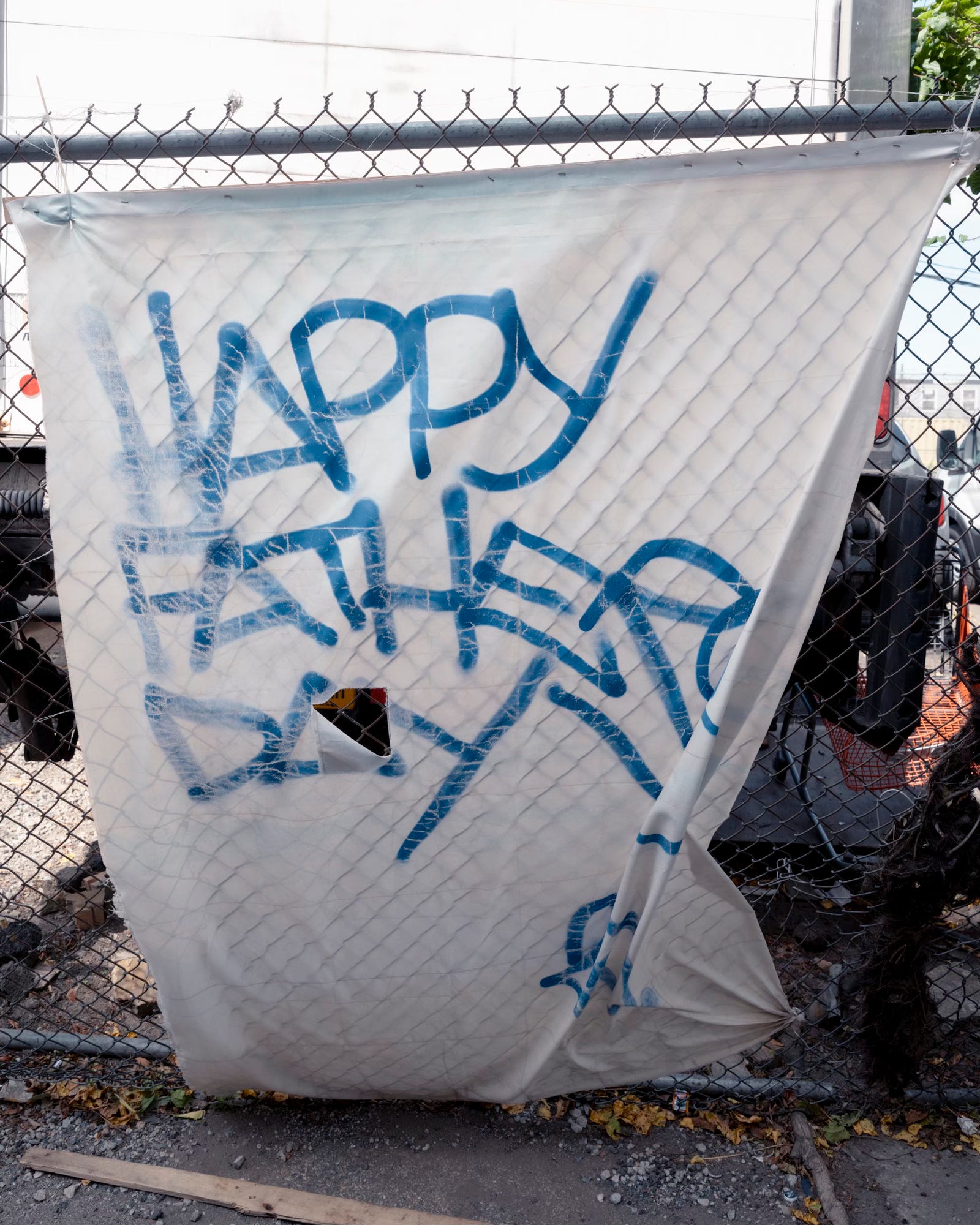
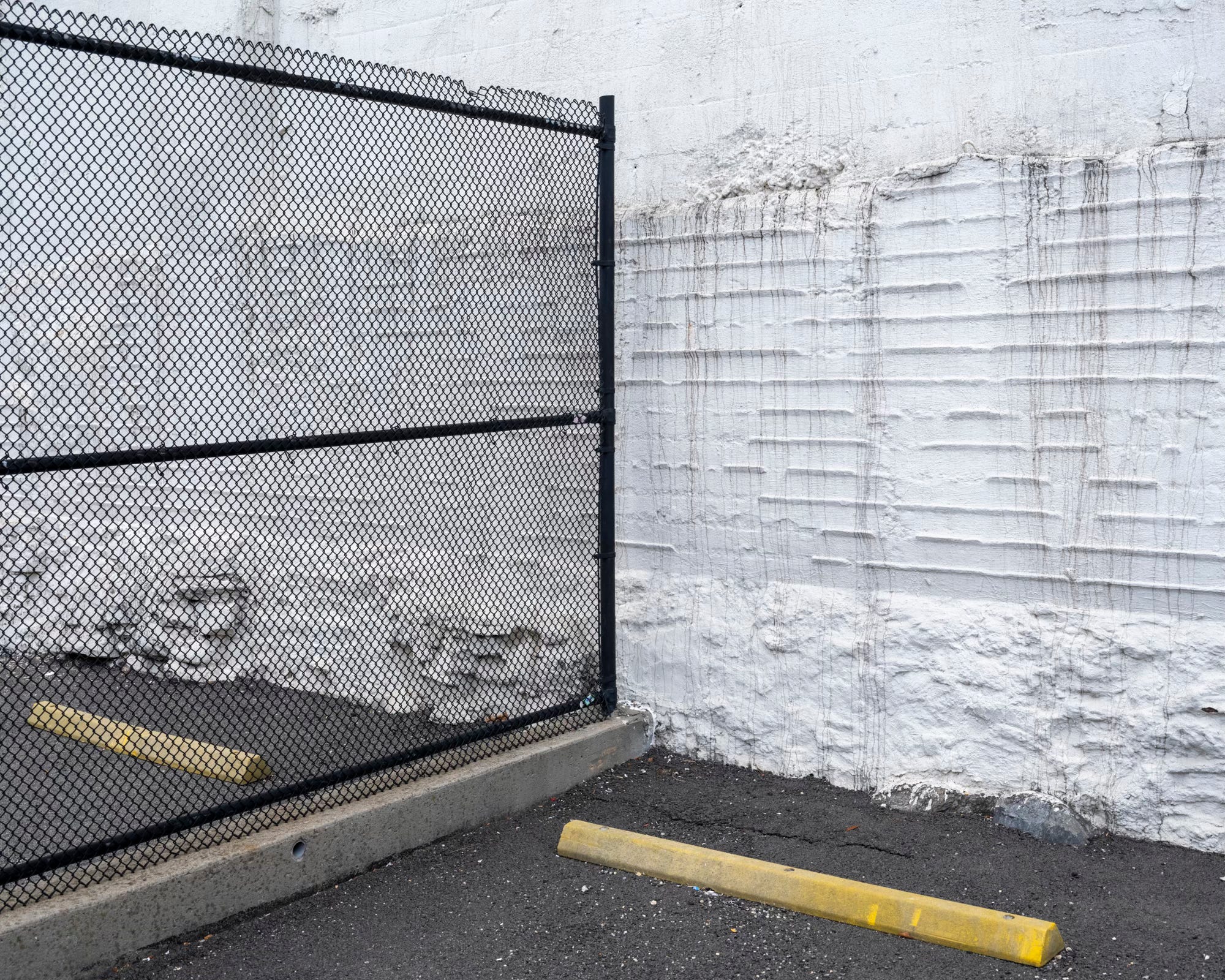
I mentioned that I ran into Joel Sternfeld in the introduction. Joel, who has a studio in Industry City, is one of the true masters of photography whose work I've featured several times before. He has written that his work is "concerned with utopic and dystopic possibilities of the American experience." Fittingly, he told me about a chain-link fence across from the MDC where friends and family leave messages, small attempts at connection woven through the links, barely visible from the small windows of the prison.
SIGHTS AND SOUNDS
This week's audio starts by a playground sprinkler on one of the last days before school begins, then heads into St. Michael's Roman Catholic Church with its distinctive egg-shaped dome. From there, the recording goes into Sunset Park itself, down 8th Avenue, and ends up at the waterfront park in Bush Terminal Park.
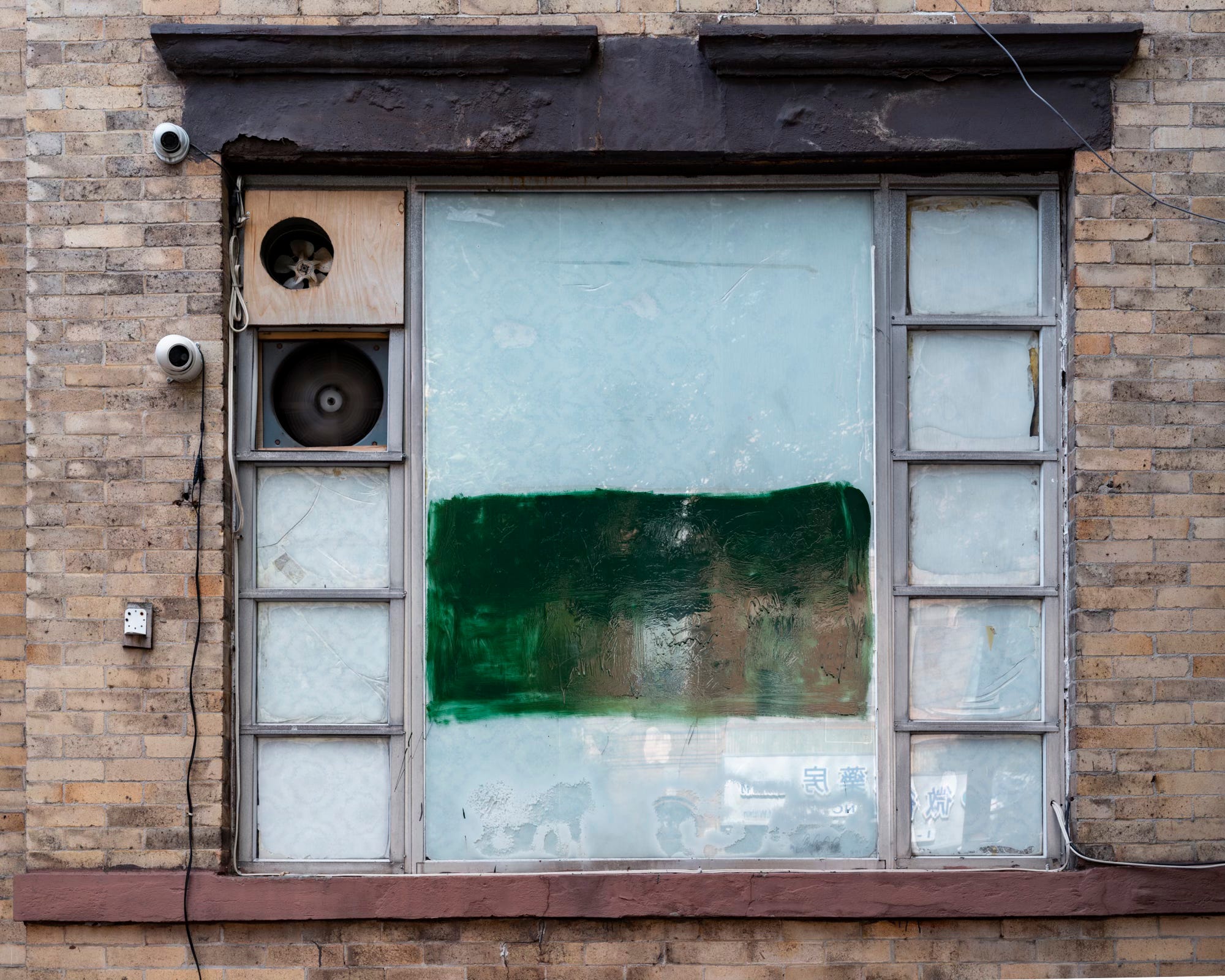
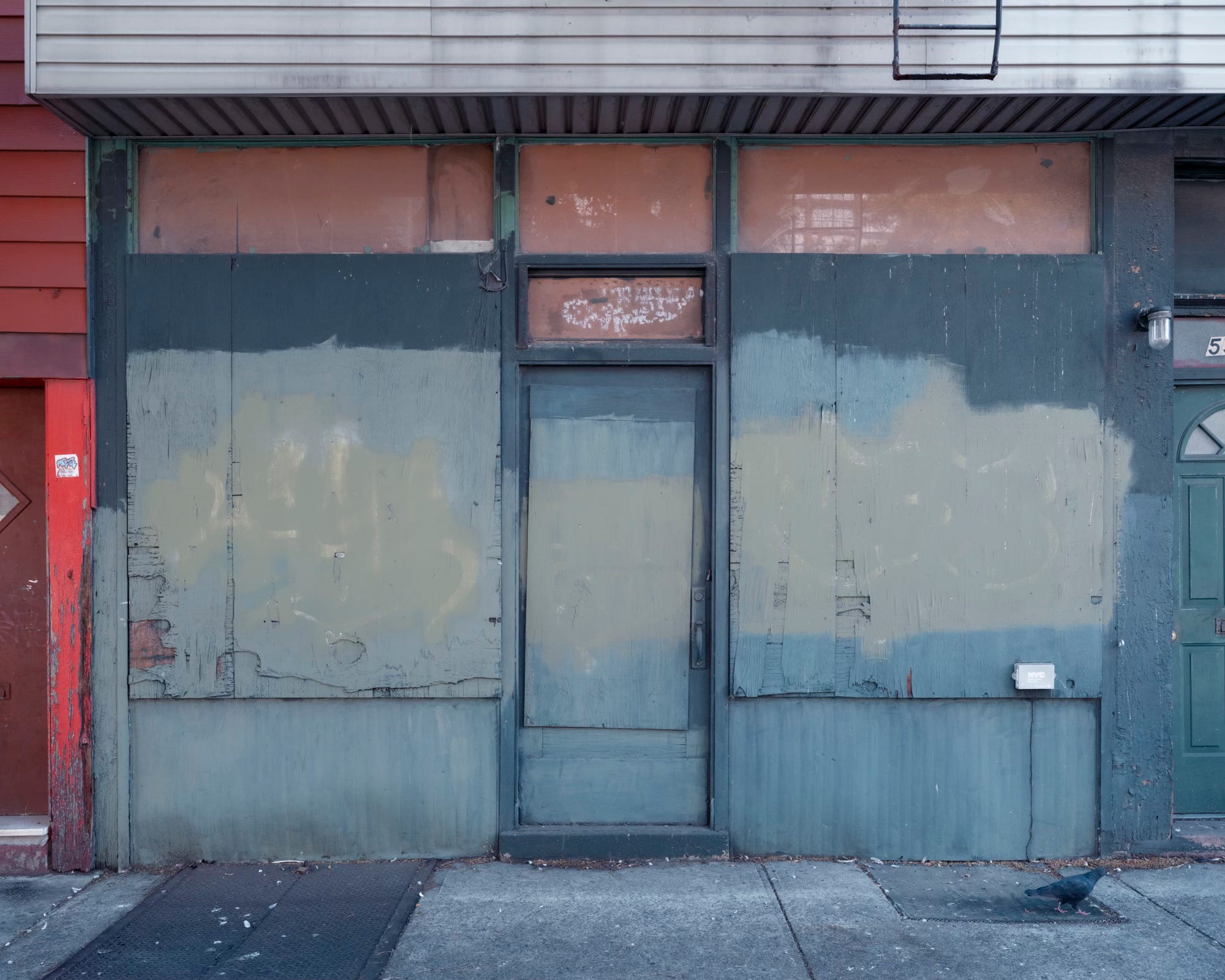
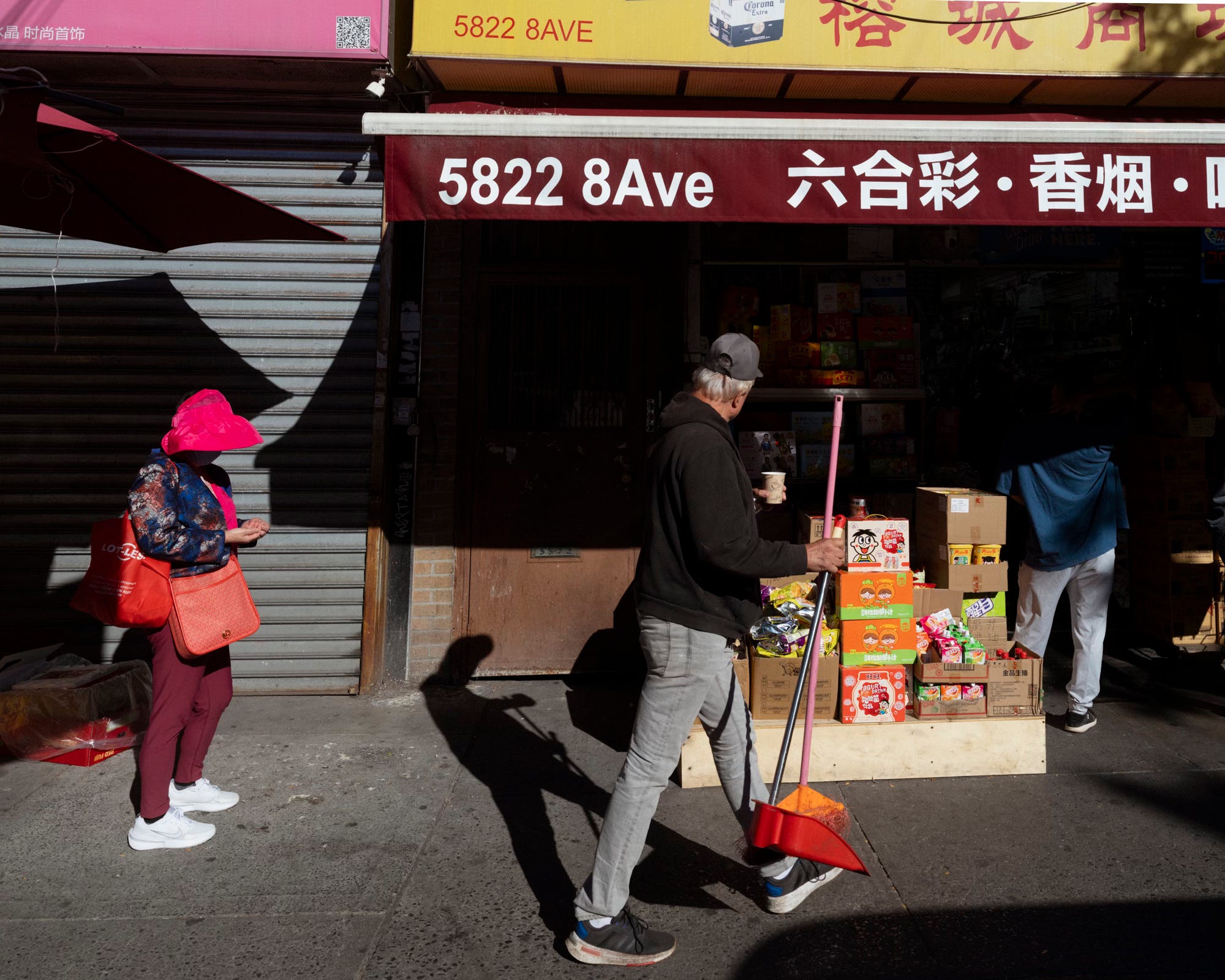
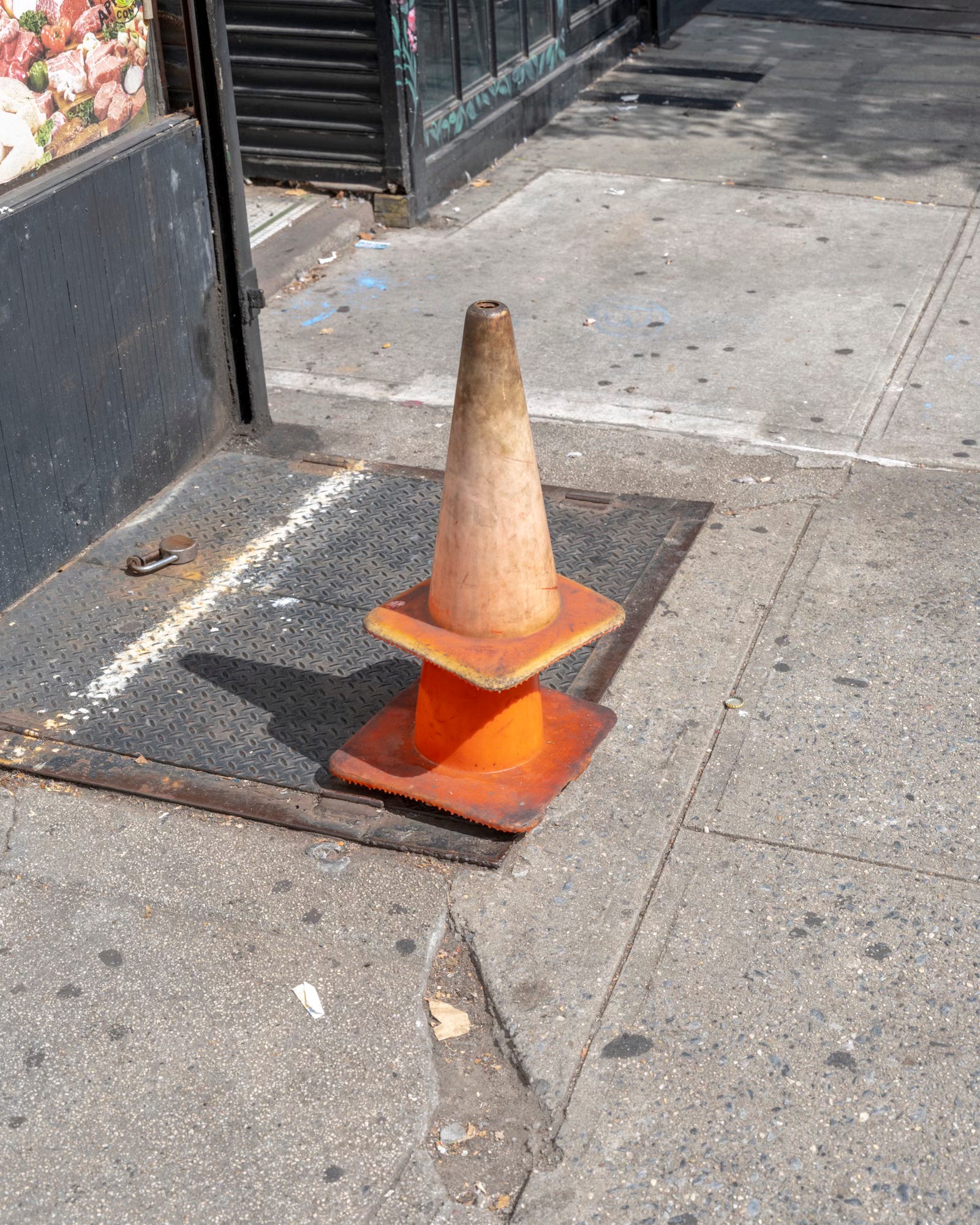
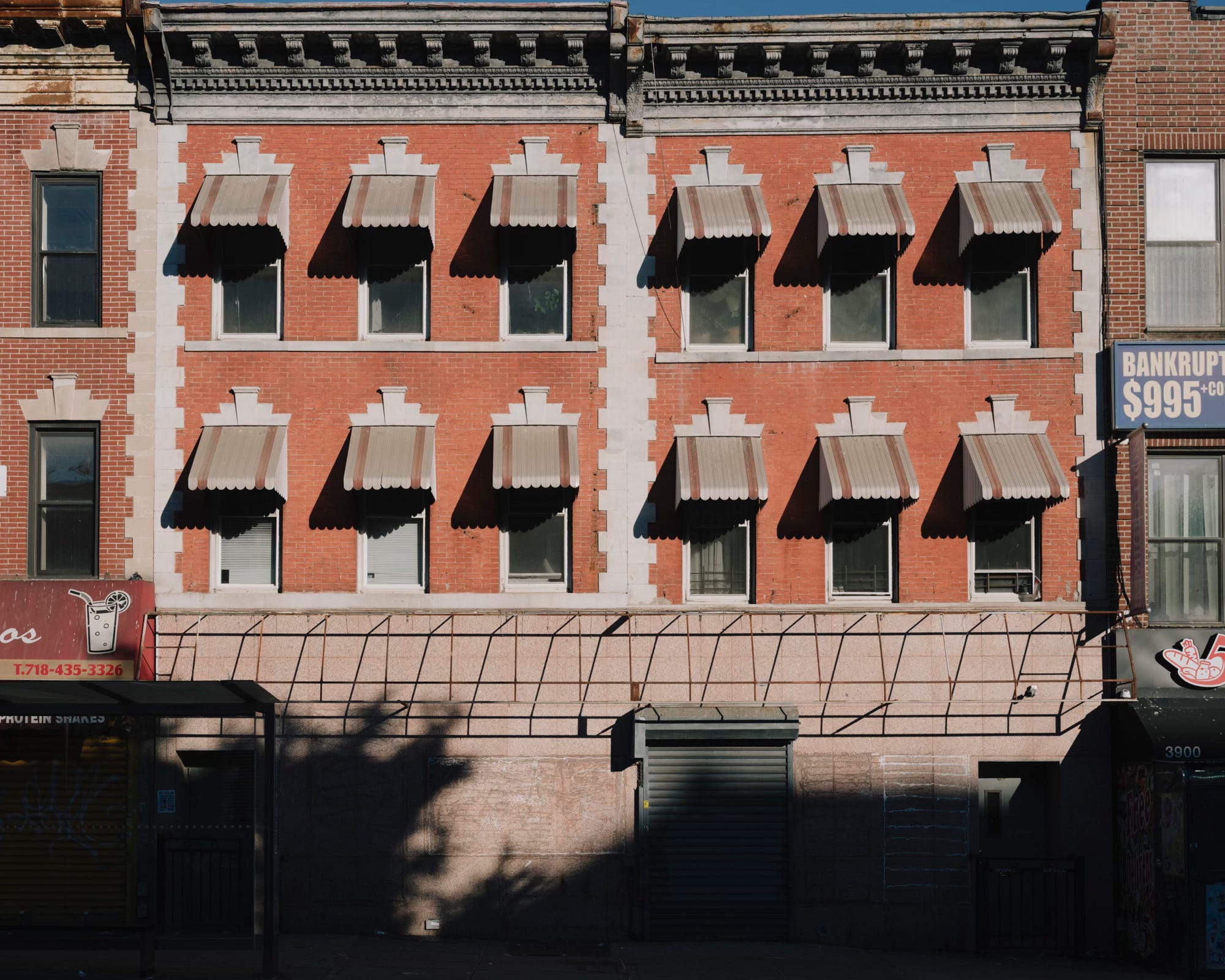
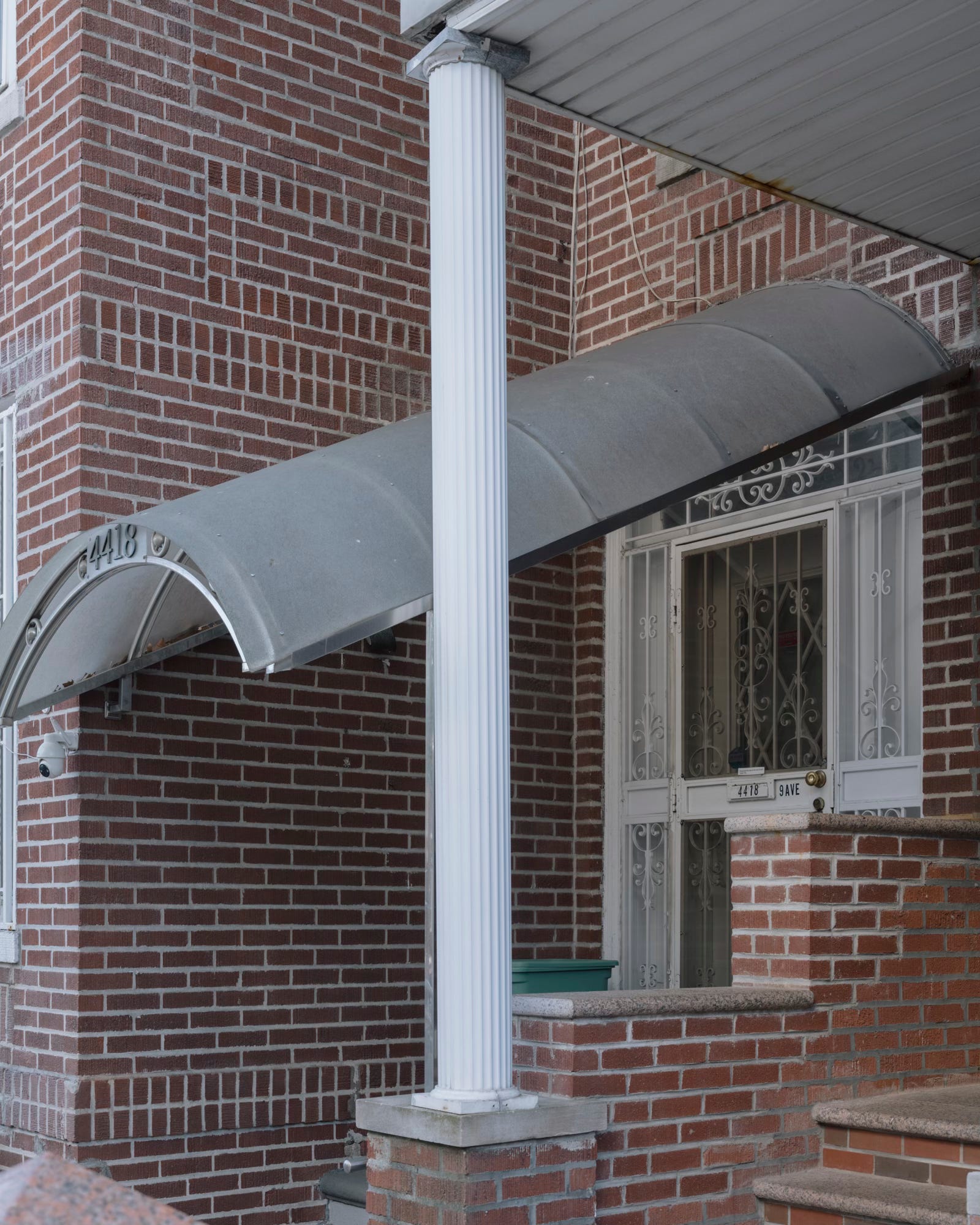
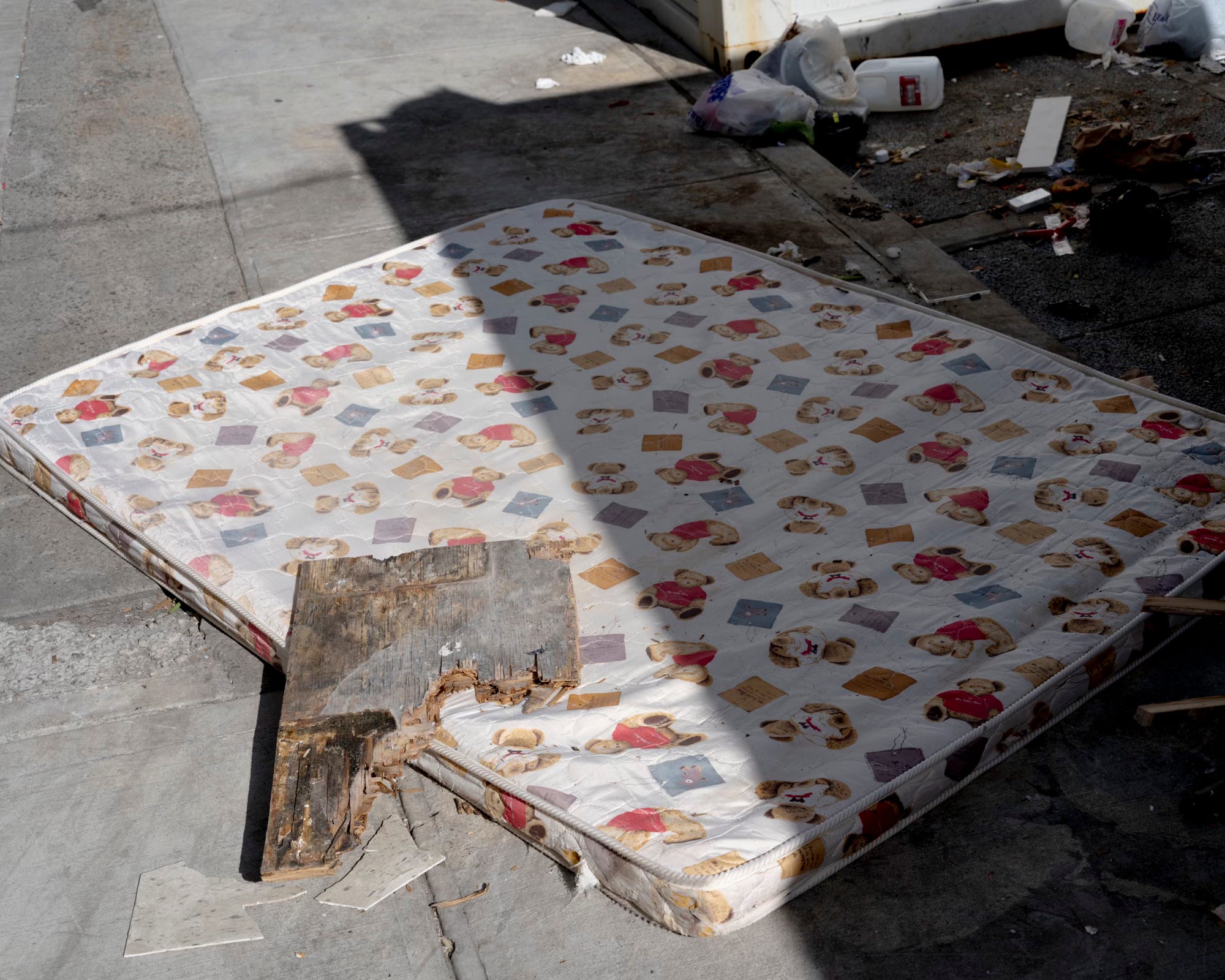
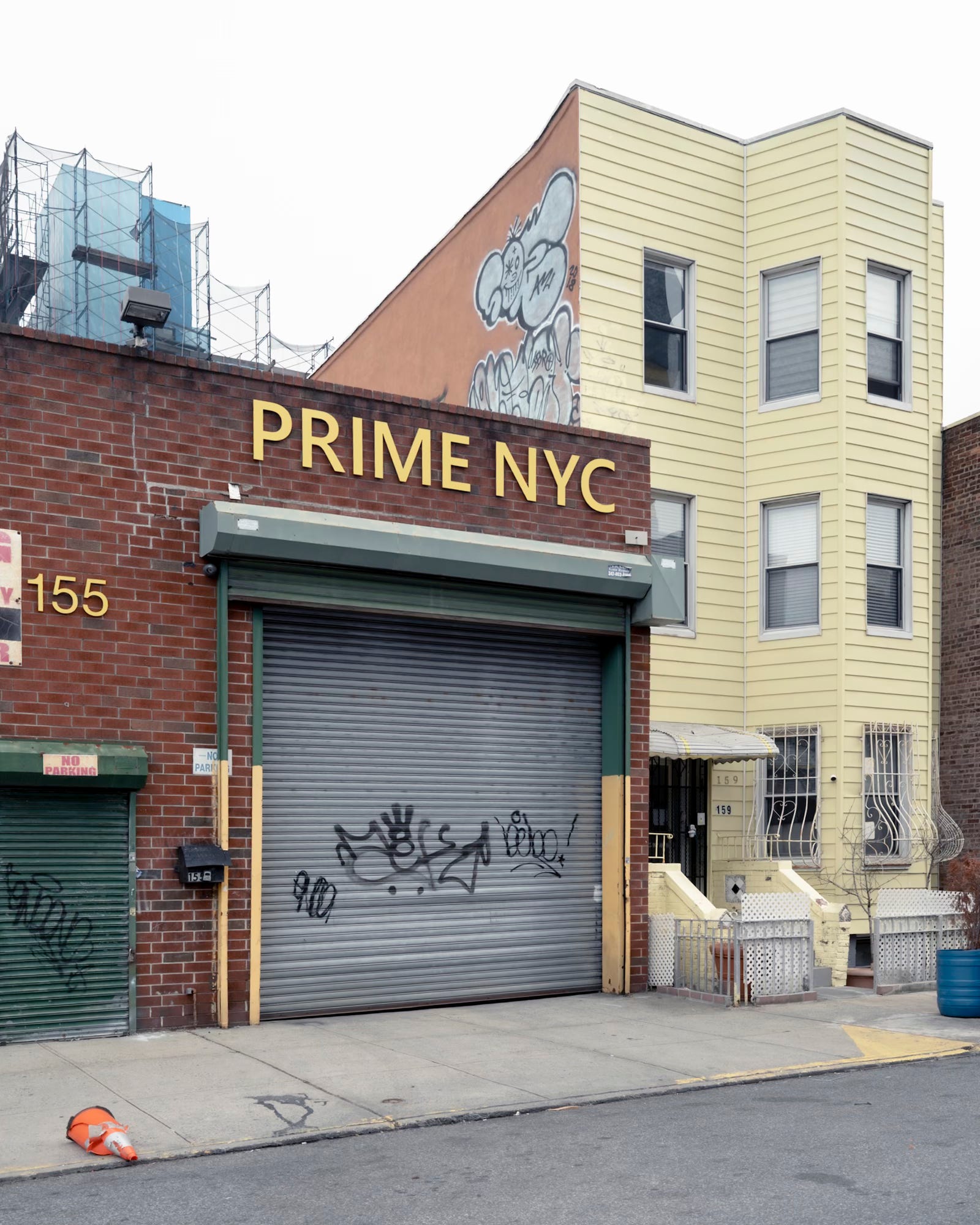
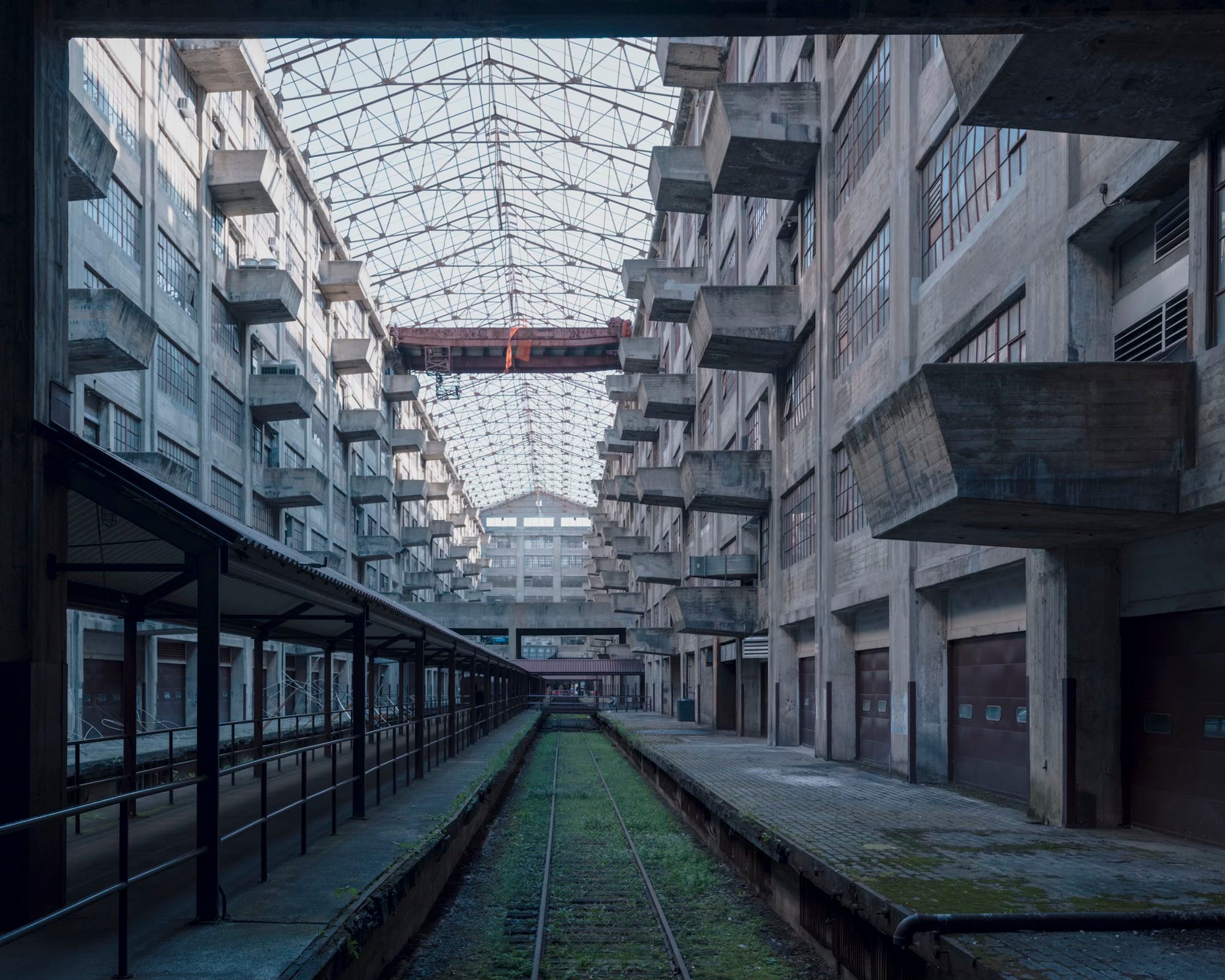
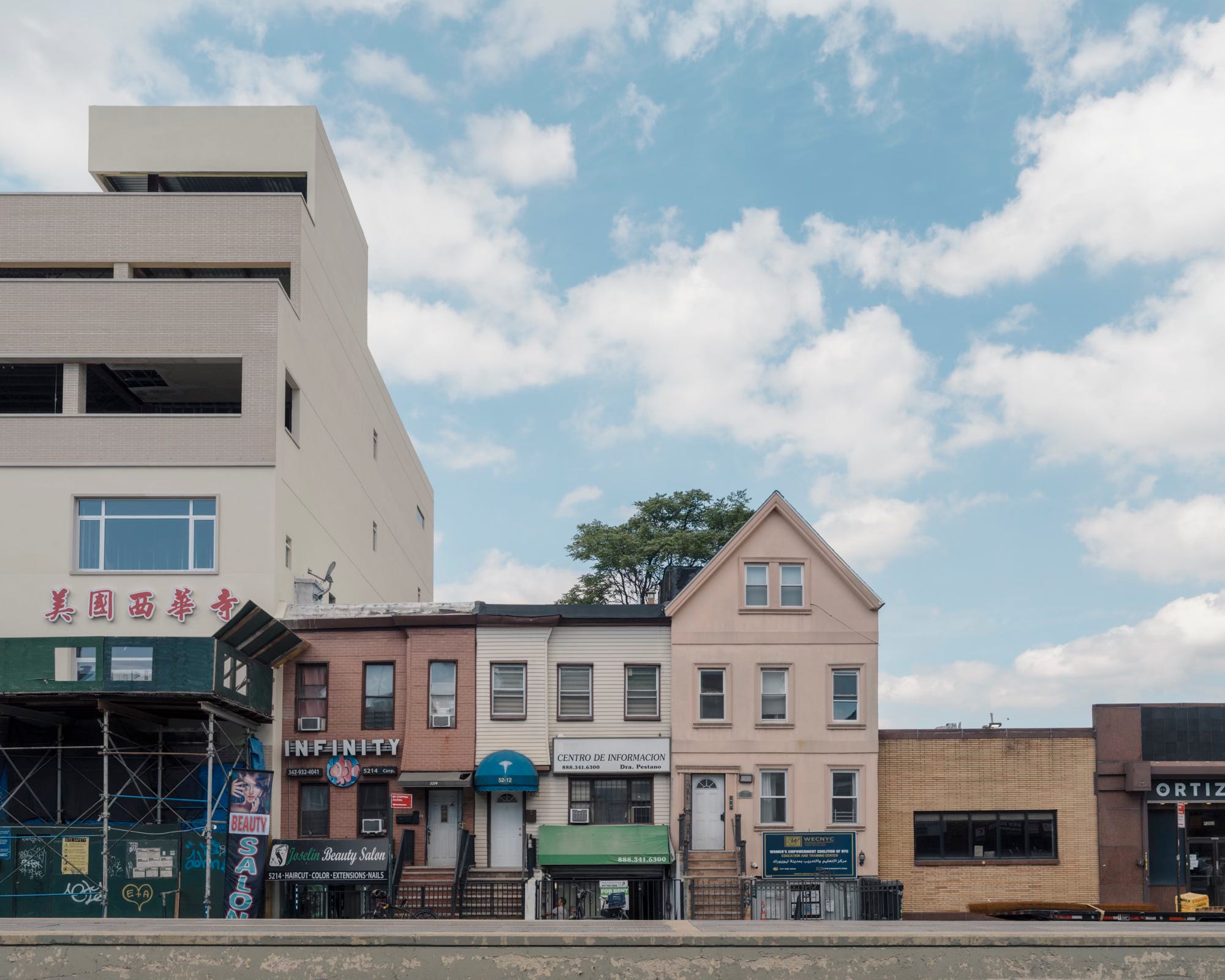
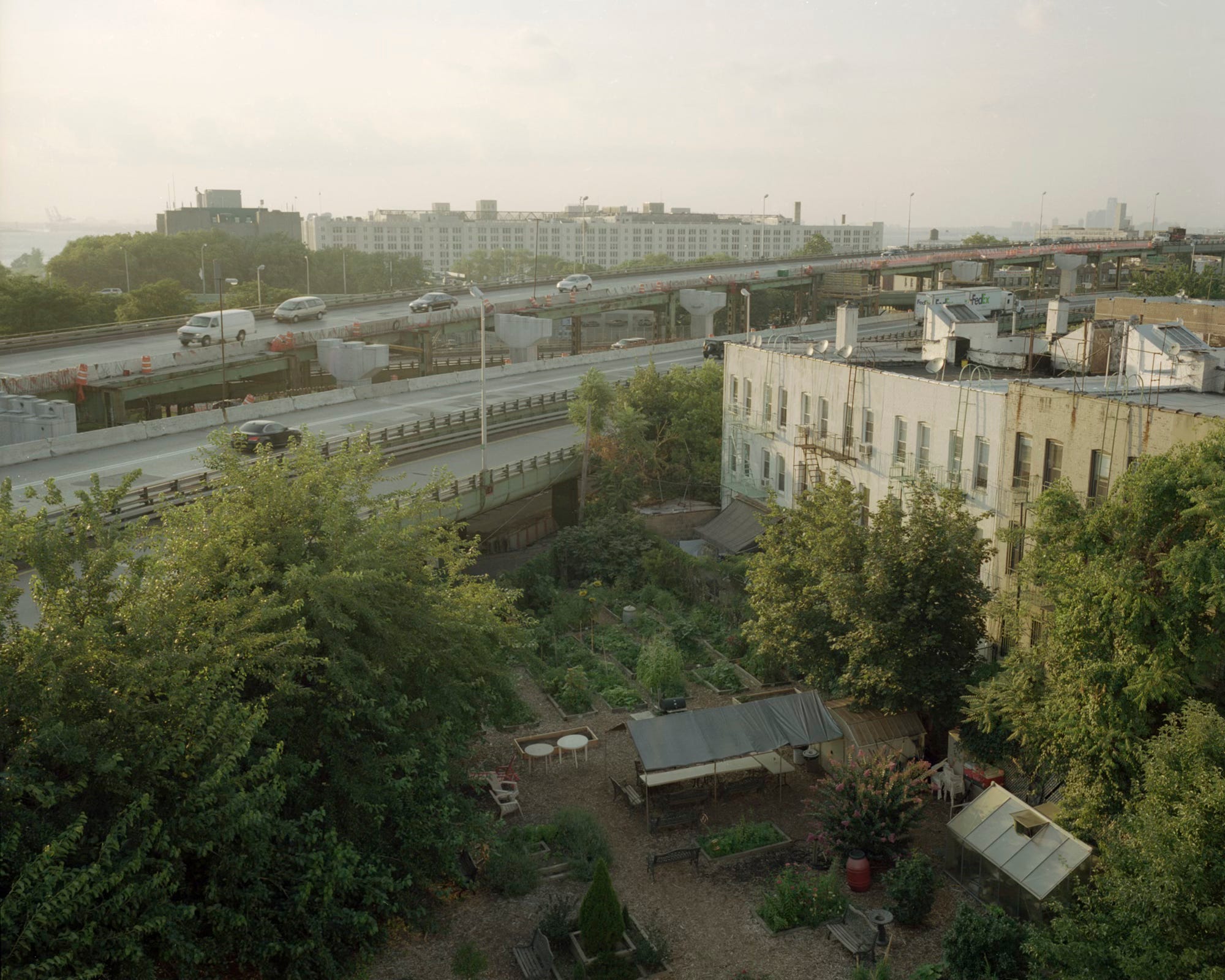
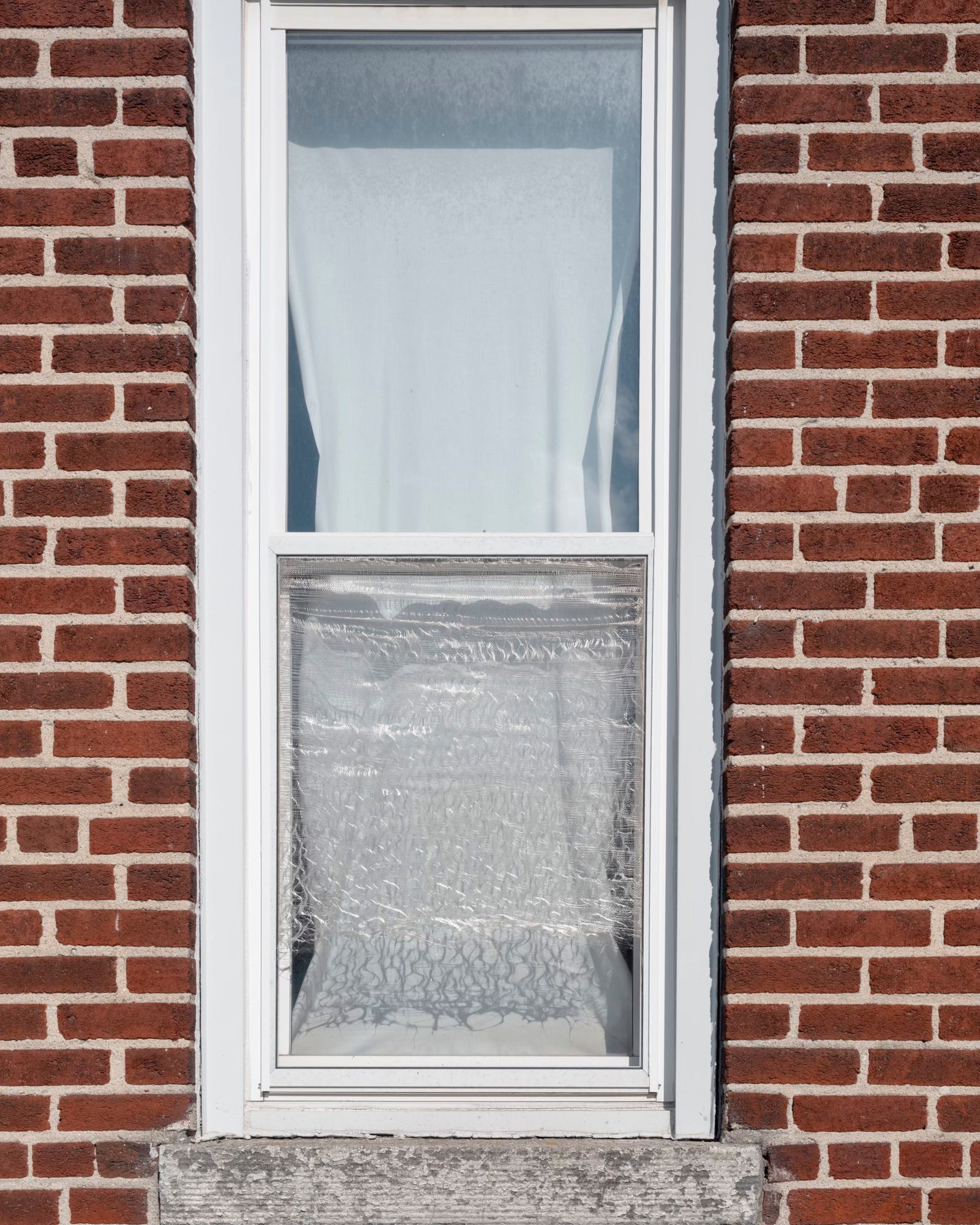
FEATURED PHOTOGRAPHER
While looking through pictures of Bush Terminal, I came across a series of photos by E.E. Rutter. There isn’t much information on E.E. except that the first E stands for Edgar and that he served as the official photographer for the borough of Brooklyn in the early 20th century. Nice work if you can get it! There is one great picture of the photographer at work.
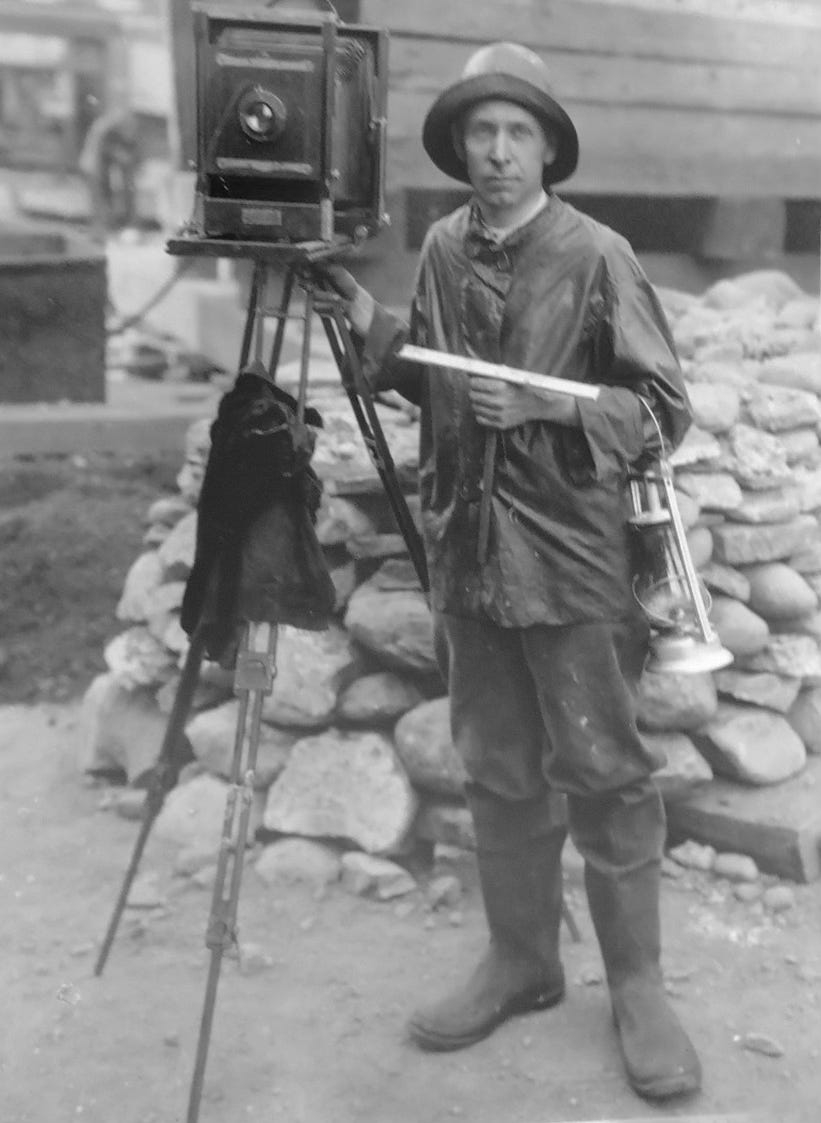
Here are some of his photographs from the Bush Terminal courtesy The Center for Brooklyn History.


ODDS AND END
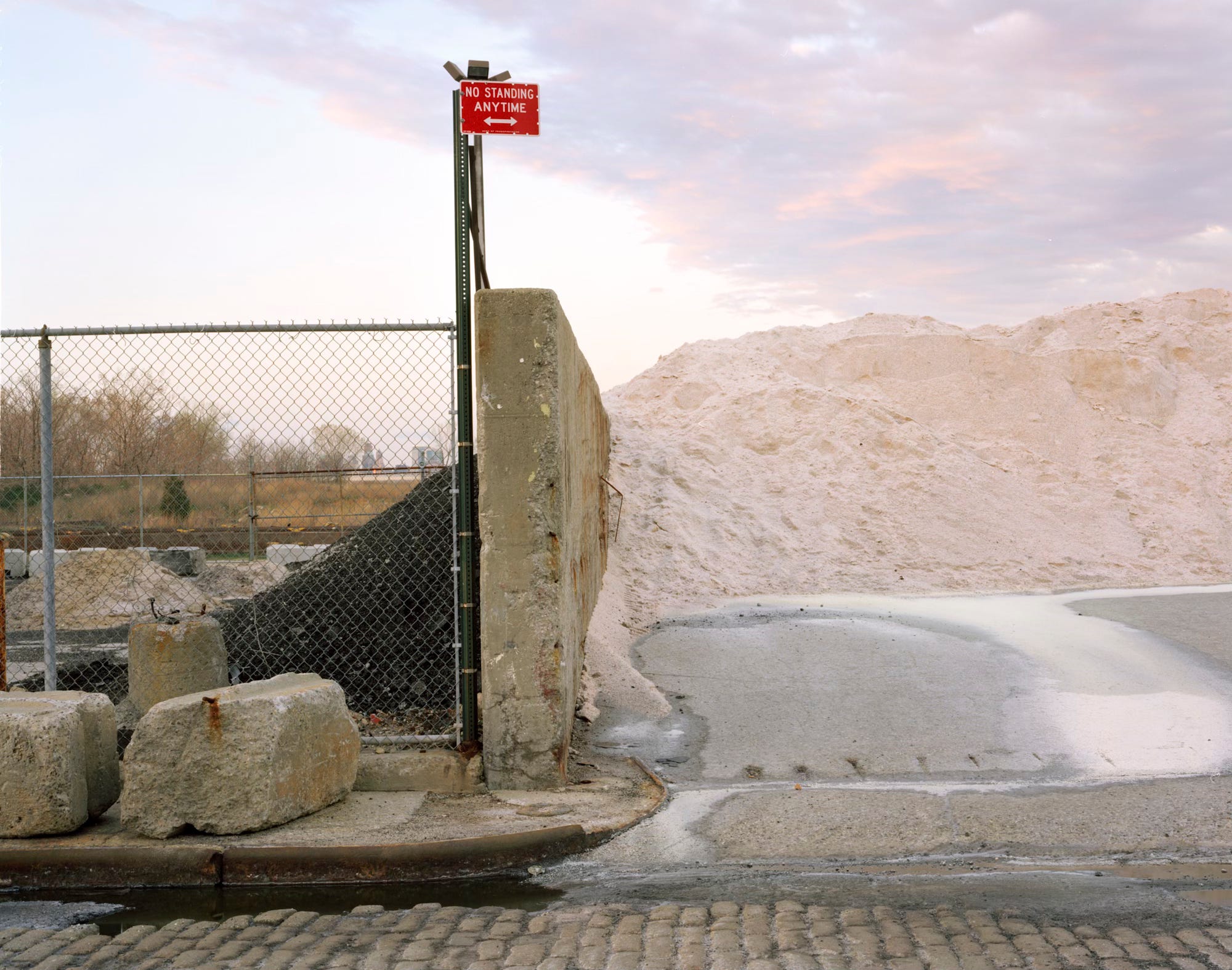
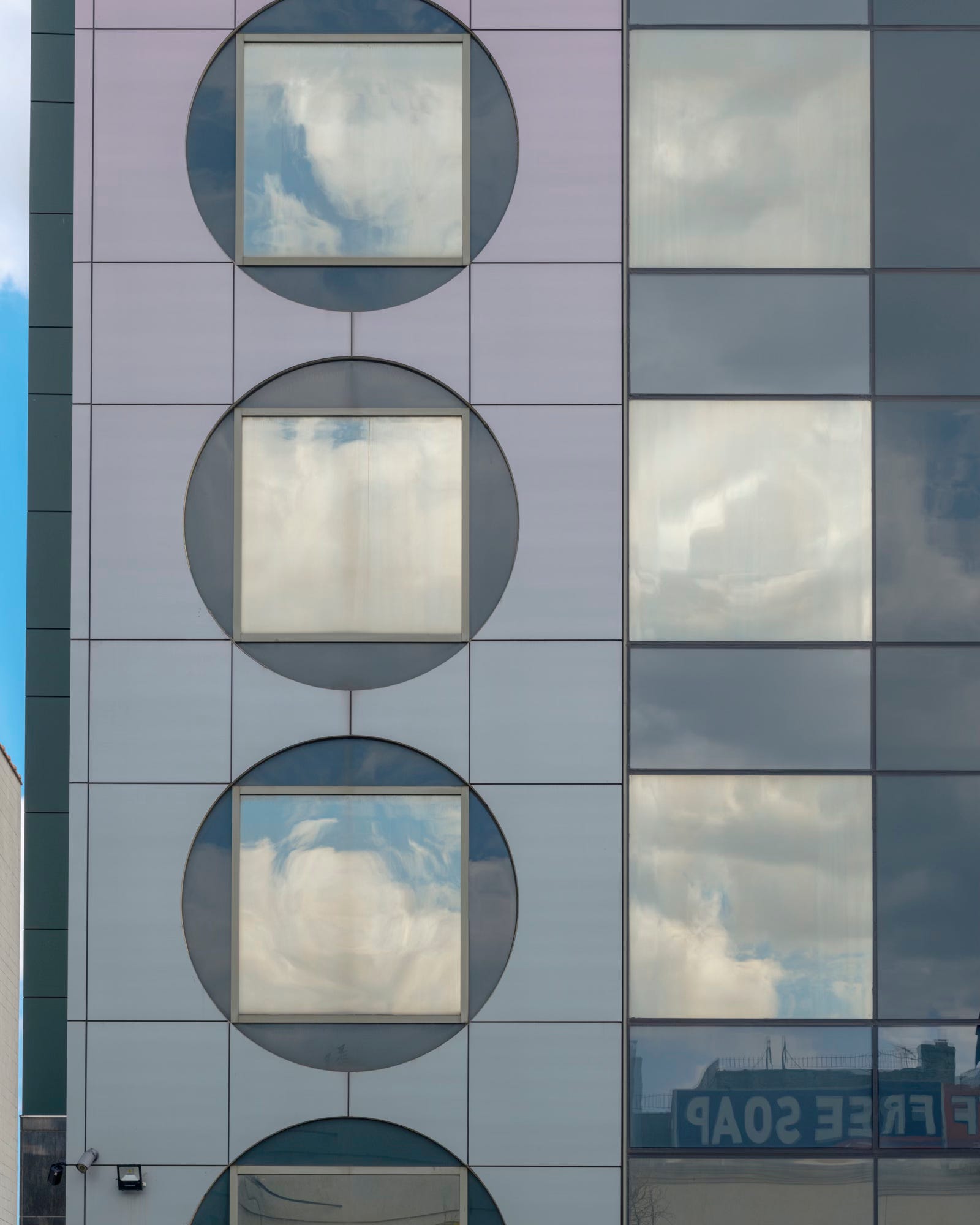
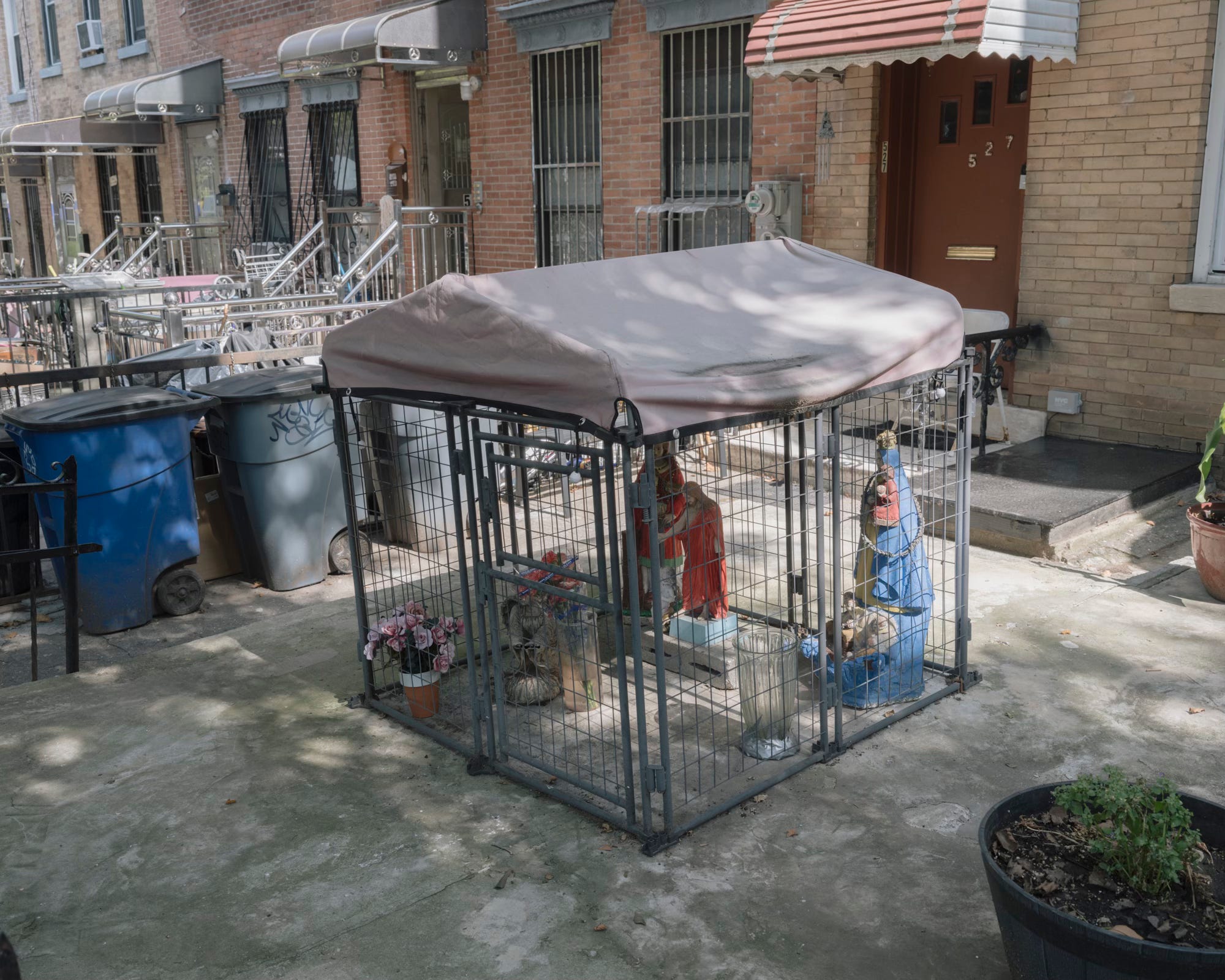
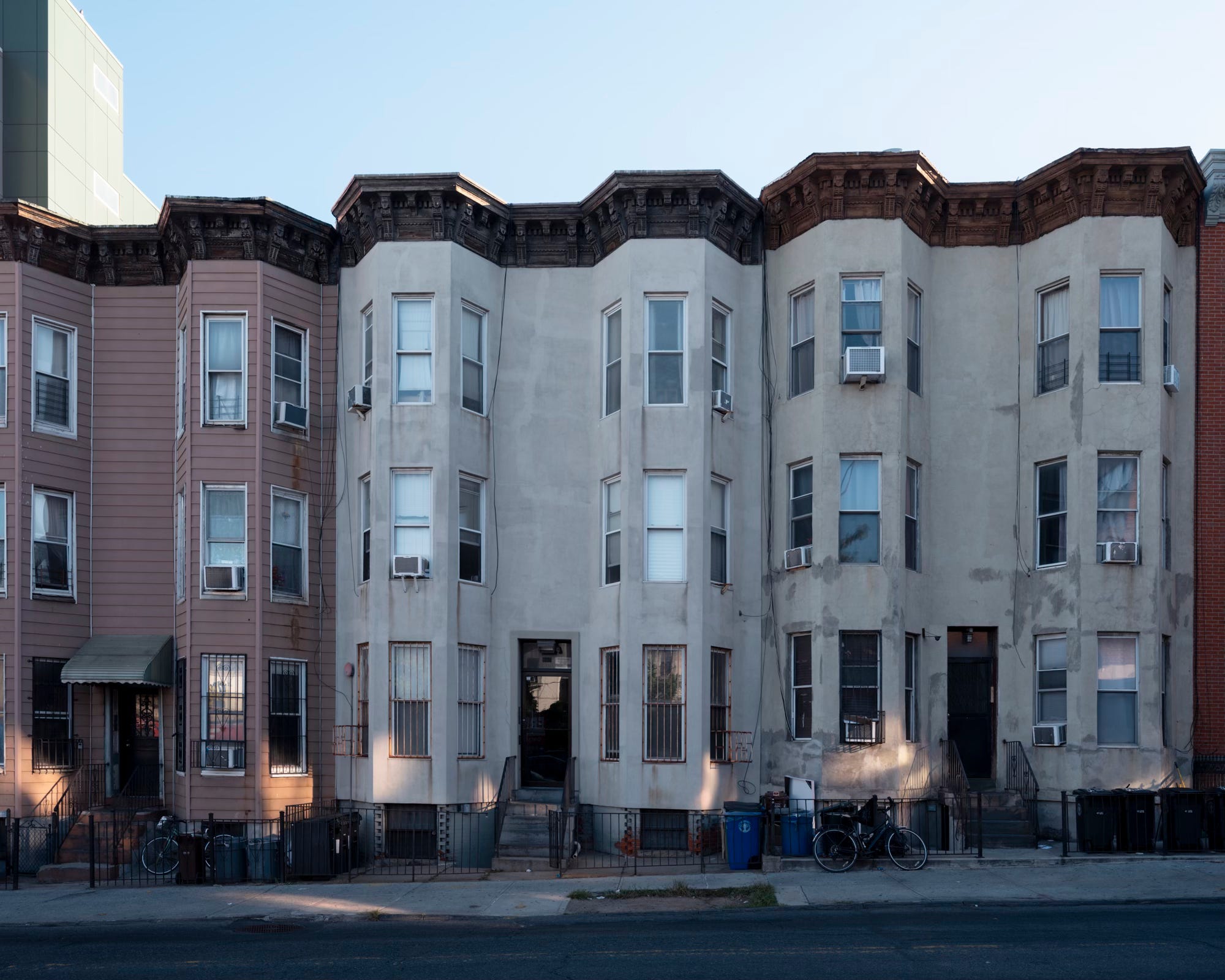
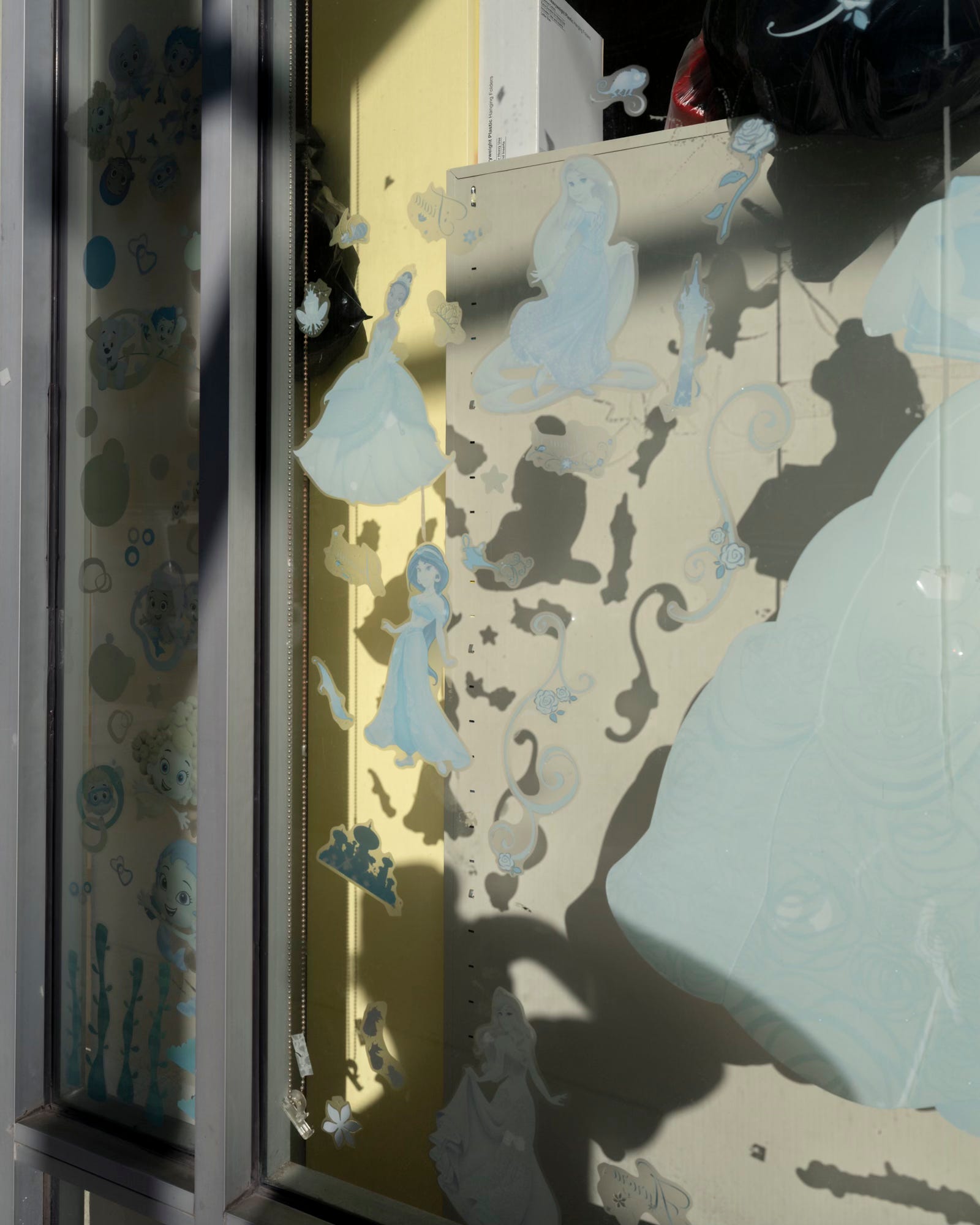
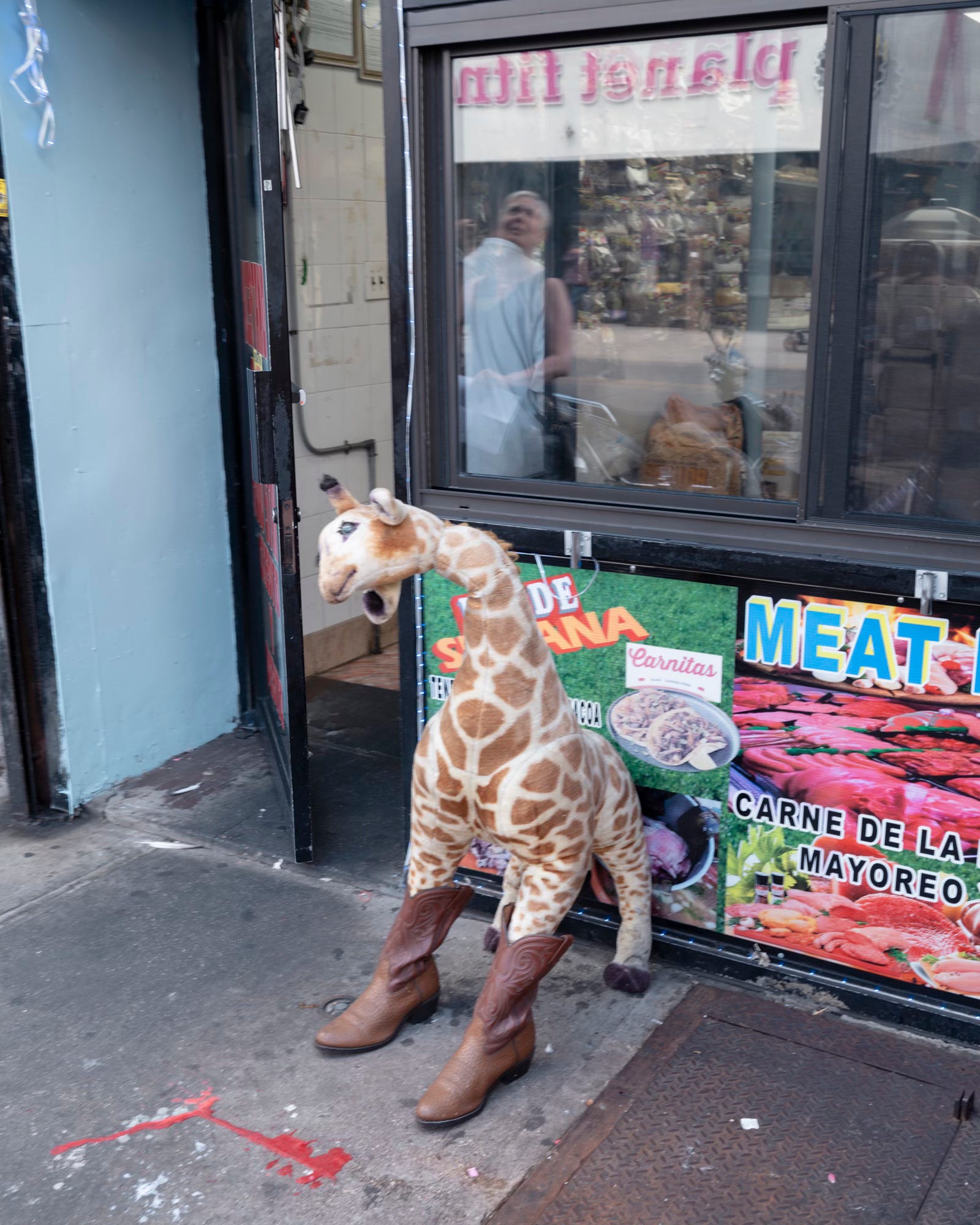
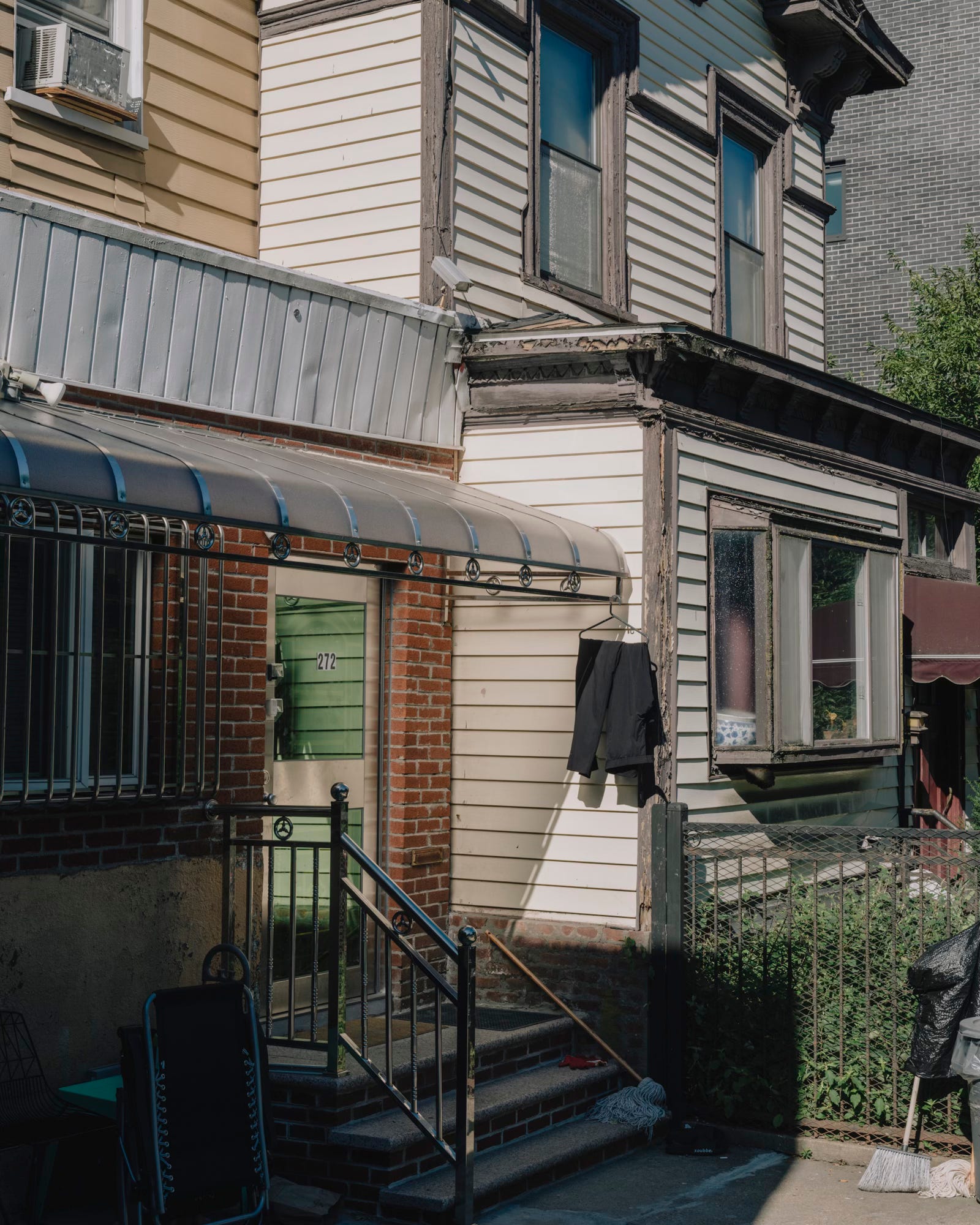
On my second trip to the neighborhood this week, I was joined by a fellow Substack writer curious about my photographic process. After spending several hours watching me take pictures of traffic cones and discarded mattresses, they may have regretted their decision, but the company certainly made my day better. I won't reveal who it was, but eagle-eyed readers might spot them lurking in one of the photos above.
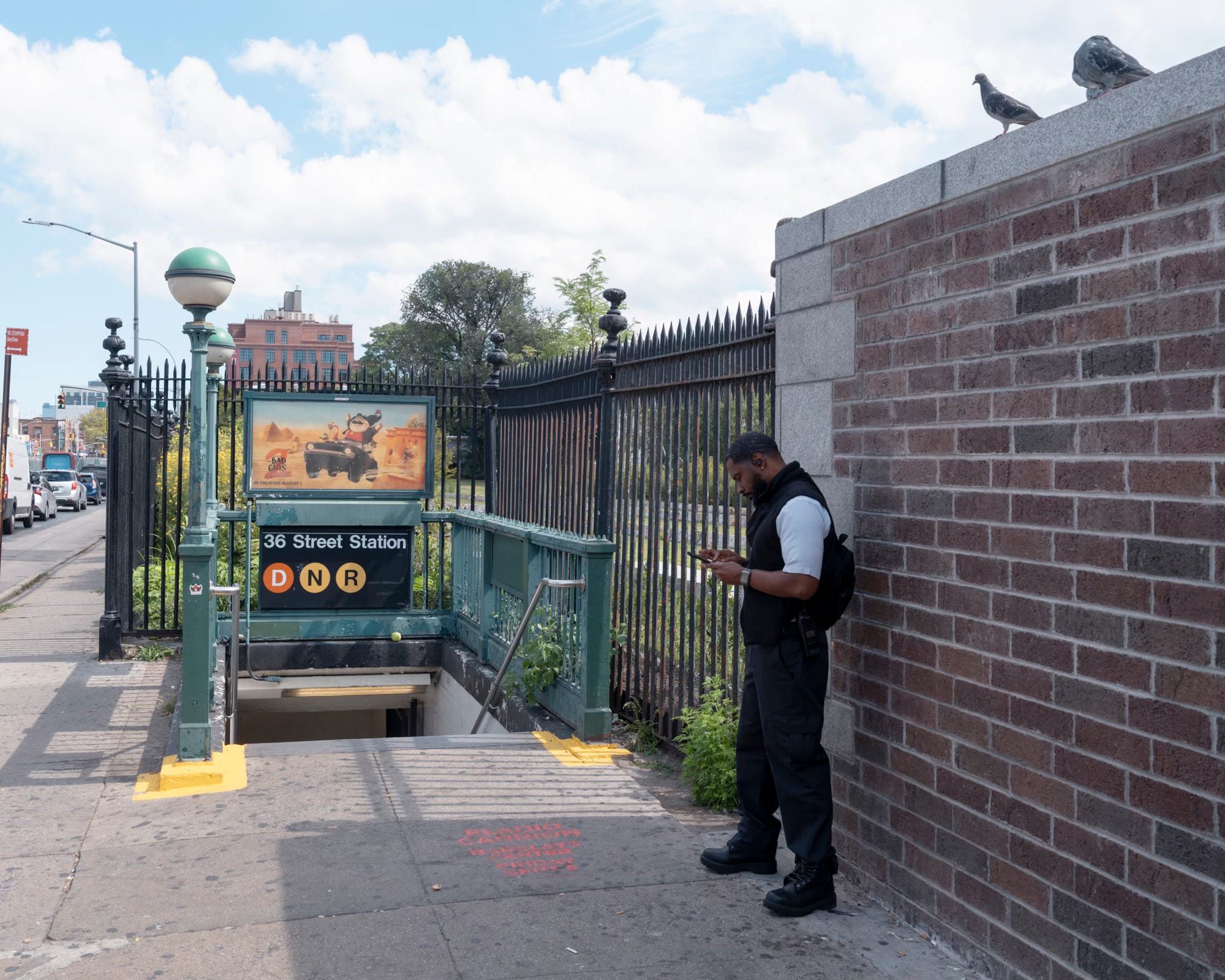
In 2012, filmmaker Dean Peterson kept tripping on his way out of the 36th Street subway station.
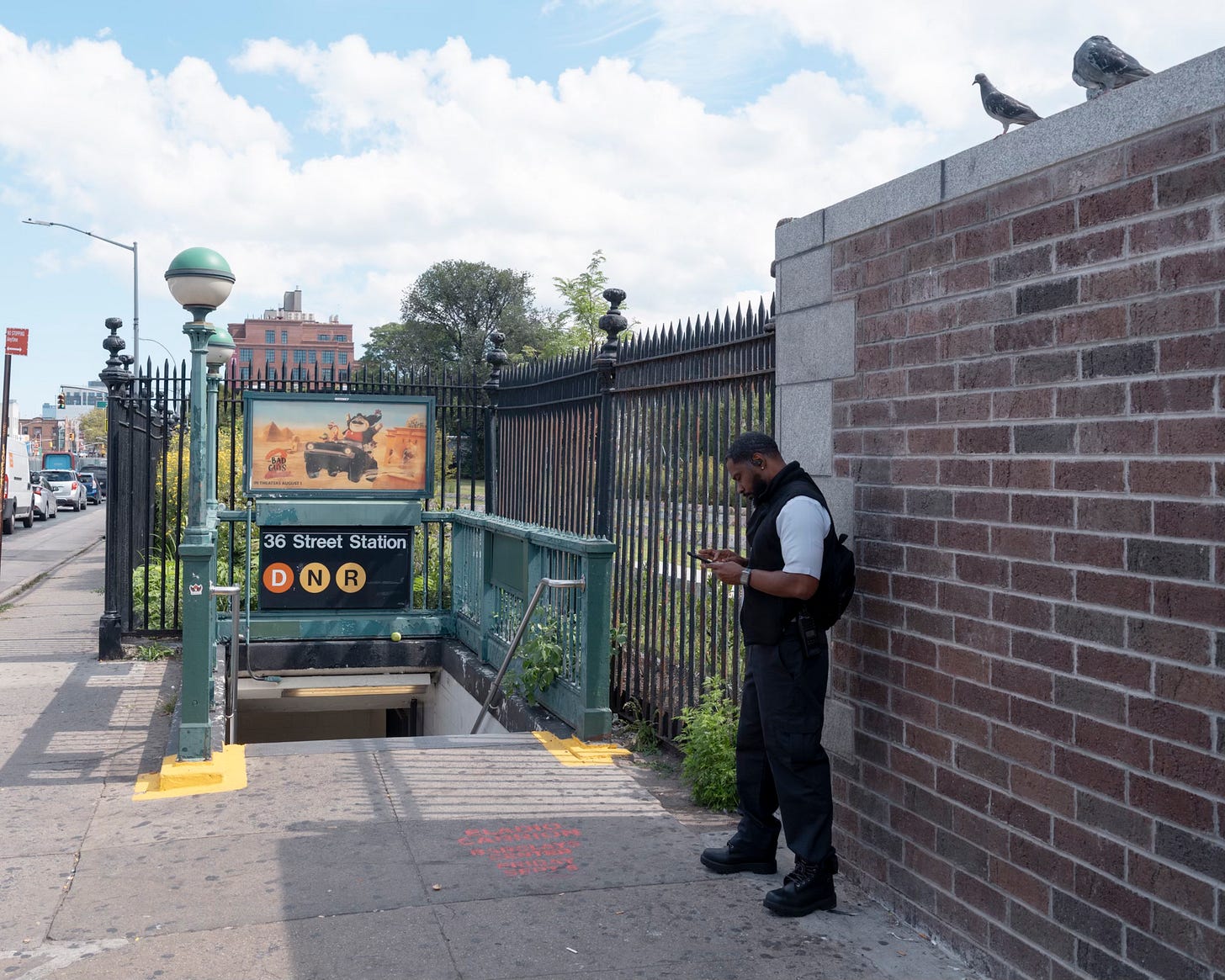
He soon noticed that he wasn’t the only one. It turns out that one of the steps was just 1/2” higher than the others, enough of a difference to throw off the gait of thousands of commuters.
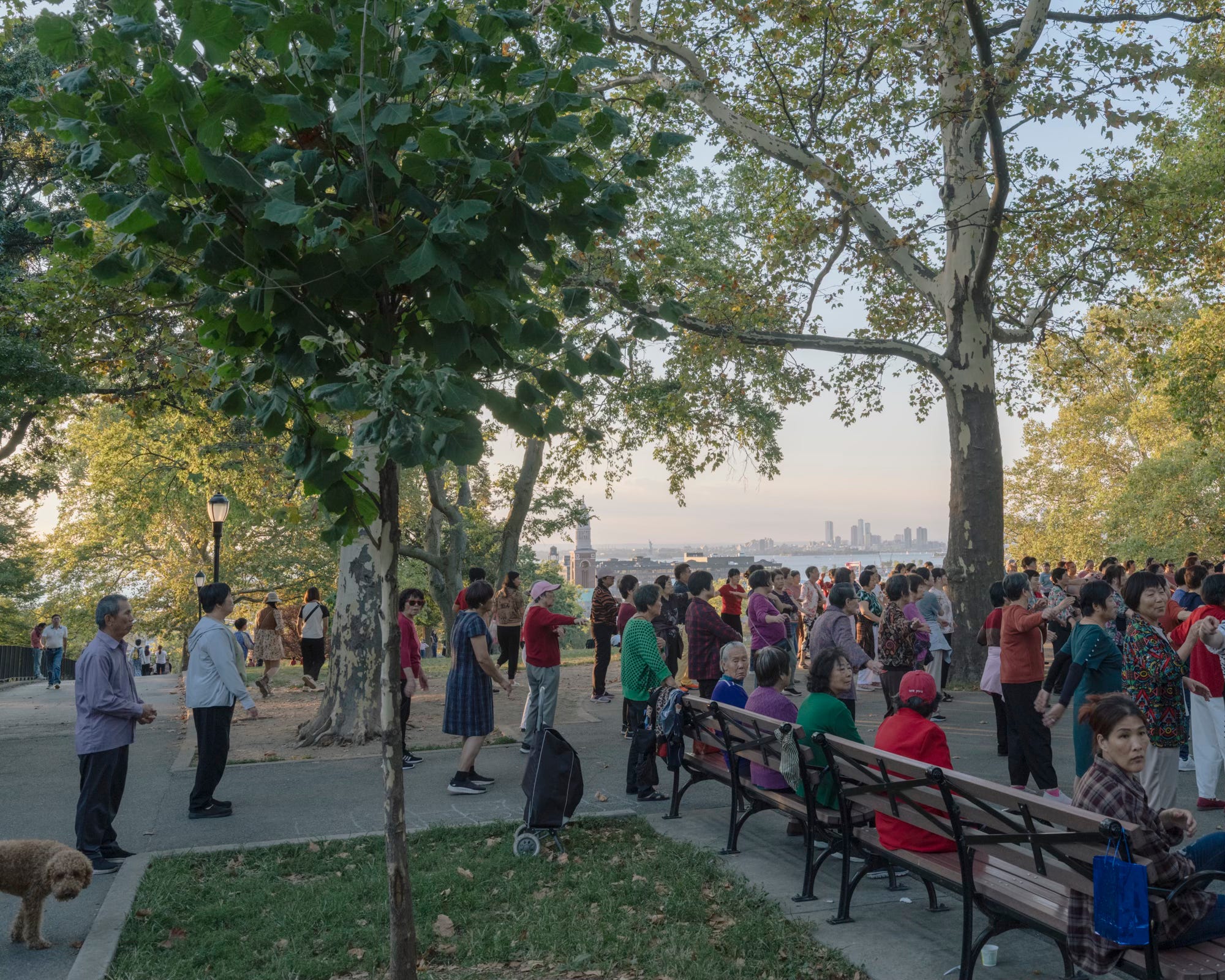
Guǎngchǎng wǔ translates to "square dancing" or "plaza dancing," and it is an extremely popular activity in Sunset Park. The practice typically involves large groups of older women performing somewhat synchronized dance moves to loud Chinese pop music.
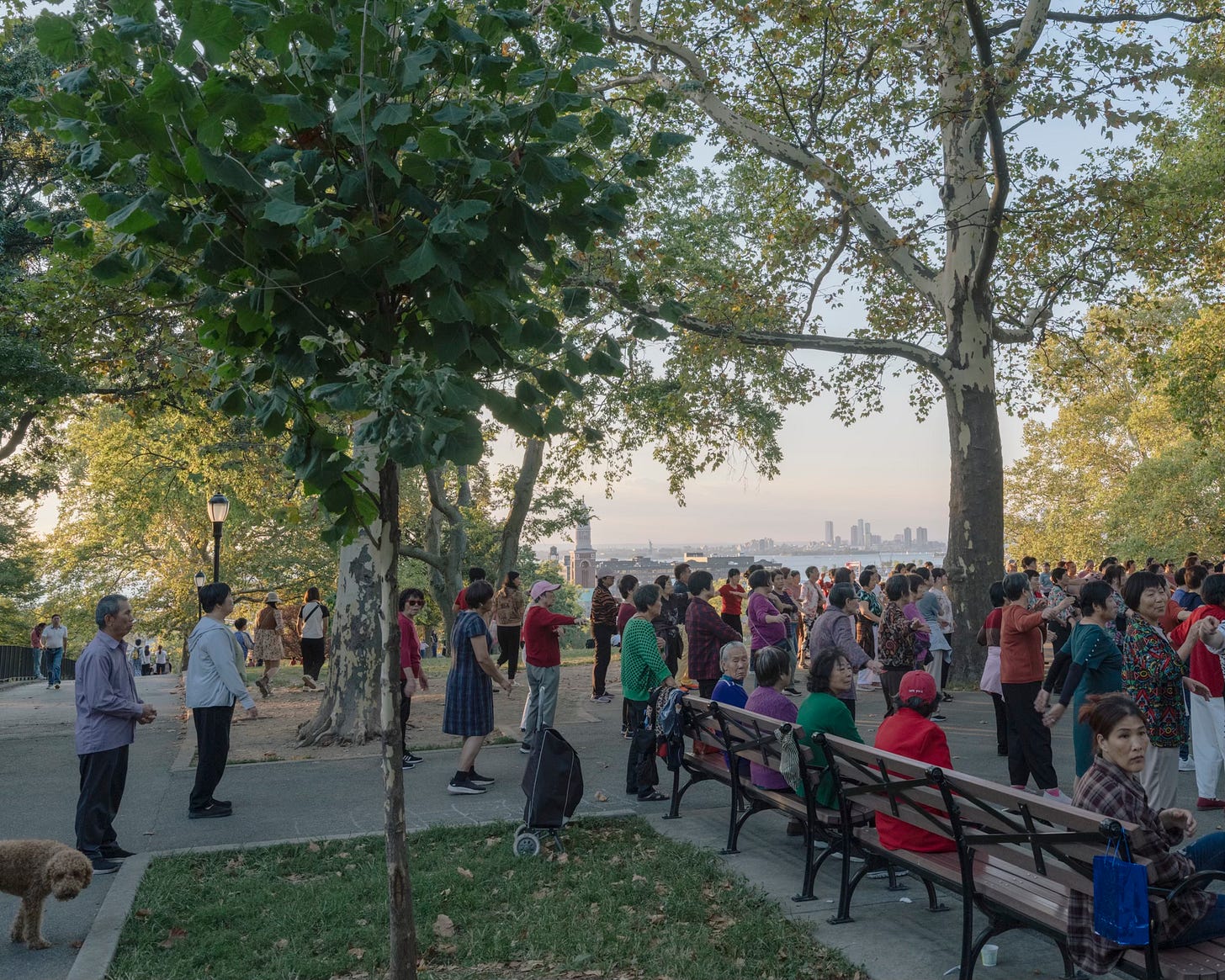
In China, it has been estimated there are over 100 million plaza dancers, though the seemingly benign activity is not without its detractors. People who live by the plazas where dancing is popular complain that the loud music disrupts their sleep, especially when multiple groups compete by turning up their volumes. Besides blocking building entrances, sidewalks, and parking areas, rival dancers sometimes fight each other over preferred dancing spots. Fed-up locals have resorted to installing massive sound systems that play messages reminding the dancers of local noise ordinances, throwing feces and, in one famous case, unleashing a trio of Tibetan mastiffs on the "Dancing Grannies."
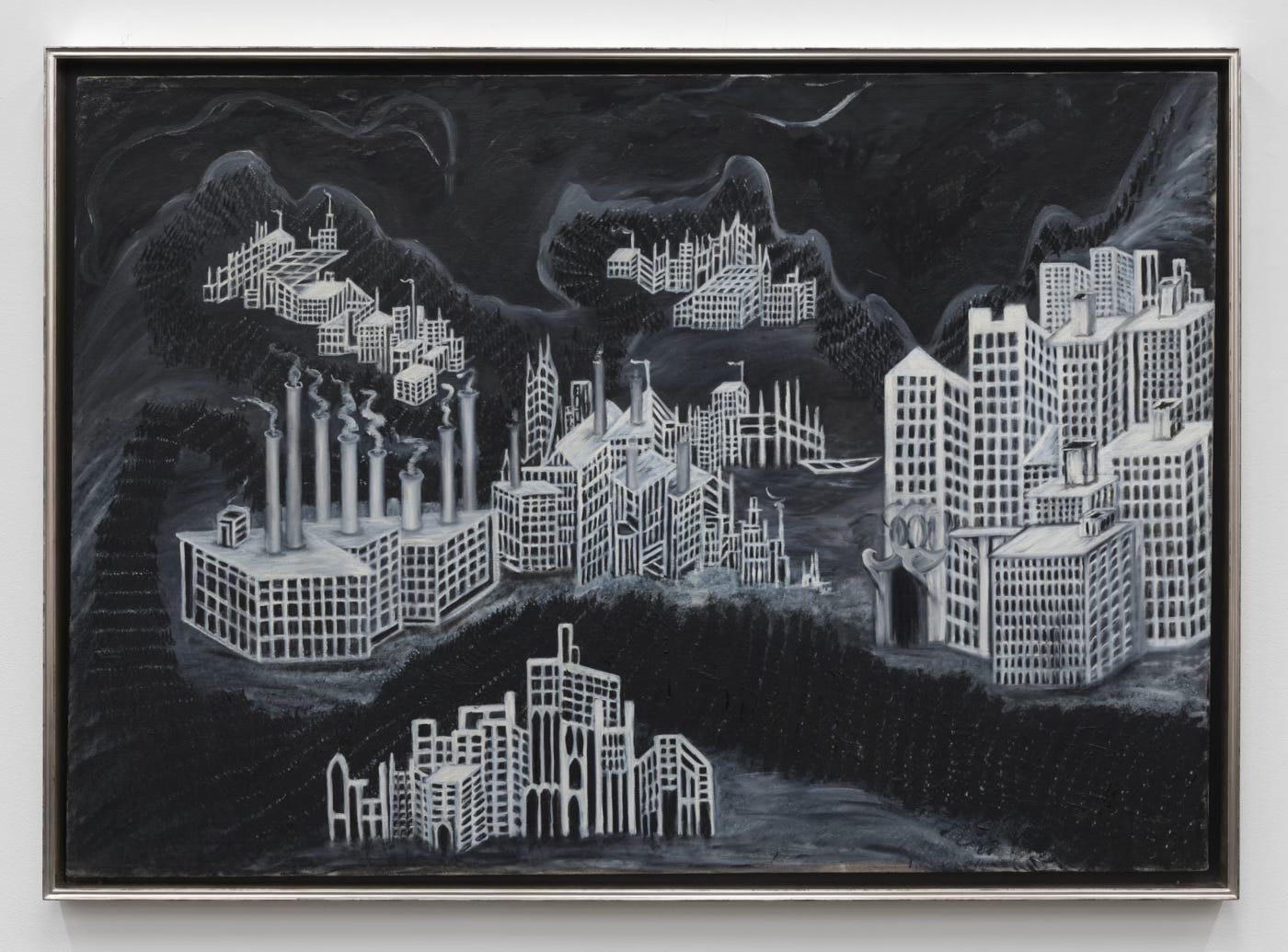
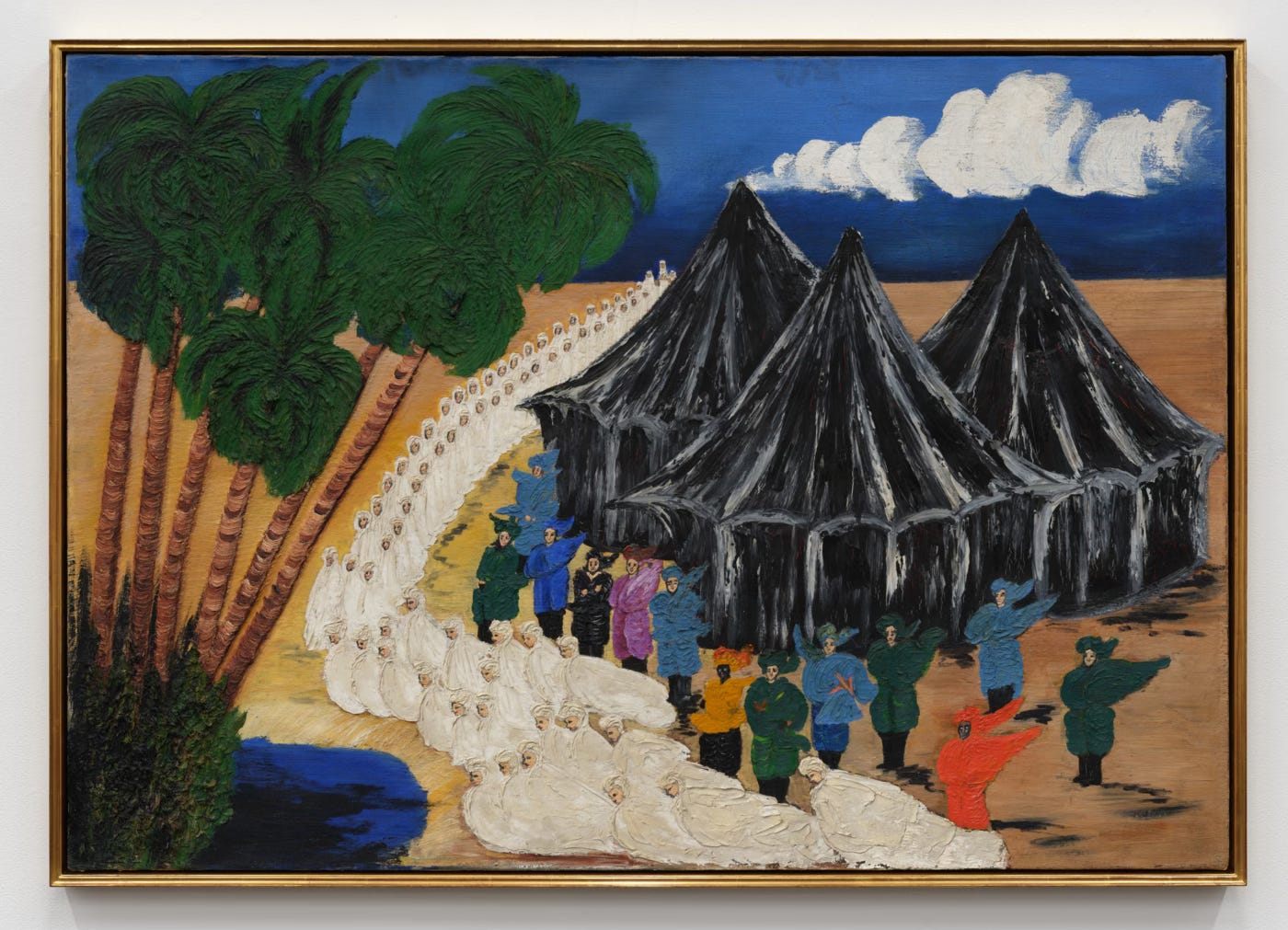
Marian Spore Bush married the founder of Bush Terminal, Irving Bush, in Reno on June 9, 1930, an hour after Bush's divorce from his second wife became final. She had started her career as Michigan’s first female dentist. After her mother’s death, she traded her dental drill for a paint brush, which she claimed was guided by “the souls of those who have lived here on earth from far-distant times down to the present.” There is currently an exhibition of her work (only up for two more days) at the Karma Gallery.
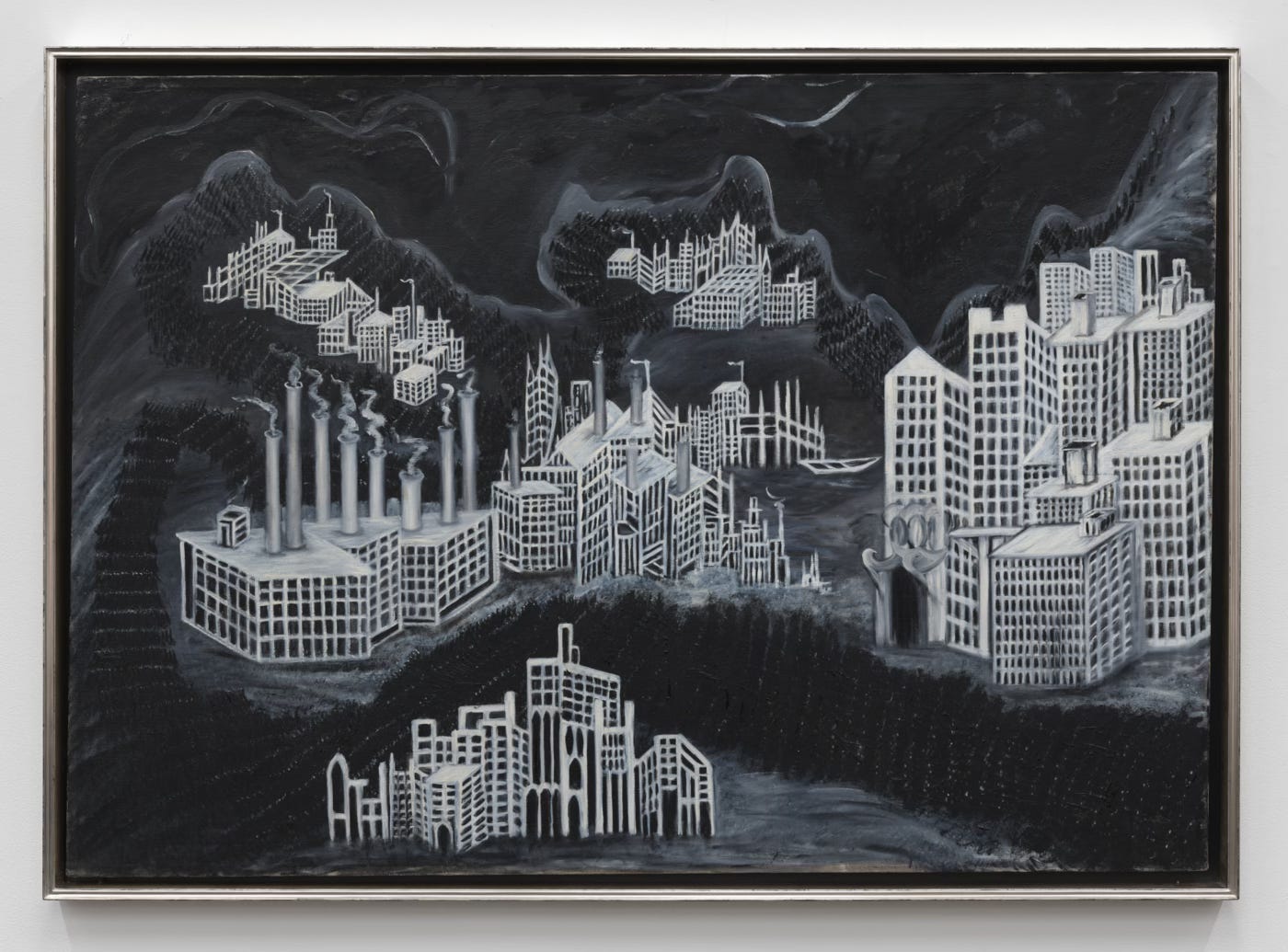
Factories, 1930.
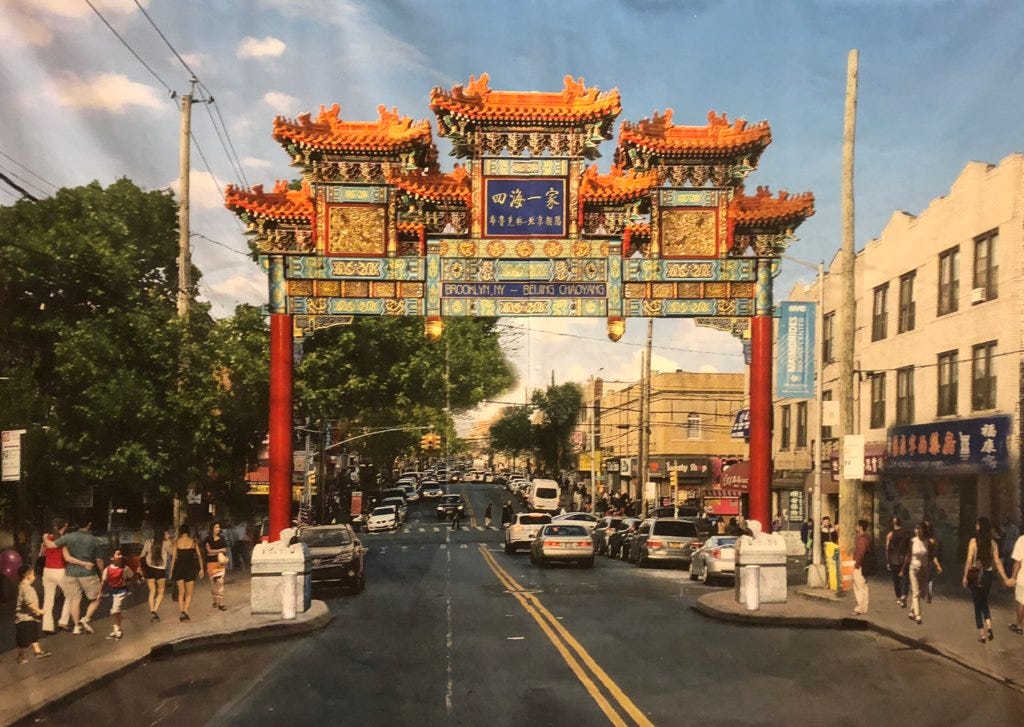
In 2013, Brooklyn Borough President, Marty Markowitz announced that an ornate 40-foot-tall “friendship” archway to welcome visitors to Sunset Park’s Chinatown was being given as a "gift" from Beijing's Chaoyang District. His successor, Eric Adams pledged $2 million for its completion in 2015, hailing it as a "great symbol of friendship,” and authorized the formation of the Sino-America New York Brooklyn Archway Association Corp, to help fund the project.
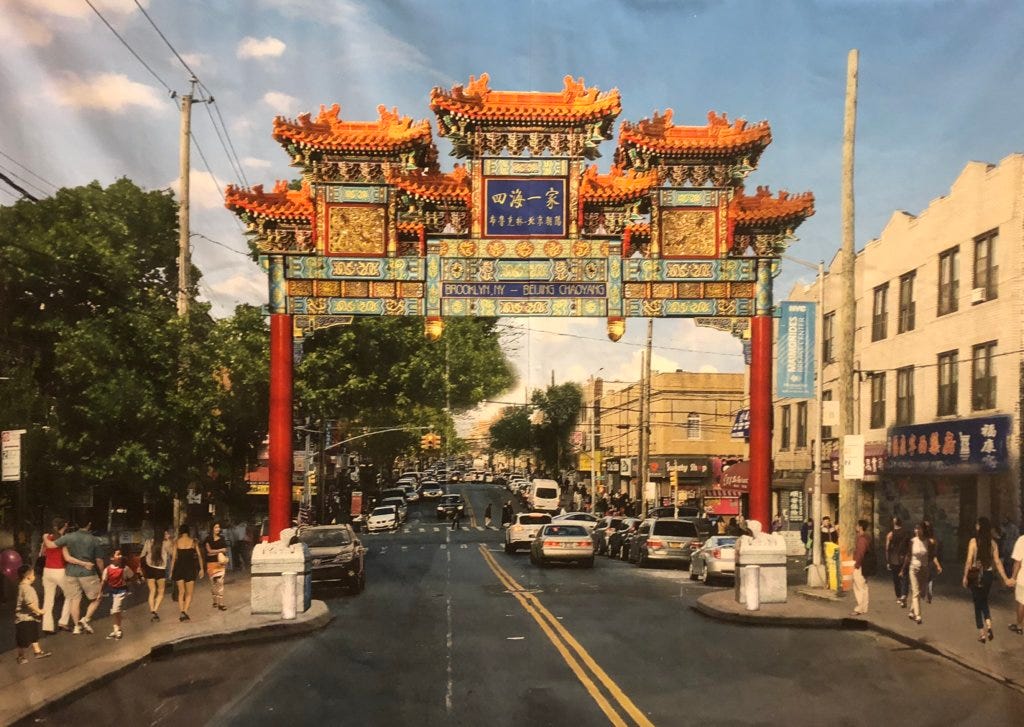
Rendering At least some of the $221,000 raised by the foundation was used for a $7,000 China trip and community events involving the future mayor. Beijing rescinded its gift offer in 2020 and the nonprofit lost its tax-exempt status in 2022 due to failed financial disclosures. The project was spearheaded by Adams’ former Director of Asian Affairs, Winnie Greco, who resigned last year after promising a campaign volunteer a job in Adams’ administration if they helped renovate her kitchen. She was recently in the news again after handing a City Hall reporter an opened bag of Herr’s Sour Cream & Onion ripple potato chips with $300 in it.
This is the best "description" of Sunset Park that I have ever read. I am amazed at Rob's ability to understand so much about such a diverse community from some research and a bit of exploration. I've shared it with my 10,000 member Sunset Parker FB group. I enjoy all of Rob's neighborhood posts but with this one I could understand his skill at being able to "explain" a neighborhood with both depth & feeling - something that takes most people 30 years to get a grasp of. This is a keeper for my archives of Sunset Park.
Well done! Text, research, photography-- it all makes for a compelling portrait of this complicated neighborhood. I love your Substack, thank you for it. Sarah Williams Goldhagen